Iraq’s Basra Turns Extreme Heat Into Eco-Friendly Salt Production Amid Climate Change Challenges
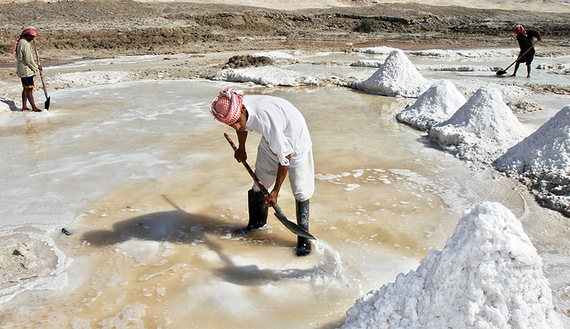
In a striking example of climate adaptation, Basra is leveraging its record-breaking heat to increase salt production from seawater.
This innovative approach not only capitalizes on the region’s intensifying temperatures but also offers a more environmentally friendly alternative to traditional rock salt mining.
According to a Reuters report, the Basra Salt Factory has optimized its operations by using large concentration tanks that accelerate seawater evaporation. This method speeds up salt crystallization, improving both efficiency and product quality.
“The higher the temperature, the greater the evaporation rate, and consequently, the higher the salt concentration,” explained Hussam Al-Akili, the factory’s production manager. “We pump seawater into the tanks until it crystallizes and the salt begins to form.”
The technique, which relies on solar evaporation, is considered significantly less harmful to the environment than rock salt extraction, which typically involves blasting and deep excavation.
However, experts have issued environmental warnings. If waste byproducts are not properly managed, saltwater extraction could disrupt coastal ecosystems and threaten marine biodiversity.
“The modest industrial benefits from rising temperatures are vastly outweighed by the broader consequences of climate change, such as population displacement and ecosystem loss,” said Dr. Mushtaq Eidan, a climate expert and professor at the University of Basra.
Iraq is among the countries most vulnerable to climate change, facing severe challenges including water scarcity, desertification, and extreme heatwaves, according to the United Nations.
As Basra continues exploring climate-resilient industrial practices, the city’s salt initiative highlights the delicate balance between economic innovation and environmental responsibility in an era of escalating global warming.
28/05/2025