Massive 8.8-Magnitude Earthquake Strikes Russia’s Kamchatka Peninsula, Triggers Tsunami and Global Evacuation Alerts
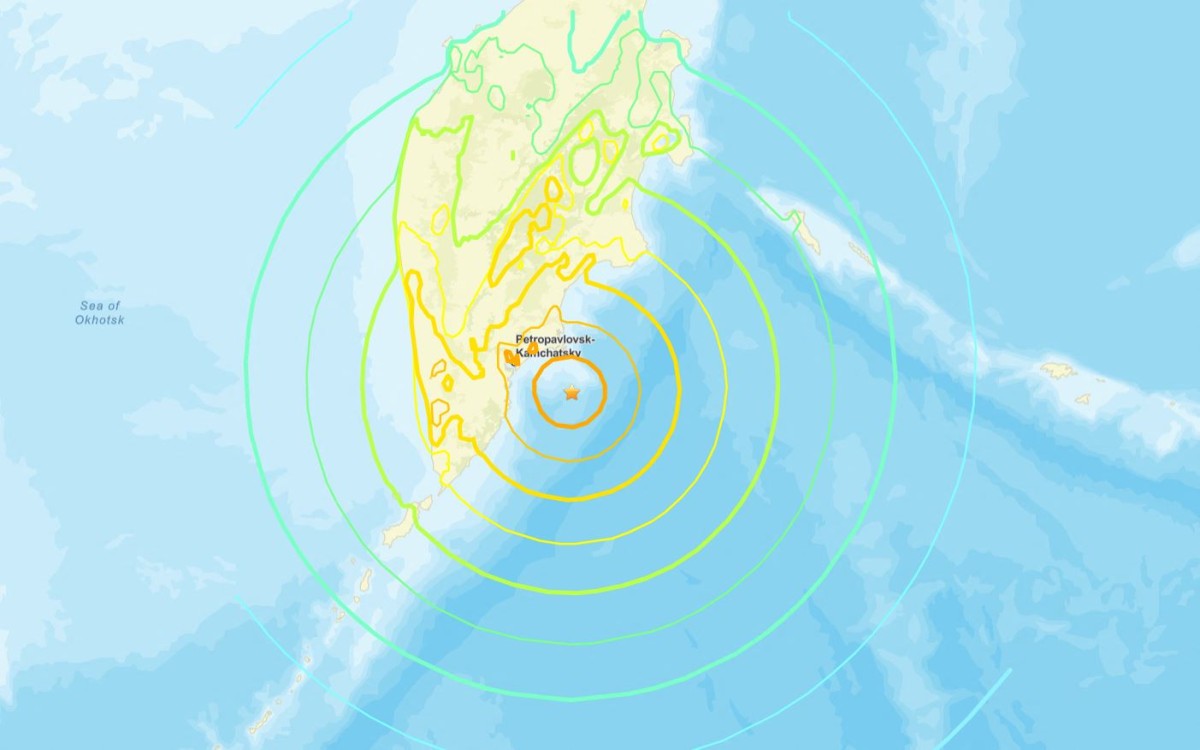
A powerful 8.8-magnitude earthquake struck off Russia's Far Eastern Kamchatka Peninsula on Wednesday, unleashing tsunami waves up to four meters (13 feet) high and triggering evacuation orders across the Pacific, including in Japan, Hawaii, and other coastal regions.
The U.S. Geological Survey (USGS) reported the quake occurred at a shallow depth of 19.3 kilometers (12 miles), approximately 119 kilometers southeast of Petropavlovsk-Kamchatsky, a city of over 160,000 people. It is one of the strongest seismic events to hit the region in decades.
Widespread Damage and Injuries in Kamchatka
Authorities in Russia confirmed that several buildings were damaged, including a kindergarten in Petropavlovsk-Kamchatsky, though no fatalities have been reported. Regional officials said tsunami waves reaching up to 13 feet flooded a port and fish processing facility in Severo-Kurilsk, sweeping away vessels and damaging coastal infrastructure.
Kamchatka Governor Vladimir Solodov described the quake as the strongest in decades and said response efforts are ongoing. “Today’s earthquake was serious and the strongest in decades of tremors,” Solodov said in a video message posted to Telegram.
Russia’s Ministry for Emergency Services confirmed minor injuries, with several people seeking medical attention. Regional Health Minister Oleg Melnikov stated that some residents were injured while fleeing buildings, including one person who jumped from a window.
Evacuation Orders Across the Pacific
Tsunami alerts were issued across Japan’s eastern coastline, prompting mass evacuations in areas still scarred by the 2011 Tōhoku disaster. Japanese authorities recorded three tsunami waves, the largest reaching 60 centimeters (24 inches), and confirmed that no damage or injuries had been reported as of Wednesday afternoon.
In Hawaii, residents were ordered to move to higher ground or seek shelter in buildings at least four stories high. The Honolulu Department of Emergency Management issued a stark warning: “Take Action! Destructive tsunami waves expected.” The U.S. Coast Guard directed ships to evacuate ports to avoid damage.
The U.S. Tsunami Warning System stated that waves over 3 meters were possible along parts of Russia, northern Hawaiian islands, and Ecuador. Waves of 1 to 3 meters were expected in Japan, Chile, the Solomon Islands, and other Pacific nations. Smaller waves were projected to reach as far as the U.S. West Coast.
President Donald Trump addressed the crisis in a statement on social media:
“A Tsunami Warning is in effect for those living in Hawaii. A Tsunami Watch is in effect for Alaska and the Pacific Coast of the United States. Japan is also in the way. Please visit tsunami.gov for the latest information. Stay strong and stay safe!”
Earthquake Felt Across the Region
Residents of Petropavlovsk-Kamchatsky described the earthquake as prolonged and intense. “Considering its strength and how long it lasted, I decided to leave the building,” said Yaroslav, a 25-year-old resident. “It felt like the walls could collapse any moment. The shaking lasted for at least three minutes.”
The Russian Academy of Sciences said this was the strongest quake to hit Kamchatka since 1952. However, Danila Chebrov, director of the Kamchatka Branch of the Geophysical Service, noted that the intensity of shaking was lower than expected for such a magnitude due to the epicenter’s characteristics. Aftershocks measuring up to 6.9 in magnitude have been reported and are expected to continue in the coming days.
Kamchatka lies along the Pacific “Ring of Fire,” a highly seismically active region known for frequent and often powerful earthquakes and volcanic eruptions.
Monitoring and Precautions Ongoing
Emergency crews in Kamchatka and across the Pacific remain on high alert, assessing damage and coordinating potential evacuations. Authorities in Japan temporarily evacuated workers from the Fukushima nuclear plant as a precaution, though no irregularities have been reported at any facilities.
Meanwhile, automaker Nissan suspended operations at several plants in Japan to ensure employee safety.
Seismic monitoring agencies continue to track aftershock activity as well as potential further tsunami risks. Officials urged residents in affected areas to remain cautious and follow local evacuation protocols until all clear signals are issued.

.jpg)
.jpg)
.jpg)