Nepal’s Prime Minister Resigns as Gen-Z Protests Escalate, Dozens Killed in Clashes
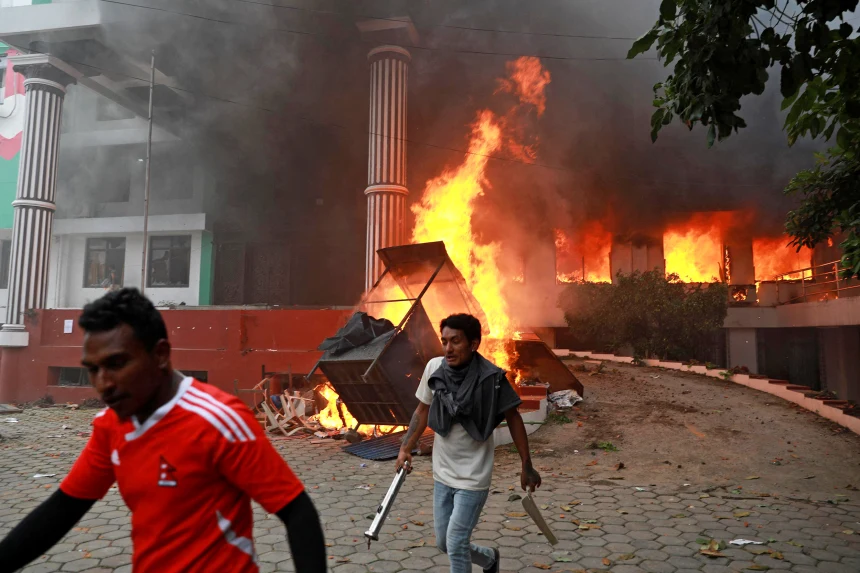
Nepali Prime Minister K.P. Sharma Oli resigned Tuesday after days of violent demonstrations over a sweeping social media ban and mounting allegations of corruption, Reuters reported.
The protests, which have swept across multiple cities in the Himalayan nation, reached a boiling point when demonstrators torched the homes of top political leaders.
Kathmandu’s Tribhuvan International Airport was shut down amid rising security concerns. “There is a lot of smoke in the vicinity of the airport,” an airport spokesperson told NBC News, confirming that most flights were being diverted.
On Monday, at least 19 people were killed after police opened fire on crowds attacking Parliament and defying an indefinite curfew. By Tuesday morning, protesters—many of them young Nepalis dubbed the “Gen-Z movement”—returned to the streets in even greater numbers.
Sahil Singh, a 29-year-old entrepreneur in Kathmandu, said the unrest is about more than one leader. “I want a real change after this, I mean a good system and government,” Singh said in a phone interview. “Right now the whole country is in chaos.”
Demonstrators set fire to the residences of President Ram Chandra Poudel, Home Minister Ramesh Lekhak, former Prime Minister Pushpa Kamal Dahal, and Sher Bahadur Deuba, leader of the Nepali Congress party, according to the Associated Press. Local media reported that the army was evacuating ministers by helicopter. Lekhak resigned late Monday following an emergency cabinet meeting.
The protests began after Oli’s government banned more than two dozen social media platforms—including Facebook, YouTube, and X—on the grounds that they had not registered for new government oversight. Rights groups, however, criticized the ban as an assault on free speech and an attempt to silence dissent.
While the government announced Tuesday it would lift the ban, many Nepalis say the damage is already done. Singh described protesters pouring into the streets “without anybody in particular leading the protests” and emphasized the anger was not about property destruction but accountability. “People were angry against the politicians,” he said.
International concern is mounting. The U.N. Human Rights Office called for a “prompt and transparent investigation” into the killings, warning of “deeply worrying allegations of unnecessary or disproportionate use of force.” India, Nepal’s neighbor, said it was “deeply saddened by the loss of many young lives” and urged dialogue over violence.
Oli, who has now served four separate terms as prime minister, most recently returned to office in July 2024, making him the country’s fifth leader in five years. His resignation leaves Nepal facing deep political uncertainty—just as a new generation of citizens demands change.


.jpg)
.jpg)
.jpg)
.jpg)