Rubio: U.S. Ready for Iran Diplomacy, but Tehran Not Serious
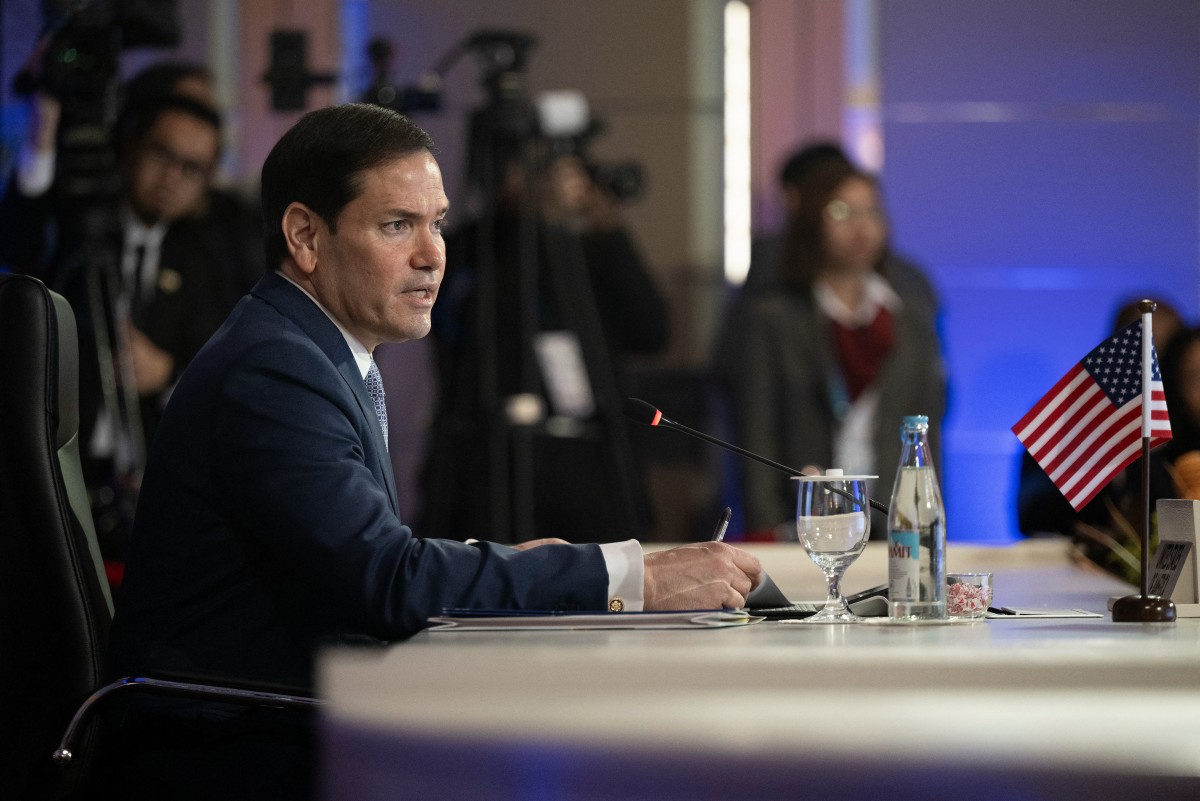
U.S. Secretary of State Marco Rubio said Wednesday that Washington remains open to negotiating an end to the ongoing crisis with Iran, but accused Tehran of failing to engage seriously in peace talks as escalating military conflicts disrupt vital global energy transit routes.
Speaking at a meeting of Southeast Asian foreign ministers in Manila, Rubio questioned Iran's commitment to diplomatic resolution while affirming that the U.S. would take all necessary measures to protect American and allied interests.
Rubio Warns of Dangerous Maritime Precedent
Addressing foreign ministers from the Association of Southeast Asian Nations (ASEAN), Rubio expressed willingness to pursue diplomatic solutions if Tehran alters its approach.
"The problem we are having right now is that they are not serious about talks. If they are serious, we are serious. If they are not, then we will do what is necessary to protect our interests, and also the interests of our allies," Rubio stated.
Rubio warned that allowing Iran to disrupt freedom of navigation in the Strait of Hormuz creates a hazardous framework for international shipping routes worldwide, including contested waters in the South China Sea:
- Freedom of Navigation: Rubio cautioned against establishing a precedent where a nation state can control an international waterway, impose tolls, or target commercial vessels.
- Regional Security Risks: He noted that allowing such actions unpunished risks encouraging similar behavior in other regions with active maritime disputes.
Backchannel Diplomacy and Military Strikes Continue
Despite the rhetoric, diplomatic channels appear partially active behind the scenes:
- Ceasefire Proposals: A senior Iranian official confirmed Monday that Tehran received a proposal from mediators for a 10-day ceasefire to salvage the interim agreement signed in June.
- Diplomatic Missions: Iranian Interior Minister Eskandar Momeni visited Pakistan to request continued mediation efforts from Islamabad.
Simultaneously, military action continues unabated. The U.S. military executed strikes against targets across Iran for an 11th consecutive night on Tuesday. Iranian state media reported explosions in Tehran, Chabahar, Konarak, and Bushehr, the site of Iran's nuclear power plant.
Earlier, Iran targeted U.S. military positions in Bahrain, Kuwait, and Jordan, while an oil tanker was struck in the Strait of Hormuz. U.S. President Donald Trump confirmed that 18 U.S. service members have been killed in the conflict, including four during recent attacks in Jordan and Iraq. An Iranian health official reported 50 civilian fatalities and 500 injuries from recent U.S. strikes.
Energy Markets Surge Amid Nuclear Threat
The widening confrontation has placed significant upward pressure on global energy markets:
- Oil Prices: Brent crude rose above $91 a barrel in Asian trade on Wednesday, while U.S. gasoline prices exceeded $4 per gallon.
- Targeting Infrastructure: President Trump renewed warnings regarding potential strikes on Iran's nuclear facilities at Natanz, which were previously targeted in June 2025. Tehran promised immediate retaliation in the event of further attacks.
![Irani’s Araghchi, left, meets with Pakistan’s Munir in Islamabad, Pakistan, in April 2026 [File: Iranian Foreign Ministry/AP Photo]](https://media.channel8.com/english/wp-content/uploads/2026/05/AP26115285212508-1777383639.webp)
.jpg)