Houthi Threat to Block Bab el-Mandeb Raises Risk of Wider Regional Conflict and Global Trade Disruption
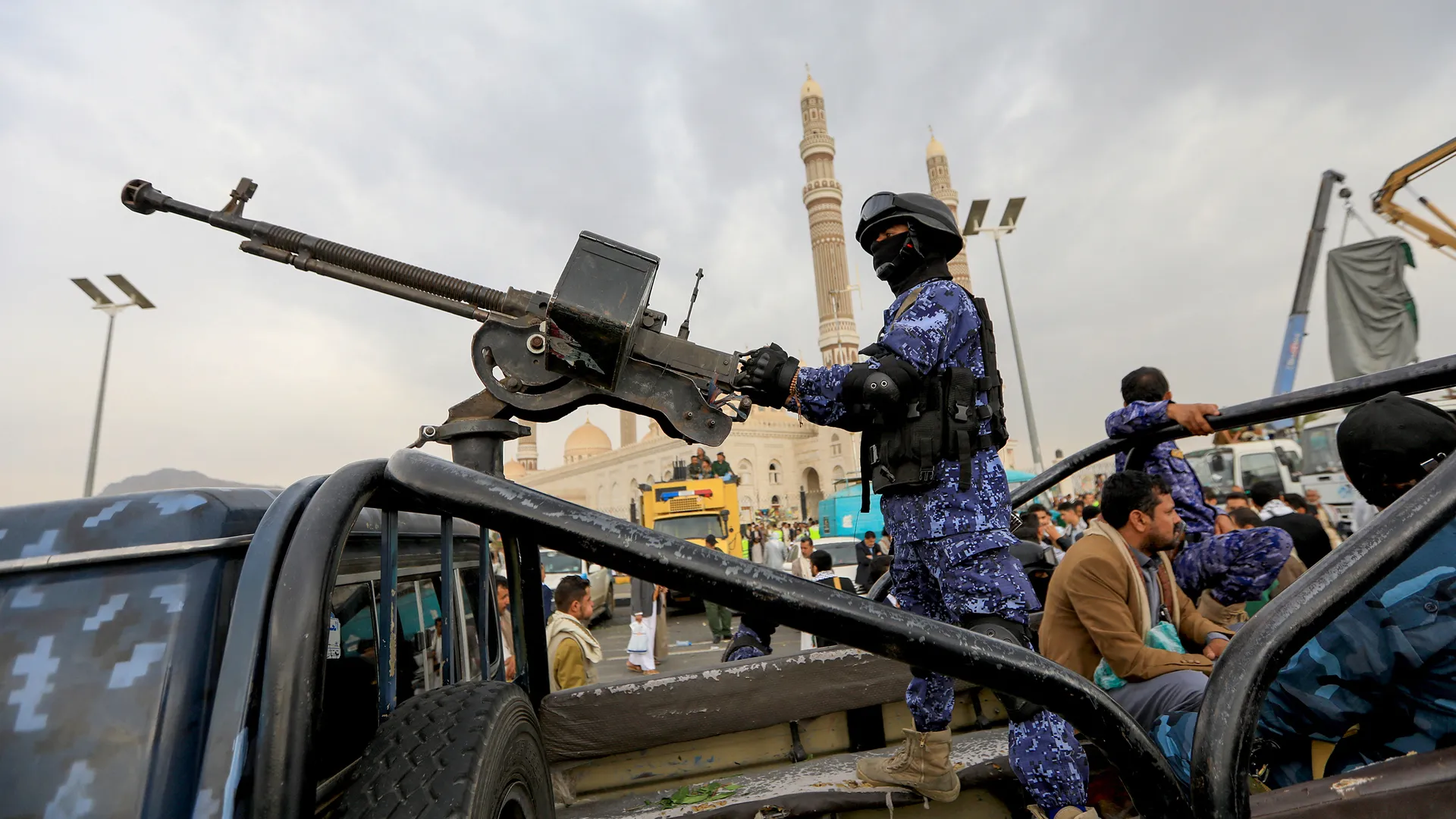
A new blockade threat by Yemen's Houthi rebels has raised concerns that the conflict involving Iran could expand further, placing one of the world's busiest maritime trade routes at risk. Analysts warn that any disruption to the Bab el-Mandeb Strait could affect global oil supplies, international shipping, and regional security.
Houthis Announce Blockade of Saudi-Linked Shipping
The Houthis announced that they have closed the Bab el-Mandeb Strait to vessels linked to Saudi Arabia in response to what they describe as the kingdom's blockade of Yemen and a recent strike on the international airport in Sanaa, the rebel-held capital.
The group claimed it forced six ships to reroute on Tuesday, although there has been no independent confirmation.
Located at the southern entrance to the Red Sea, the Bab el-Mandeb Strait connects the Red Sea with the Gulf of Aden. Around 12% of global trade, including roughly one-quarter of worldwide container traffic, passes through the waterway as ships travel between Europe and Asia via Egypt's Suez Canal.
The route has become increasingly important for Saudi oil exports after shipping through the Strait of Hormuz was severely disrupted by the ongoing Iran conflict.
The Houthis said their measures target only ships connected to Saudi Arabia or operating to and from Saudi Red Sea ports. However, during their previous blockade linked to the Gaza war, the group attacked several vessels with limited or no direct connection to the conflict, raising concerns that shipping companies may avoid the route regardless of the stated restrictions.
Plans to Disrupt Maritime Traffic
Although the Houthis do not control Yemen's coastline along the Bab el-Mandeb Strait, they maintain positions less than 100 kilometers from the area.
According to three Houthi officials who spoke to the Associated Press on condition of anonymity, the group has spent months preparing plans to disrupt shipping. Those plans reportedly include naval mines, explosive-laden boats, drones, and helicopters that could be used to board vessels.
The officials said ships would first receive warnings before entering designated areas. Military action would follow if those warnings were ignored.
Security analysts note that even sporadic attacks could significantly disrupt commercial shipping, similar to the impact Iran has previously had in the Strait of Hormuz by increasing security risks and insurance costs.
Global Trade and Oil Markets Face New Risks
Experts warn that simultaneous pressure on both the Strait of Hormuz and the Bab el-Mandeb Strait would affect two of the world's most critical maritime chokepoints.
Clionadh Raleigh, founder of the conflict monitoring organization ACLED, said such a scenario would create major disruptions across global shipping routes.
According to an analysis by the Atlantic Council, more than seven million barrels of petroleum per day transited the Bab el-Mandeb Strait in June, compared with around four million barrels before the escalation of the Iran conflict.
Saudi Arabia has recently exported about four million barrels of oil per day through its Red Sea port of Yanbu, reducing the impact of disruptions in the Strait of Hormuz.
Even if Bab el-Mandeb becomes inaccessible, Saudi Arabia could continue exporting oil through alternative routes, including shipments across the Red Sea to Egypt's SUMED pipeline or through the Suez Canal. International shipping companies could also reroute vessels around the Cape of Good Hope, though doing so would add one to two weeks to voyages and significantly increase transportation costs.
Risk of Renewed Military Escalation
The Houthis previously attacked more than 100 commercial vessels during the Gaza conflict before U.S. and Israeli military operations largely halted those attacks in early 2025.
Responding to the latest threat, U.S. President Donald Trump said that no disruption had occurred so far and that the United States would respond if necessary.
The blockade threat also risks reigniting Yemen's conflict with Saudi Arabia and its allies. Large-scale fighting largely subsided after a 2022 truce, but Saudi officials have stated they will ensure the Bab el-Mandeb Strait remains open.
Saudi military spokesperson Major General Turki al-Malki said any threats against commercial shipping would be addressed decisively, describing such actions as violations of international law and acts of maritime piracy.
The Houthis recently launched missiles and drones at Saudi Arabia's Abha International Airport following what they said was a Saudi strike targeting Sanaa International Airport. The rebels claim the airport attack was intended to stop senior Houthi officials returning from Iran after attending the funeral of Supreme Leader Ayatollah Ali Khamenei.
According to the Houthis, their blockade aims to pressure Saudi Arabia into ending its restrictions on Yemen.
![Irani’s Araghchi, left, meets with Pakistan’s Munir in Islamabad, Pakistan, in April 2026 [File: Iranian Foreign Ministry/AP Photo]](https://media.channel8.com/english/wp-content/uploads/2026/05/AP26115285212508-1777383639.webp)
.jpg)