Mass Border Crossing Overwhelms Spain's Ceuta Enclave
At a Glance
- Around 60,000 migrants enter Ceuta.
- At least 34 people reported dead.
- Spain blames human smuggling networks.
- Border tensions continue into Friday.
Around 60,000 migrants crossed from Morocco into Spain's North African enclave of Ceuta within 24 hours, overwhelming local authorities and leaving at least 34 people dead in one of the largest border breaches in the territory's history.
Key Statements and Focus Area
- Ceuta President Juan Jesus Vivas described the situation as "absolutely unsustainable."
- Spanish Prime Minister Pedro Sanchez called the crossing "a violation of Spain's territorial integrity."
- Authorities linked the surge to human smuggling networks and confusion over a recent Spanish Supreme Court ruling.
- Humanitarian groups warned that thousands of migrants, including unaccompanied children, were left without shelter.
Mass Crossing Overwhelms Ceuta
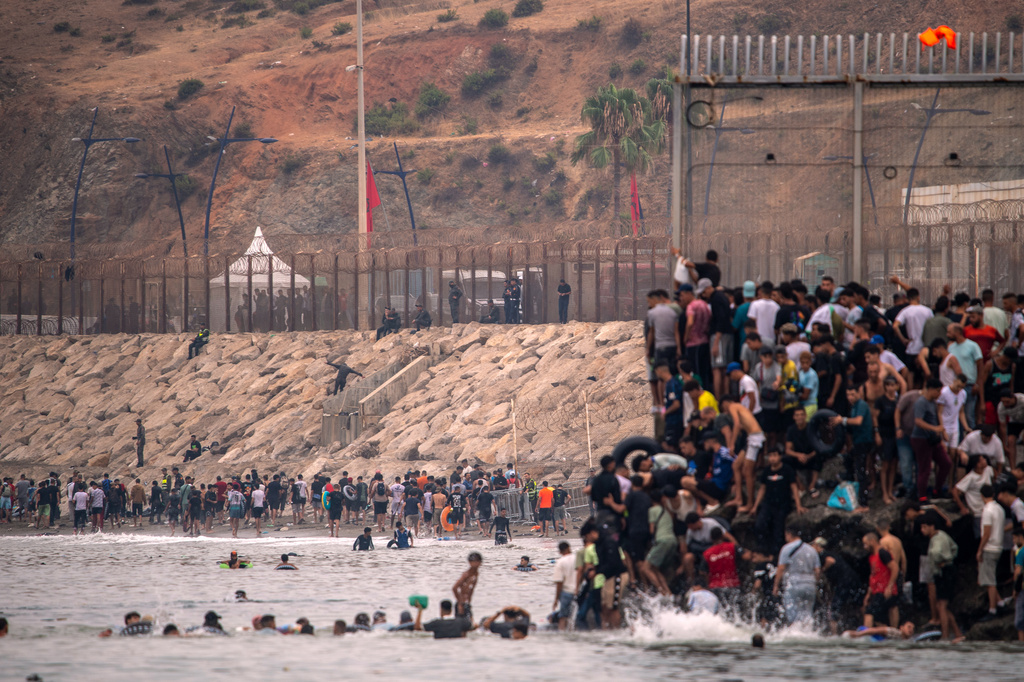
Thousands of migrants crossed into the Spanish enclave of Ceuta from Morocco over a 24-hour period, with Ceuta President Juan Jesus Vivas estimating that around 60,000 people entered the territory.
The influx is equivalent to roughly 70% of Ceuta's population, placing severe pressure on local authorities and emergency services.
At least 34 migrants died during the crossing.
Many reportedly drowned while attempting to swim into Ceuta, while others were killed in the chaos near the Tarajal border area as large crowds tried to enter the enclave.
The crisis continued on Friday as Moroccan security forces clashed with migrants near the border.
Live footage showed hundreds of people gathered near Ceuta before Moroccan authorities dispersed crowds using tear gas. Others continued attempting to reach Spanish territory by sea, while some migrants voluntarily returned to Morocco.
Moroccan police also deployed additional personnel, used water cannons, and fired warning shots to prevent further crossings.
Spain Blames Smuggling Networks
Speaking in Ceuta, Prime Minister Pedro Sanchez condemned the mass crossing, describing it as "a violation of Spain's territorial integrity."
He accused human smuggling networks of spreading misinformation and exploiting vulnerable migrants.
"It appears that this interpretation of the Supreme Court's ruling spread like wildfire through the networks of human trafficking organizations," Sanchez said.
Spanish authorities said smugglers misrepresented a recent Supreme Court ruling concerning migrants arriving by sea, encouraging thousands to attempt the crossing.
Humanitarian Concerns Grow
Rachid Sbihi, head of a workers' association representing Spain's Civil Guard officers, described the situation as "a serious humanitarian crisis."
He said thousands of migrants, including unaccompanied children, were sleeping in parks and on sidewalks as emergency services struggled to respond.
Spanish military personnel deployed to Ceuta have focused primarily on humanitarian assistance and treating the injured.
Political Fallout Spreads Across Europe
The crisis has sparked political reactions beyond Spain.
Italian Prime Minister Giorgia Meloni threatened to suspend Italy's participation in the Schengen open-border system with Spain, while French Interior Minister Laurent Nunez announced stronger border checks along the Spanish frontier.
The Spanish government rejected claims that its migrant regularization policy triggered the crisis, instead blaming smugglers' interpretation of the Supreme Court ruling.
Crossings Extend to Melilla
Authorities also reported attempted crossings into Melilla, Spain's other North African enclave.
In the Moroccan border town of Bni Nsar, clashes broke out between migrants and police, with reports of injuries, arrests, and damage to police vehicles.
FYI
Ceuta and Melilla are Spain's two autonomous cities on the North African coast and form the European Union's only land borders with Africa. Both enclaves have long served as major entry points for migrants seeking to reach Europe. The latest surge comes as Spain continues to balance stricter border controls with broader migration reforms, while European governments remain divided over how to respond to increasing migration pressures.
Dive Deeper: Handpicked Stories for You
Follow Channel8 for continuous updates:
https://channel8.com/english/news/62697
31/07/2026