Gen Z Sparks Cultural Shift Toward Analog Tech
At a Glance:
- Pew Research shows nearly half of teens report being online constantly.
- Dumb phone sales are projected to reach $49.66 billion by 2030.
- Social media trends like #bringbackflipphones are driving retro device sales.
- Gen Z embraces the Newtro trend to reclaim attention from algorithms.
A growing cultural shift is taking hold among Generation Z as young users increasingly step back from social media and smartphone reliance in favor of analog technology.
Despite growing up in an entirely digital ecosystem, younger cohorts are leading a broader "digital detox" movement by adopting basic feature phones, retro audio gear, and film cameras. The trend reflects a deliberate effort to regain agency over personal attention, reduce screen time, and counter the persuasive design algorithms that dominate modern online platforms.
Key Statements and Focus Area
- Constant Connectivity: Highlighting modern screen habits, Pew Research Center data revealed that "nearly half of teens almost constantly report being online."
- Industry Growth: Prototyping market expansion, Research and Markets reported that "the basic phone market is expected to grow from $39.11 billion in 2025 to $49.66 billion by 2030."
- Viral Paradox: Addressing the unexpected driver of feature phone sales, HMD noted that "sales of its flip phones doubled between 2022 and 2023, attributing the surge to the spread of the #bringbackflipphones hashtag on TikTok."
- Algorithmic Resistance: Outlining the underlying motivation, cultural analysts observe that "Gen Z is attempting to break free from the data-harvesting economy and algorithms that dictate content."
The Rise of Dumb Phones and Digital Detox
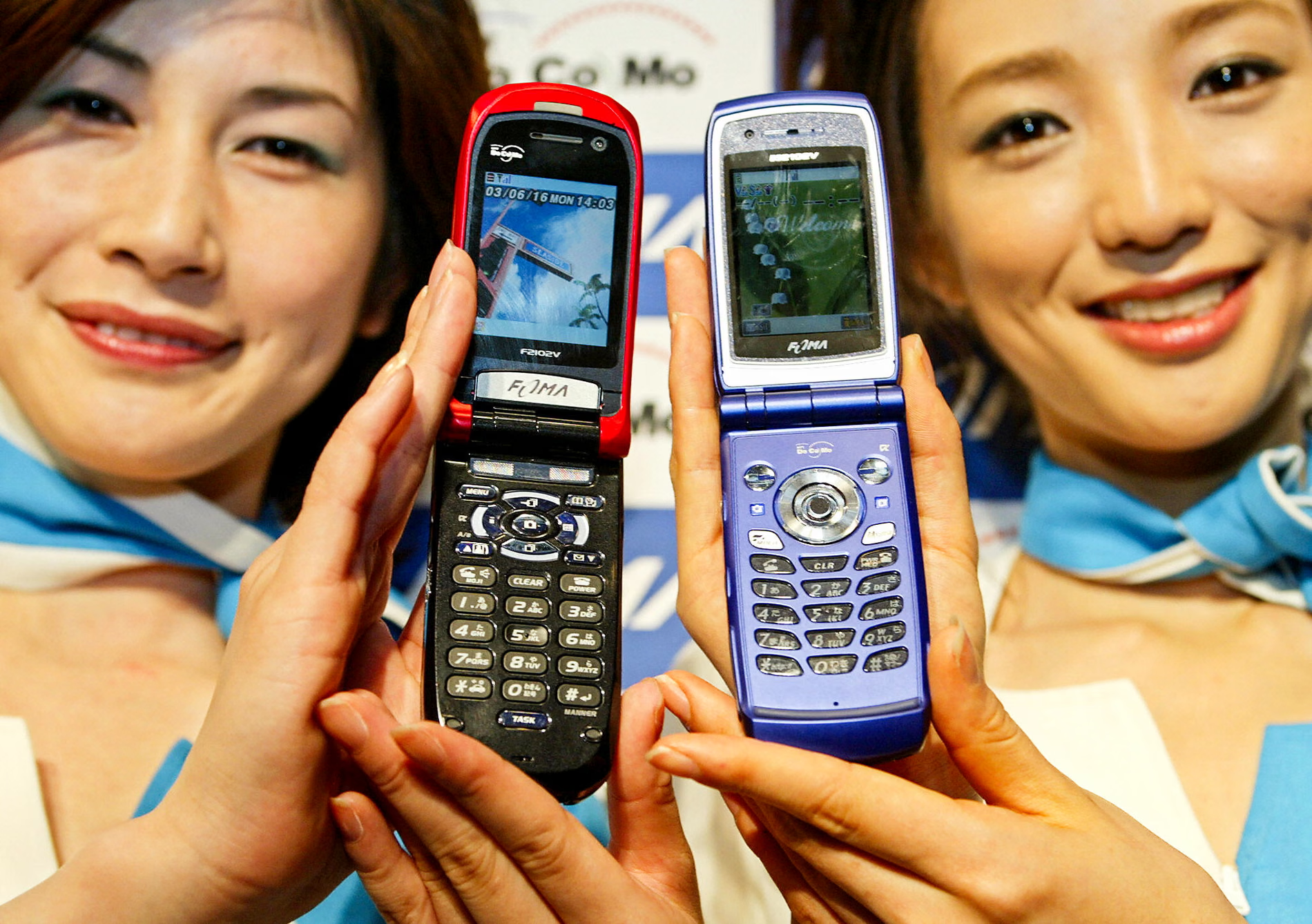
As awareness grows regarding the mental health impacts of endless scrolling, Gen Z is driving demand for low-distraction hardware. Minimalist device manufacturers such as Light and Swiss-based Punkt report strong sales for basic phones, while revived classics like the Nokia 3210 have re-entered mainstream markets. Rather than cutting connection entirely, users are adopting "dumb phones" as dedicated secondary devices to enforce intentional boundaries during personal hours.
The Newtro Movement and Vintage Revival
The embrace of basic phones represents one element of a broader trend known as "Newtro", a concept originating in South Korea that modernizes vintage aesthetics. Beyond mobile devices, younger consumers are purchasing vinyl records, cassette tapes, Sony Walkmans, old iPods, and film cameras from legacy brands like Kodak and Polaroid. The movement celebrates tactile design from the Y2K era, when consumer technology served as an intentional tool rather than an attention-capturing platform.
Reclaiming Agency in the AI Era
The shift comes as the broader internet evolves away from its original open structure. Major search engine overhauls and AI-driven content feeds have transformed standard web browsing into continuous algorithmic loops. For Gen Z, adopting retro hardware offers a way to experience a simpler digital environment, allowing them to reset their relationship with technology on their own terms.
FYI
The resurgence of analog technology highlights an evolving resistance to the "attention economy," where digital platforms monetize user engagement through predictive algorithms. While previous generations transitioned gradually from offline childhoods to smartphone ubiquity, Gen Z represents the first generation seeking to retroactively establish boundaries against pervasive digital access. As major tech conglomerates pivot toward artificial intelligence and automated interfaces, consumer demand for minimalist hardware underscores a growing public desire to separate human connection from data collection and continuous online exposure.
09/08/2026