Peshmerga Official Says Coalition Aid Will Continue Post-September 30
At a Glance
- The Peshmerga Secretary General said the conclusion of the Coalition's mission will not end military aid.
- Mohammed urged Erbil and Baghdad to create a unified system of drones and advanced radars to protect airspace.
- he noted that the 2027 U.S. defense budget allocation for Peshmerga and federal forces remains under active debate.
- Former Peshmerga official stated that advisors based in embassies and consulates will remain to maintain ongoing aid.
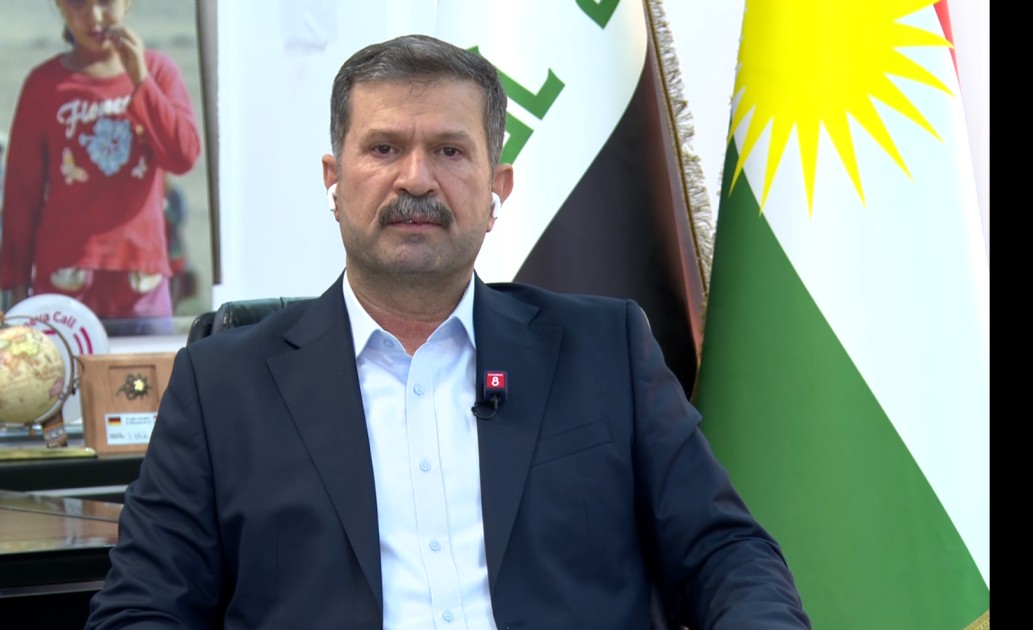
Bakhtiar Mohammed, Secretary General of the Peshmerga Ministry, stated that the conclusion of the International Coalition’s mission on September 30 will not end aid to Peshmerga forces, but Erbil and Baghdad must establish a unified defense mechanism to protect airspace using drones and advanced radar systems.
Key Statement and Focus Area
- The Peshmerga Secretary General emphasized that, "Following September 30, the federal government and the U.S. government will engage in talks to establish a bilateral agreement together. This is currently under discussion, and the Peshmerga forces will be part of this agreement."
- "The Kurdistan Regional Government and the federal government must establish a mechanism to protect Iraqi airspace as a whole,” Mohammed said.
Speaking to Channel8 on Sunday, Mohammed stated that the current assistance tied to the International Coalition's mission will conclude when its mandate ends on September 30.
“However, the end of the coalition's mission does not mean that aid and support for the Peshmerga and federal forces will come to an end,” he stressed.
He highlighted that the 2027 U.S. budget allocation for both Iraqi federal and Peshmerga forces remains under debate with no final decision made.
Mohammed added that the upcoming agreement depends directly on post-September 30 negotiations and finalized U.S. funding levels.
The Secretary-General expressed hope that the work regarding Region 1, one of the two newly created operational commands as part of Peshmerga reforms, would be completed shortly, noting that relevant committees are currently discussing the matter.
He underlined that this process must be finalized before September 30, “because we are entering a new phase of capacity building for the Peshmerga.”
“This will transition the Peshmerga from a phase of reorganization and unification to a phase of empowerment,” he remarked.
Mohammed stressed that Erbil and Baghdad must create a mechanism to protect the skies, "because Iraqi airspace is a matter of sovereignty, indivisible, and constitutes a single entity."
He added that this must include providing drones, counter-drone networks, radars, and air defenses across Iraq, with Kurdistan as an integral part of the system.
Meanwhile, Jabar Yawar, former Secretary General of the Peshmerga Ministry, told Channel8 that, “The Coalition's support will continue but in a different way.”
“The end of the coalition forces' mission in Kurdistan and Iraq does not mean they will completely leave the country,” he said, adding that Iraq has strategic agreements with each of the countries within the anti-ISIS coalition.
Yawar also stated that most foreign embassies in Baghdad and consulates in the Kurdistan Region house military advisors who will maintain ongoing relations with both Iraqi and Peshmerga forces.
FYI
The Iraqi federal government finalized a fixed and final deadline of September 30 to formally end the military mission of the International Coalition against ISIS in Iraq.
Under the bilateral framework negotiated between Baghdad and Washington, the coalition began a phased drawdown.
While troops vacated bases in central and southern Iraq first, the final phase concludes on September 30, shifting the relationship entirely.
The Coalition has provided extensive financial, logistical, and training support to the Kurdistan Region’s Peshmerga forces since 2014, while conditioning long-term aid on the full unification of its politically divided units.
Historically, the Peshmerga forces have operated under separate regional commands, split between the KDP-aligned Unit 80 and the PUK-aligned Unit 70.
Backed heavily by the U.S. and coalition partners, the caretaker Kurdistan Regional Government launched a sweeping institutional overhaul to unify all units under the direct authority of the Ministry of Peshmerga Affairs.
To structure the new unified military, the ministry carved the region into two main operational commands: Region 1 and Region 2, separated geographically by the Great Zab River.
Completing the administrative rollout of Region 1 before the September deadline is a critical benchmark to prove the Peshmerga is ready to transition from a phase of organization to independent empowerment
In recent months, repeated drone incursions against local infrastructure and military bases across the Kurdistan Region and Iraq have highlighted the urgent need for comprehensive measures to secure the country’s airspace.
Dive Deeper: Handpicked Stories for You
Follow Channel8 for continuous updates:
KRG Interior Minister Hopes U.S Military, Financial Aid Continues
Coalition Financial Stipends for Peshmerga Forces to Continue Through September
Germany Concludes Military Mission in Kurdistan Region
Peshmerga Minister Attends Coalition Ceremony and Defense Talks in Jordan
30/08/2026