Coordination Framework Meets Amid Cabinet Deadlock and Disarmament Refusal
At a Glance
- Factions reject Laith al-Khazali for Deputy Prime Minister, leaving 9 portfolios vacant.
- Groups like Harakat al-Nujaba and Kata'ib Hezbollah flatly refuse to surrender weapons.
- A new proposal extends disarmament to the end of 2027 to evade U.S. sanctions.
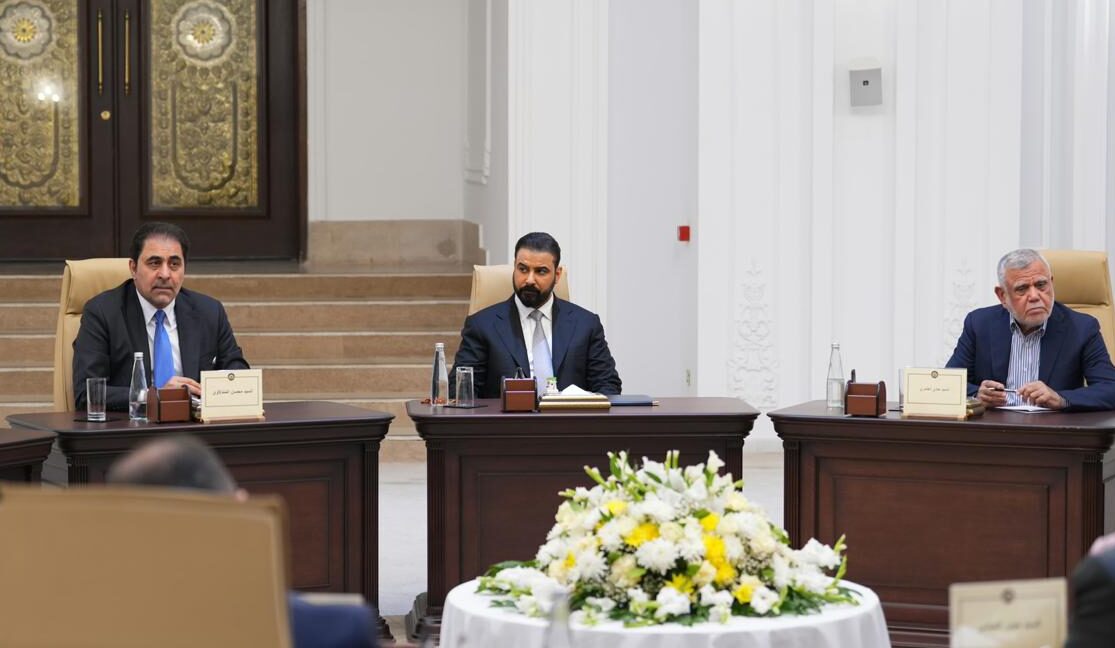
The Coordination Framework is scheduled to hold its weekly meeting this evening to address filling vacant ministerial portfolios, the latest outcomes of negotiations with armed groups, and the draft law governing the Popular Mobilization Forces (PMF).
Key Statements and Focus Areas
- An informed source told Channel8 that the completion of the government cabinet has hit a major gridlock over the appointment of deputy prime ministers.
- With only 23 days remaining, the deadline for the withdrawal of U.S. forces and the simultaneous disarmament of armed groups is rapidly approaching.
The appointment of deputy prime ministers has emerged as a major political gridlock, with several factions opposing the nomination of Laith al-Khazali due to a potential U.S. veto regarding the Asa'ib Ahl al-Haq movement.
This escalating dispute threatens to disrupt the political timeline just as the Prime Minister prepares to submit the ministerial lineup to the Council of Representatives.
Al-Zaidi remains resolute in his stance to link the final withdrawal of U.S. forces directly with the simultaneous disarmament of all domestic armed factions.
Shiite leaders, including Nouri al-Maliki and Hadi al-Amiri, have publicly rejected the proposed timeline, declaring that no official deadline has been established for the disarmament of armed factions.
Armed groups, most notably Harakat al-Nujaba and Kata'ib Hezbollah, have openly defied the government by publicly refusing to surrender their weapons.
The negotiating committee consisting of al-Maliki, al-Amiri, and Mohammed Shia al-Sudani has reached a dead end due to the groups' refusal.
An emerging proposal suggests initiating the weapons collection process via a public announcement only after Coalition forces withdraw—a strategic move aimed at shielding Iraq from U.S. sanctions and preventing political embarrassment for the Prime Minister.
The process of collecting weapons will last until the end of 2027 and will mainly focus on organizing the PMF.
The proposed strategy focuses on systematically collecting weapons while effectively severing the political ties between domestic parties and the PMF.
FYI
Nine out of 23 ministerial portfolios remain vacant as Prime Minister Ali al-Zaidi seeks to finalize his cabinet amid fierce political deadlocks over deputy prime minister positions.
Regarding disarmament, al-Zaidi maintains a resolute stance that all armed groups must surrender their weapons simultaneously with the upcoming U.S. troop withdrawal deadline.
Three armed groups—Saraya al-Salam, Asa'ib Ahl al-Haq, and Kata'ib al-Imam Ali—have actively participated in handing over unregistered weapons to state authorities so far.
During a recent meeting with Coordination Framework leaders, Harakat al-Nujaba’s Political Council head, Ali al-Asadi, stated that the group will not compromise on the weapons of the resistance, arguing that their arsenal is ideological, unconfined by borders, and vital to countering regional threats.
The issue of collecting the weapons of these groups and reorganizing the status of the Popular Mobilization Forces is considered one of the most complex files facing the Iraqi government, especially at a time when political disputes within the Coordination Framework have deepened and the time for the withdrawal of U.S. forces is approaching.
It is still not clear whether the United States will agree to this long-term plan of the Shiite leaders which lasts until the end of 2027, or will confront them with economic sanctions.
Dive Deeper: Handpicked Stories for You
Follow Channel8 for continuous updates:
State Administration Coalition Discusses Strategy To Shield Economy From Sanctions
State Administration Coalition Backs September 30 Deadline on Arms
Lack Of Funds Stalls Iraqi Interior Security Forces Retirement Bill
07/09/2026