Hussein and Araghchi Emphasize Regional De-escalation in New York
At a Glance
- Iraqi Foreign Minister and Iranian counterpart met in New York to review ongoing indirect U.S.-Iran negotiations and coordinate regional de-escalation.
- Araghchi provided an overview of third-party mediated talks with Washington.
- The ministers evaluated the outcomes of the recent multi-nation summit held with U.S. President to assess international contributions toward regional dialogue and security.
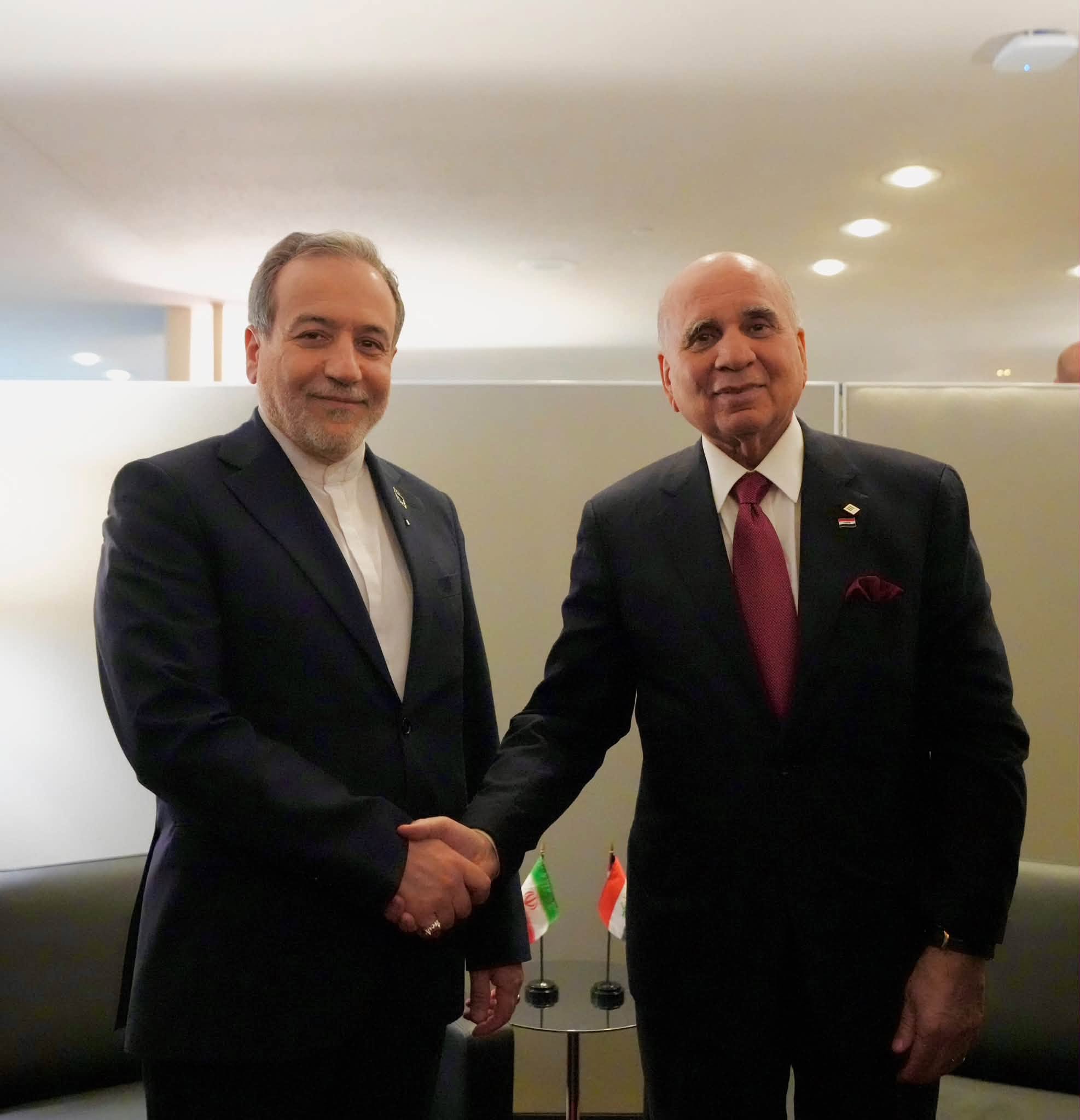
Iraqi Foreign Minister Fuad Hussein and his Iranian counterpart Abbas Araghchi reviewed ongoing U.S.-Iran negotiations, stressing the necessity of supporting diplomatic efforts aimed at "ending escalation and preventing the further expansion of tensions."
Key Statements and Focus Area
- The Iraqi Foreign Ministry stated that Minister Fuad Hussein “stressed the importance of continuing diplomatic efforts and dialogue among the parties concerned in a manner that contributes to containing tensions, preventing their further escalation, and preserving regional security and stability.”
- The statement noted that the meeting focuses on bilateral ties, regional developments, and the necessity of maintaining ongoing diplomatic consultations to address current challenges.
- According to the state-run Islamic Republic News Agency, Minister Araghchi called on regional nations to maintain good neighborly relations, specifically urging them to prevent external parties from utilizing their territories or facilities to launch actions against Iran.
Meeting on the sidelines of the UN General Assembly in New York, the Iraqi Foreign Ministry said in a statement on Wednesday that both sides discussed supporting diplomatic efforts aimed at regional de-escalation, security, and stability.
According to the statement, Araghchi provided an overview of the ongoing indirect U.S.-Iran discussions mediated by a third party on the sidelines of the UN General Assembly in New York, which aim to reduce regional escalation and explore avenues to reopen the Strait of Hormuz to maritime navigation.
The discussion also reviews the outcomes of the summit convening the Gulf Cooperation Council states, Iraq, Jordan, Syria, Lebanon, Egypt, and Türkiye in the presence of U.S. President Donald Trump, assessing how regional and international contacts can support ongoing de-escalation and dialogue efforts.
Both sides further emphasized "the importance of continuing consultations and coordination on regional developments, supporting diplomatic efforts aimed at ending escalation and preventing the further expansion of tensions, and enhancing opportunities for dialogue and the achievement of peaceful solutions, thereby contributing to consolidating regional security and stability.”
Meanwhile, IRNA reported that Araghchi attributed the instability in the Strait of Hormuz to military actions by the United States and Israel, stating that restoring maritime security requires a cessation of U.S. operations in the area.
FYI
The bilateral meeting between foreign ministers in New York follows months of military conflict and maritime friction between the United States and Iran over the nuclear enrichment program and control of the Strait of Hormuz.
High-level talks between the United States and Iran took place on Tuesday in New York on the sidelines of the 81st United Nations General Assembly.
The sessions were mediated by Qatari diplomats to de-escalate the ongoing military conflict and explore the reopening of the Strait of Hormuz.
Trump described the three-hour indirect meeting between U.S. and Iranian officials as "very good" and "very productive," stating that another round of diplomatic talks is already scheduled for the "very near future."
During his main address to the United Nations General Assembly, Trump defended the seven-month war against Iran, warning that Tehran faces a choice between a peaceful diplomatic settlement after the upcoming U.S. midterm elections or the complete "obliteration" of the Islamic Republic.
Iran formally proposed three conditions during talks, lifting the U.S. naval blockade, releasing frozen financial assets, and ending regional hostilities, promising to fully reopen the Strait of Hormuz within seven days if Washington complies.
Dive Deeper: Handpicked Stories for You
Follow Channel8 for continuous updates:
Talabani Hails Historic U.S.-Iran Talks as Victory for Global Security
Trump Warns Tehran As Iran War Dominates UN Speech
Ghalibaf Says Hormuz Will Remain Closed Until Iran's Conditions Met