Trump Hosts Xi in Washington as Trade and Strategic Rivalry Dominate Summit
At a Glance
- U.S. President Donald Trump is hosting Chinese President Xi Jinping at the White House on Thursday for a state summit.
- Xi's visit is his first to Washington in more than a decade and the leaders' second meeting this year.
- Washington and Beijing have extended their tariff truce until January 10, 2027, creating space for further trade negotiations.
- Taiwan, artificial intelligence, rare earths, Iran and military communications are also expected to feature in the talks.
U.S. President Donald Trump is hosting Chinese President Xi Jinping at the White House for a high-profile state summit aimed at maintaining stability in relations between the world's two largest economies despite deep strategic and economic rivalry.
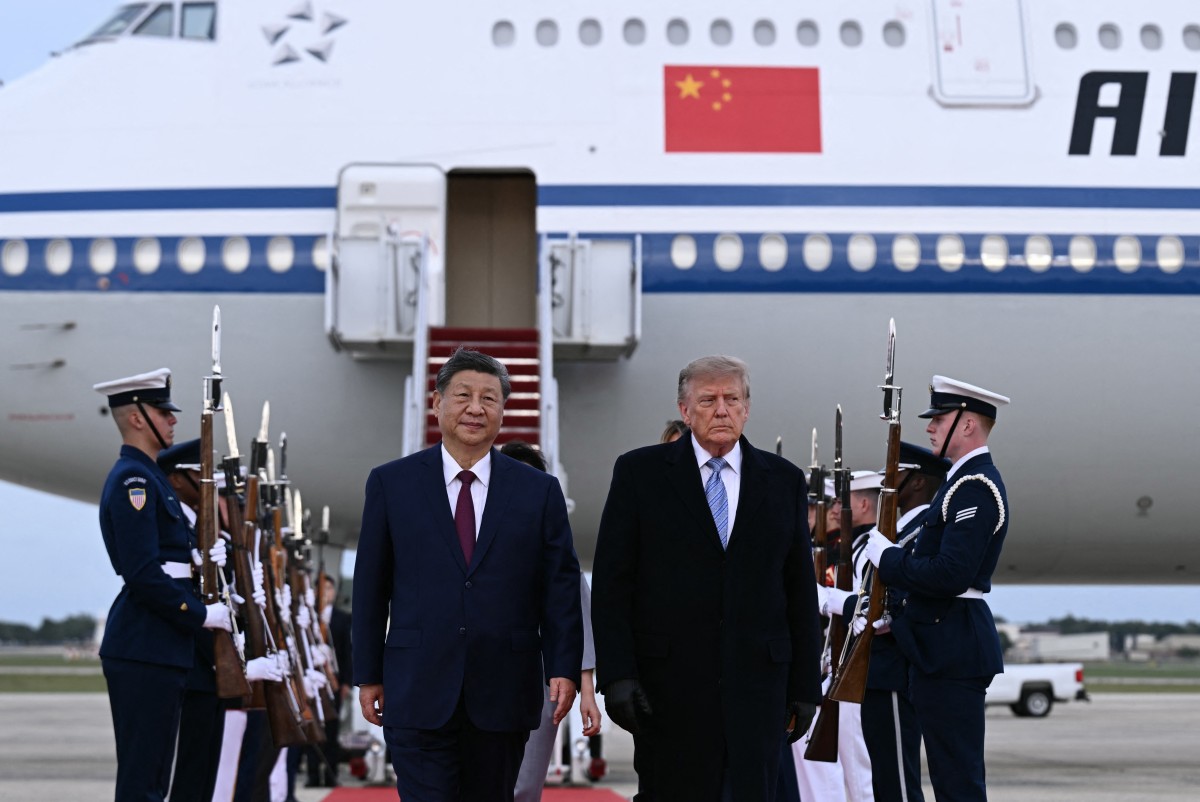
Xi arrived in Washington on Wednesday and was personally welcomed by Trump at Joint Base Andrews in a rare gesture that underscored the symbolic importance of the visit.
Key Statements
“China and the United States should be partners, not rivals.”
— Chinese President Xi Jinping, in remarks following his arrival in Washington.
“This is really the historical reincarnation of what we often referred to in antiquity as single combat.”
— Former U.S. Deputy Secretary of State Kurt Campbell, describing the meeting between Trump and Xi.
Trade Truce Extended
The summit comes after U.S. and Chinese officials agreed to extend their existing tariff truce until January 10, 2027.
The arrangement pauses a trade confrontation in which reciprocal tariffs had previously exceeded 100 percent, while giving both sides additional time to negotiate broader trade arrangements.
Potential outcomes include agreements involving U.S. agricultural exports, Chinese purchases of Boeing aircraft, non-tariff barriers, drug trafficking and additional economic measures.
U.S. Trade Representative Jamieson Greer has said the two countries are expected to make announcements concerning agriculture and non-tariff barriers.
Taiwan and Security
Taiwan remains one of the most sensitive issues in the relationship.
China claims Taiwan as part of its territory, while the island is self-governed. Washington maintains unofficial relations with Taipei and provides it with military equipment.
Xi is expected to raise U.S. arms sales to Taiwan, while Trump has previously described a potential arms package as a negotiating tool.
The summit is also expected to address military-to-military communication, with U.S. Secretary of State Marco Rubio discussing the possibility of an AI-related crisis communication mechanism modeled partly on Cold War-era hotlines.
Artificial Intelligence
Artificial intelligence is emerging as another area where Washington and Beijing face both competition and shared risks.
Officials from both countries have discussed establishing a dialogue on AI, including mechanisms to prevent dangerous incidents involving advanced systems from escalating into wider economic, security or military crises.
At the same time, Washington is expected to maintain restrictions on China's access to advanced U.S. technology, reflecting the broader competition over AI and strategic technologies.
Iran and Global Issues
Trump and Xi are also expected to discuss the war in Iran and its wider impact on energy supplies, trade and regional stability.
Washington has sought Chinese assistance in putting pressure on Tehran, but Beijing has maintained close economic ties with Iran and has shown limited willingness to adopt Washington's approach.
FYI
The Trump-Xi summit highlights the increasingly complex relationship between Washington and Beijing: both governments have an interest in preventing economic confrontation from escalating, while continuing to compete over technology, trade, military influence and strategic supply chains.
The extension of the tariff truce provides a temporary framework for negotiations, but major disagreements remain over Taiwan, advanced technology and China's control of critical minerals. The summit's significance therefore lies not only in any immediate agreements, but also in whether both sides can establish mechanisms for managing competition and preventing disputes from escalating.
Dive Deeper: Handpicked Stories for You
Follow Channel8 for continuous updates:
Pezeshkian Confronts Trump With Wartime UN Speech
British Prime Minister Burnham Meets U.S. President Trump At UNGA

.jpg)
.jpg)
.jpg)
.jpg)