SpaceX Starship Reaches Orbit but Booster Lost in Failed Catch Attempt
At a Glance
SpaceX's Starship spacecraft reached orbit on Friday in its boldest test yet.
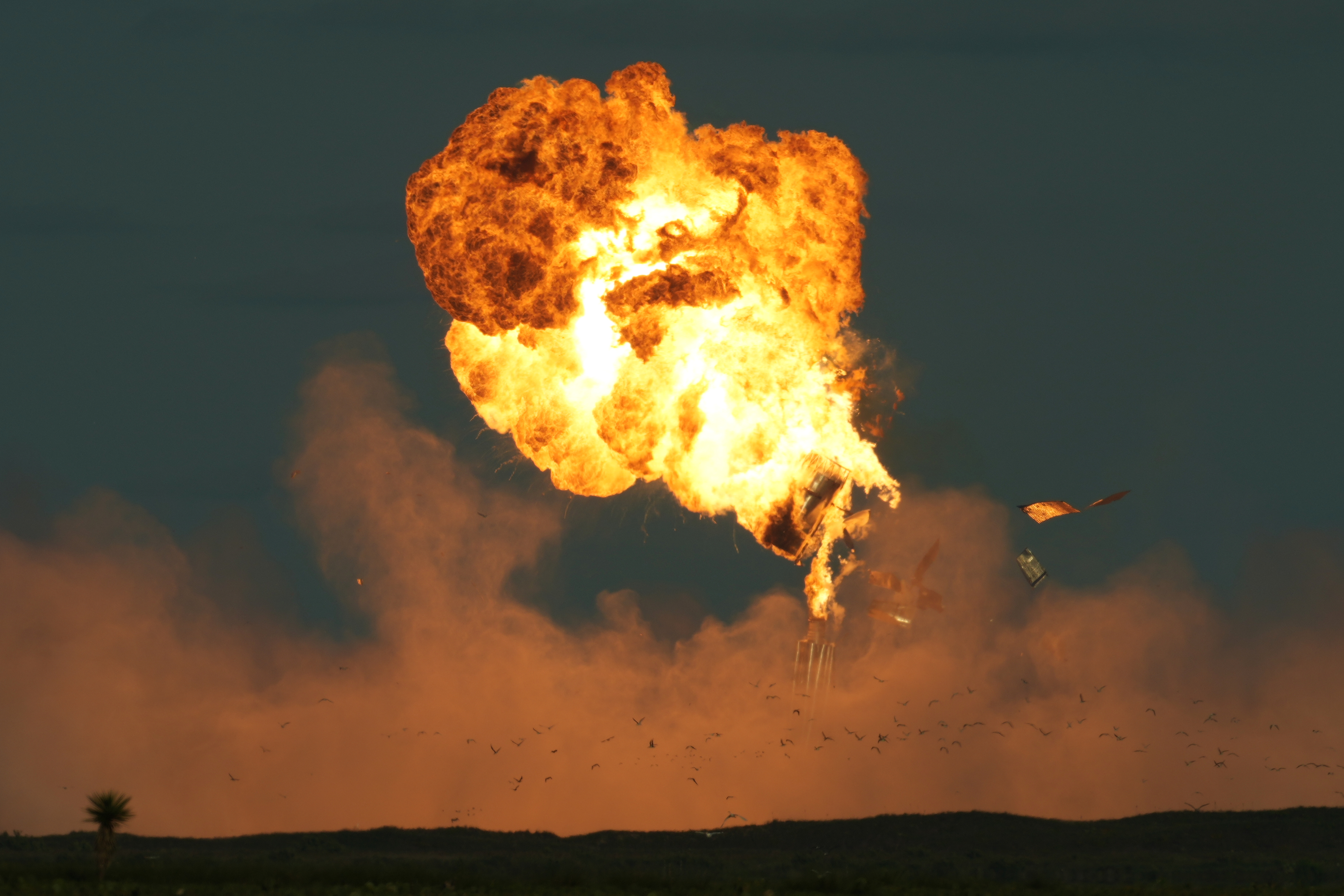
The first-stage booster fell into the Gulf of Mexico and exploded instead of returning to the pad.
The spacecraft will try to return to the launch tower on Saturday.
SpaceX's attempt to recover its entire Starship at the launch pad was thwarted Friday when the booster fell into the Gulf of Mexico and exploded, though the spacecraft still soared into orbit.
Key Statements and Focus Area
SpaceX on the Miss: "Well, that certainly isn't the news that we had hoped to hear for today." — Kate Tice, SpaceX launch commentator.
SpaceX on Reusability: Falcon rockets "are still not fully reusable. We still throw that second stage away every single flight. Starship, we're going to catch both the first stage and second stage." — Kiko Dontchev, SpaceX Vice President of Launch.
Focus Area: The Starship test flight and SpaceX's push toward full rocket reusability.
Instead of returning to its Texas pad, the booster was diverted to a point offshore, a move Tice said was in line with safety checks meant to protect the pad.
No explanation was given for what went wrong.
It was the first attempt to catch the upgraded 236-foot booster, the production model for moon and Mars missions, and SpaceX had already made three successful booster catches at Starbase, making the miss more surprising.
The spacecraft continued on, dropping off 26 of the company's most advanced Starlink satellites shortly after reaching orbit.
It is to complete 15 laps of Earth at about 170 miles altitude before steering back toward the pad on Saturday, a flight that could last up to 22 hours.
It would be the first time Starship tries to return from orbit and be plucked in midair by mechanical arms on the launch tower.
Together, the booster and spacecraft stand 407 feet tall, the world's biggest and most powerful rocket.
SpaceX plans to begin launching Starships from Florida within months and from Louisiana in a few years.
NASA is paying SpaceX billions to land Artemis astronauts on the Moon, with Blue Origin's Blue Moon as the alternative.
During next summer's Artemis III mission, astronauts will practice docking with both vehicles in Earth orbit, setting the stage for a lunar landing as early as 2028.
FYI
The spacecraft portions of all 14 previous Starships ended up in the ocean, either by design or in flaming wreckage.
The first full-scale test in 2023 ended when engines failed, and the self-destruct system was activated.
September's test was the first to reach orbit, but no stages were recovered.
Elon Musk sees full reusability as the key to the launch rates needed for moon bases and Mars missions.
Dive Deeper: Handpicked Stories for You
Follow Channel8 for continuous updates:
SpaceX Plans $74 Billion Investment in AI Supercomputing Campuses