M. John Harrison Wins 2026 Booker Prize for The End of Everything
At a Glance
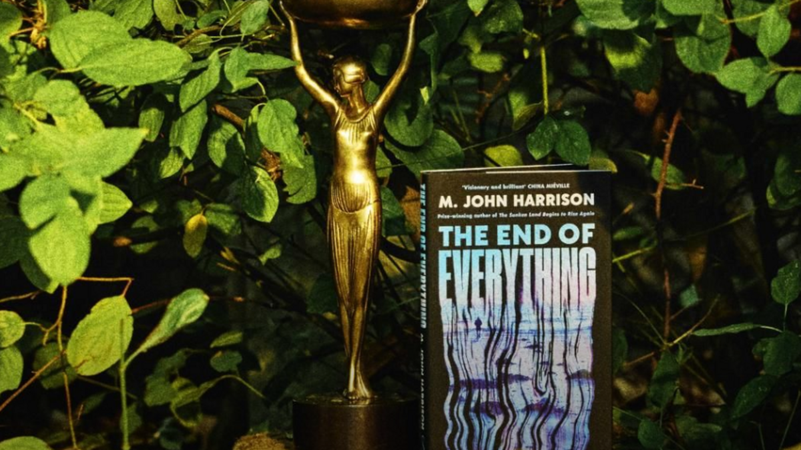
British author M. John Harrison has won the 2026 Booker Prize for his dystopian satire, The End of Everything.
The 81-year-old receives £50,000, becoming the oldest winner in the award’s history.
The novel depicts a near-future society collapsing after an unexplained catastrophe and the arrival of mysterious, shape-shifting entities.
Harrison defeated five other shortlisted authors, including previous winners Douglas Stuart and Marlon James, and Pulitzer Prize winner Elizabeth Strout.
British science fiction and fantasy author M. John Harrison has won the Booker Prize for his dystopian novel The End of Everything, receiving the £50,000 award at a ceremony in London.
Key Statements and Focus Areas
Judges Praise the Novel’s Ambition
Mary Beard, chair of the judging panel, described the novel as:
“The politics of now seen through the lens of the future.”
Beard said the story portrays a society experiencing a catastrophe its people do not fully understand, leaving both its characters and readers uncertain about what is happening.
She also praised Harrison’s writing, with the judges highlighting its “huge ambition” and “exceptional and assured writing.”
A Historic Booker Win
At 81, Harrison becomes the oldest author to win the Booker Prize.
The award marks his first Booker win and a significant milestone in a writing career spanning six decades.
The End of Everything is his 13th novel and was selected unanimously from a shortlist of six books.
The win is also the first Booker Prize victory for its independent publisher, Serpent’s Tail.
The novel is set on England’s Kent coast in the near future, following an unexplained catastrophe that has led to the collapse of social order and the arrival of mysterious, shape-shifting entities known as the iGhetti.
Its central character, Phillip Tennent, makes a living collecting objects washed ashore by the sea. He lives with his elderly aunt Marnie, who carries a pistol, as they attempt to navigate a world where familiar institutions and social norms have broken down.
The story takes a further turn when Phillip discovers a mysterious object on the coast that appears capable of changing its form.
Through this post-apocalyptic setting, Harrison explores uncertainty, social collapse and the difficulty of making sense of a world undergoing profound change.
At the awards ceremony, the judging panel selected Harrison over five other shortlisted writers, including previous Booker winners Douglas Stuart and Marlon James, as well as Pulitzer Prize winner Elizabeth Strout.
The £50,000 prize was presented to Harrison by the previous year's winner, David Szalay, at London's Old Billingsgate.
FYI
Harrison’s victory marks a notable moment for speculative fiction, a genre that has historically had a limited presence among Booker winners. The award also reflects the novel’s engagement with contemporary anxieties through an imagined future, with judging chair Mary Beard describing its approach as examining present-day politics through a futuristic lens. At 81, Harrison also becomes the oldest recipient in the prize’s history, surpassing the previous record held by Margaret Atwood, who was 79 when she jointly won in 2019.
Dive Deeper: Handpicked Stories for You
Follow Channel8 for continuous updates:
Bachtiyar Ali's "The Last Pomegranate of the World" to Appear in Russian
Ancient Greek Coins Used Medusa to Project Military Power
Canadian Publisher Boreal Drops Author Thelyson Orelien After AI Investigation