Claude Helps Deliver Breakthrough in 167-Year-Old Mathematical Problem
At a Glance
Anthropic mathematician Levent Alpöge says he discovered a proof of the Riemann Hypothesis with help from the company’s Claude AI model.
The proof was released as a formal project containing approximately 17 million lines of code written in Lean.
The Lean and Mathlib communities have certified that the formalized proof is correct after conducting independent technical checks.
The hypothesis, first proposed in 1859, is one of seven Millennium Prize Problems, each carrying a $1 million award.
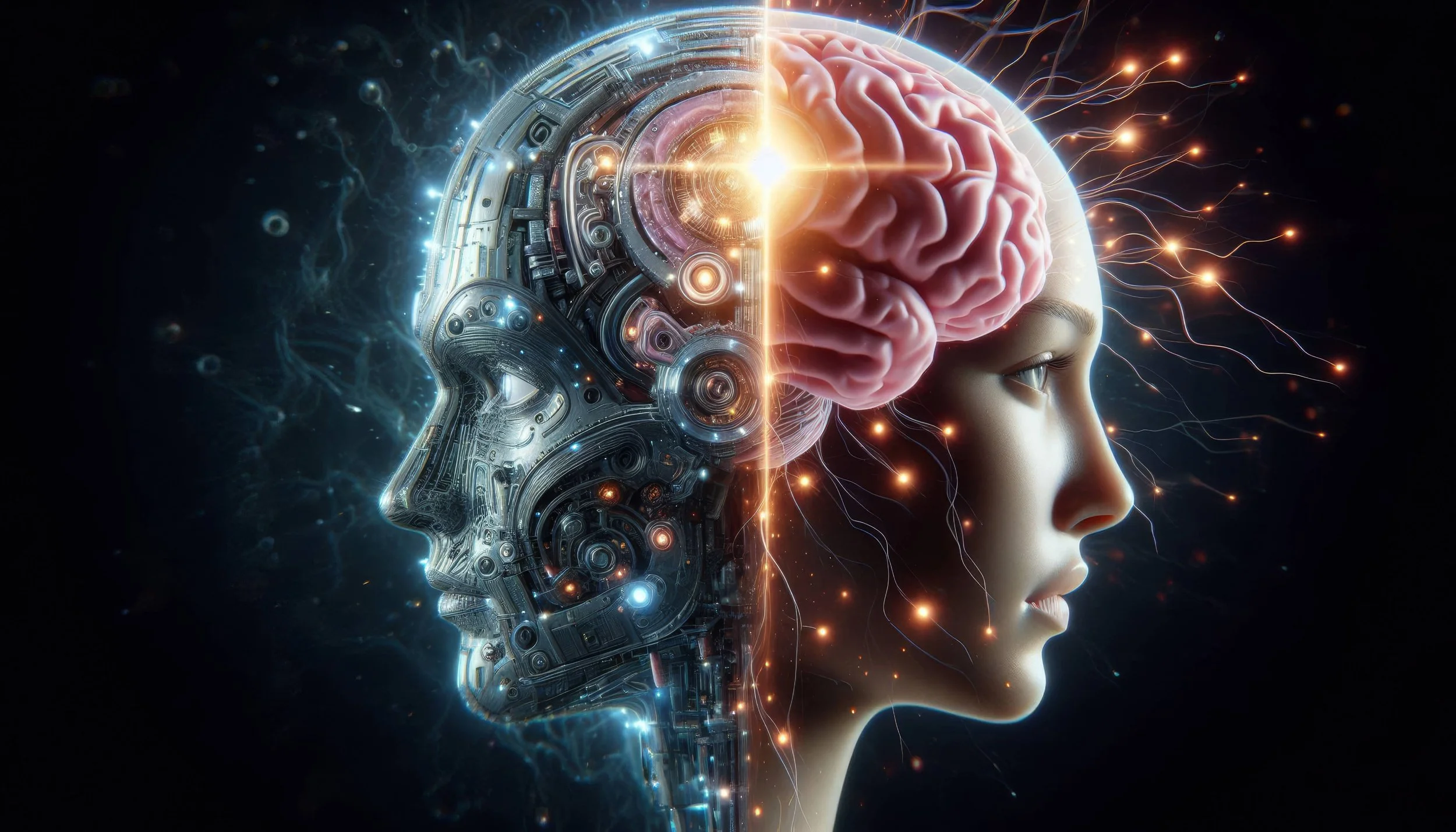
A mathematician at artificial intelligence company Anthropic says he has solved the long-standing Riemann Hypothesis with assistance from the company’s Claude model, in what could become a landmark development in mathematics and AI-assisted research.
Key Statements and Focus Areas
Levent Alpöge’s announcement
“I believe I have, working with Claude, discovered a proof of the Riemann Hypothesis.”
Alpöge made the statement in a four-page note published on November 20, describing the collaboration that led to the proposed solution.
Independent verification
The Lean and Mathlib communities issued a joint statement on November 21, saying they had full confidence in the proof’s correctness.
Their checks included confirming that the code compiled, that it proved the intended mathematical statement, and that the formal proof passed several independent proof-checking systems.
The statement was endorsed by the Lean Focused Research Organization and the Mathlib Initiative.
The role of artificial intelligence
Alpöge said Claude made substantial contributions during the process, while he helped guide the mathematical approach.
The proof was formalized using Lean, a programming language designed to express mathematical arguments in a format that computers can verify.
The released formalization comprises approximately 17 million lines of code.
Levent Alpöge, a mathematician working at Anthropic, announced that he had discovered a proof of the Riemann Hypothesis with assistance from the company’s Claude AI model.
First proposed by German mathematician Bernhard Riemann in 1859, the hypothesis concerns the distribution of prime numbers and is widely regarded as one of the most significant unsolved problems in pure mathematics.
In a four-page note published on November 20, Alpöge wrote that he believed he had found a proof through his work with Claude. He also said the method could be extended to the Generalized Riemann Hypothesis.
Rather than releasing a conventional mathematical paper, Alpöge published the proof in Lean, a formal programming language that enables computers to check mathematical arguments step by step. The project contains approximately 17 million lines of code.
The development received a significant endorsement the following day, when the Lean and Mathlib communities announced that they had completed a series of checks and had full confidence in the proof.
Their assessment included verifying that the code compiled correctly, that it established the accepted formulation of the Riemann Hypothesis, and that the proof passed Lean’s official verification system and several independent checkers.
The verification represents a major step beyond the initial announcement. However, the mathematical ideas behind the proof still need to be explained and examined more broadly by researchers. A conventional, readable exposition of the argument has not yet been published.
The Riemann Hypothesis is one of seven Millennium Prize Problems selected by the Clay Mathematics Institute in 2000. Each carries a $1 million prize, subject to the institute’s requirements, including publication in a qualifying peer-reviewed journal and a period of at least two years of scrutiny.
FYI
The development highlights the growing role of AI in advanced mathematical research. The significance is not simply that an AI model assisted with a difficult problem, but that its contribution was incorporated into a formal proof that could be checked by independent computer systems. If the mathematical community continues to validate and understand the result, it could mark a major milestone in both number theory and AI-assisted scientific discovery. The announcement also follows recent claims by other AI researchers of progress on major mathematical problems, intensifying debate over how artificial intelligence may change scientific research.