Kirkuk Governor Blames National Grid Shortage For Power Crisis
.jpg)
At a Glance
Kirkuk Governor addresses the ongoing energy emergency.
Prime Minister investigates Kirkuk’s escalating private generator pricing crisis.
Federal committee arrives Wednesday to implement radical infrastructure solutions.
Commercial diesel prices skyrocket from 50,000 to 260,000 dinars.
A federal investigation is underway as Kirkuk Governor Mohammad Samaan Agha maintains that national grid shortages and reduced diesel quotas are the true catalysts behind the province's escalating electricity crisis.
Key Statements and Focus Area
Mohammad Samaan Agha defended his leadership amid public backlash, stating, "When guests visit Kirkuk, many people speak out, claiming that Mr. Mohammad Samaan should not receive them because he is a minister rather than the governor. However, whenever a crisis occurs, everyone demands that he act as the governor to confront and handle the situation."
Addressing the root causes of the widespread blackouts, Samaan emphasized that the local government is not to blame for the current energy grid failure. "We must realize that the real reason behind the crisis is the shortage of national electricity supply hours and the reduction in Kirkuk Governorate's share of gas oil," Samaan stated, adding that the fault does not lie with Kirkuk’s local administration despite political claims.
The official explicitly alleged that the sole purpose of the current unrest was "to target the Turkmen governor and no one else."
While validating that public demonstration is a legitimate right, Samaan cautioned citizens against compromising public safety, damaging private property, or undermining security forces.
He confirmed that local voices have successfully reached the Prime Minister, hinting at an imminent decree to refer the generator pricing files to the Commission of Integrity to hold negligent actors accountable.
Urging an immediate end to the street demonstrations to preserve ethnic brotherhood, Samaan called upon local youth to assist law enforcement, reminding residents that a ministerial committee will arrive on Wednesday to devise permanent, rather than temporary, structural remedies.
The Kirkuk governor highlighted that the current energy crisis stands in stark contrast to previous regional administrations. During the era of Dr. Najmaldin Karim, massive provincial budgets and a 150-megawatt injection from investor Ahmad Ismail allowed local authorities to distribute diesel to generator operators completely free or at heavily subsidized rates, keeping prices at a historic low of 3,000 dinars per ampere.
Compounding the current crisis is the severe inflation of fuel markets, he added. In recent years, under the administration of Mr. Rakan Al-Jouboury, a commercial barrel of diesel cost 50,000 dinars, which later rose to 117,000 dinars under Mr. Rebwar Taha. Today, regional geopolitical instability has pushed prices to an unprecedented 260,000 dinars per barrel, making an increase in electricity fees an unavoidable economic reality.
Reflecting on past challenges, Samaan recalled his appearance on Al-Taghier TV channel where he proudly fought to secure fuel quotas to protect citizens from price hikes, stating his record of professional integrity remains unblemished despite facing the harshest operational circumstances in the province's history.
FYI
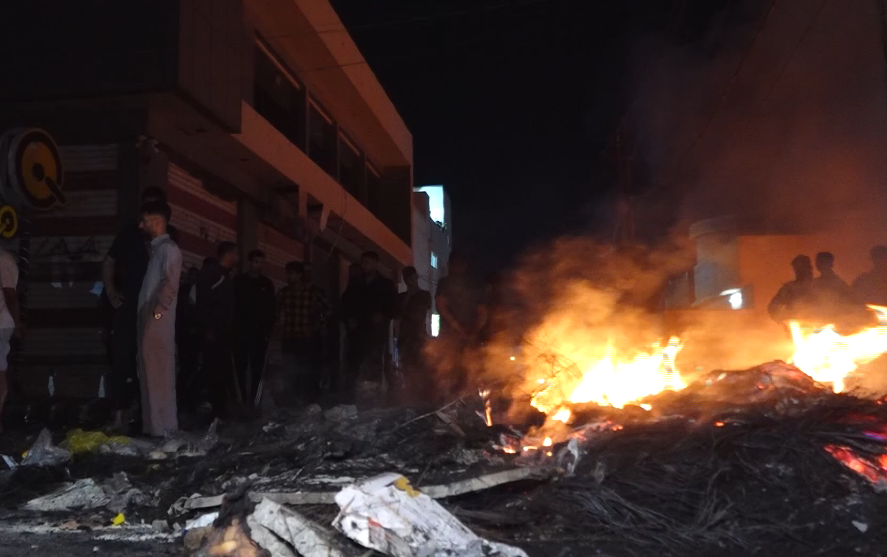
Renewed public protests have erupted across Kirkuk following widespread discontent over escalating private diesel generator subscription fees.
In response to the initial public outcry, the Kirkuk Provincial Council voted to slash the official price per ampere from 18,000 dinars down to 13,000 dinars.
While local citizens welcomed the price reduction, private generator operators flatly rejected the legislative decision. Operators retaliated by collectively shutting down their units, leaving a massive portion of the governorate and its surrounding territories completely without electricity.
Amid the growing unrest, Kirkuk First Deputy Governor Rebwar Taha confirmed he secured federal Ministry of Electricity approval to boost the province's national grid share to mitigate the power shortfall.
This escalating dispute has culminated in widespread blackouts and major disruptions, including angry demonstrators blocking the main highway connecting Kirkuk and Erbil near Pirde.
Dive Deeper: Handpicked Stories for You
Follow Channel8 for continuous updates:
Kirkuk Boosts Grid Power Amid Generator Strike and Protests
Rebwar Taha to Serve as Acting Kirkuk Governor Until Agreement Reached
 (1).webp)