Melting Swiss Glaciers Reveal Centuries of Hidden History
At a Glance
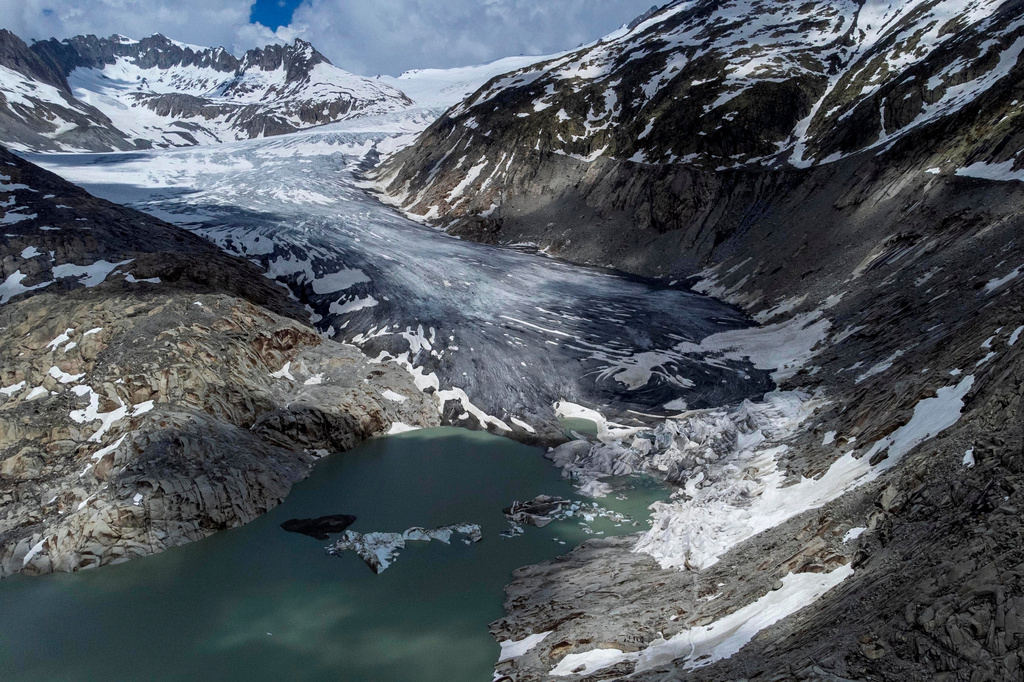
Switzerland lost 5.5% of its total glacier volume in 2026, marking the second-largest annual decline on record.
A new exhibition in Lucerne displays objects uncovered as glaciers retreat.
The recovered items range from ancient artifacts to modern rubbish and mountaineering equipment.
Scientists say glacier ice also preserves evidence of past climates, pollution, and human activity.
A new exhibition in Lucerne, Switzerland, is displaying artifacts and other objects uncovered by melting glaciers, offering a glimpse into centuries of history as rising temperatures accelerate ice loss.
Key Statements and Focus Area
Glaciers and Historical Preservation: “The glaciers are disappearing very, very fast now, and before that completely happens, we want to show to the people that this is a very important and interesting archive of what we will lose, unfortunately.” — Andreas Burri, director of the Glacier Garden.
Uncertain Origins of Recovered Objects: “It’s trash. People either lost it or threw it away. We don’t really know for sure.” — Andreas Burri, director of the Glacier Garden.
The exhibition focuses on glaciers as both records of human activity and environmental archives, preserving evidence of past climates, pollution, and historical events.
The exhibition, titled Treasury of Ice, is hosted by the Glacier Garden, an open-air museum in Lucerne. Its collection includes a bow once used for hunting, a Roman-era statuette, a cow skull, boots, ski equipment, and a primitive Swiss army knife. More recent finds include a crushed mayonnaise tube and a discarded wine bottle.
The objects are displayed on white transport and storage boxes similar to those used to move recovered materials from the mountains to laboratories. Videos, historical charts, and a model illustrating glacier movement provide additional context. A cylinder of extracted glacier ice drips as it is displayed, reflecting the ongoing thaw.
Beyond visible artifacts, glacier ice contains microscopic evidence of environmental conditions across different periods. Pollen, greenhouse gases, and radioactive material from mid-20th-century nuclear tests have been found preserved in ice.
Researchers have also identified soot and charcoal from forest fires during an exceptionally hot and dry period in the mid-16th century, offering evidence of extreme conditions nearly 500 years ago.
The retreat has also exposed the remains of missing mountaineers. In August, the bodies of two Belgian hikers who had disappeared decades earlier were found near the Trift glacier, south of Lucerne. In 2015, the remains of two Japanese climbers missing since 1970 were discovered near the Matterhorn.
FYI
Swiss glaciers have experienced substantial losses as temperatures rise. Glaciologists reported that Switzerland lost 5.5% of its total glacier volume in 2026, the second-largest annual decline recorded. The retreat exposes previously buried material while threatening the long-term preservation of ice that contains environmental and historical evidence.
Glaciers can preserve traces of atmospheric conditions, vegetation, fires, and human activity in layers of ice accumulated over time. As the ice melts, some of that evidence becomes accessible for study, while the archive itself gradually disappears.
Dive Deeper: Handpicked Stories for You
Follow Channel8 for continuous updates:


.jpg)