Tom Barrack Says Post-Assad Transition Offers Kurds Best Chance for Lasting Rights in Syria
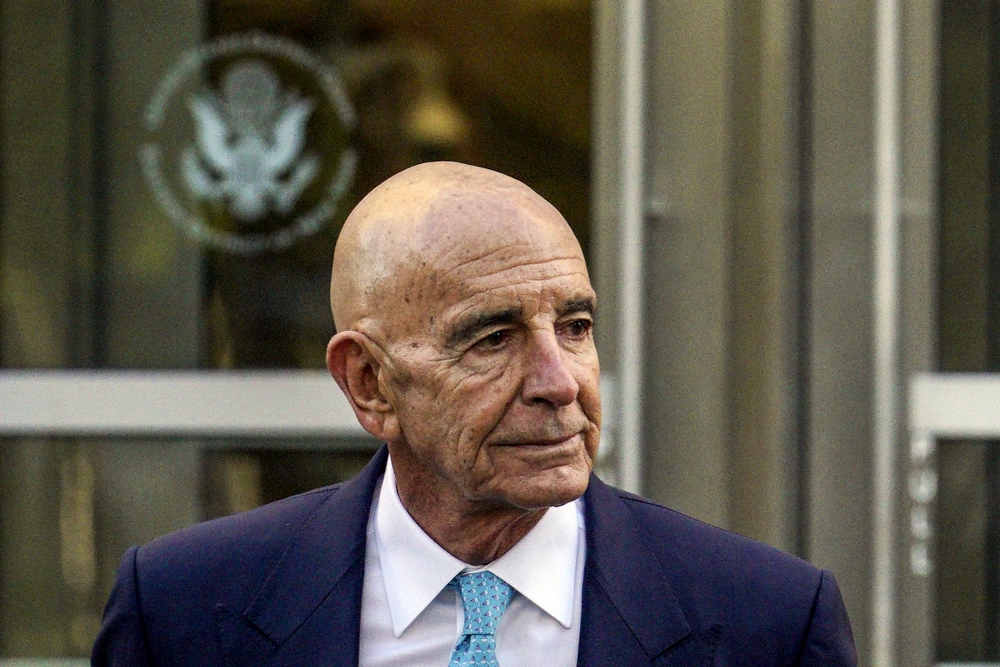
U.S. Special Envoy to Syria Tom Barrack said the post-Assad political transition under Syria’s new government presents what he described as the most significant opportunity yet for Kurdish rights, integration, and long-term stability within a unified Syrian state.
In a detailed statement, Barrack said the government led by the Syrian Interim President Ahmed al-Sharaa offers a pathway for Syrian Kurds to secure full citizenship, cultural protections, and political participation rights he said were systematically denied under former president Bashar al-Assad.
“The greatest opportunity for the Kurds in Syria right now lies in the post-Assad transition,” Barrack said, adding that decades of discrimination had left many Kurds stateless, restricted the use of their language, and excluded them from public life.
Shift in U.S. Role After Defeat of ISIS Territorial Control
Barrack said the U.S. military partnership with the Syrian Democratic Forces (SDF) was originally built around the fight against ISIS, noting that Kurdish-led forces proved the most effective ground partner in dismantling the group’s territorial “caliphate” by 2019.
At the time, he said, the Assad government was neither stable nor a viable counter-terrorism partner, citing its reliance on Iran and Russia. That calculation, Barrack said, has since changed.
“Syria now has an acknowledged central government that has joined the Global Coalition to Defeat ISIS,” he said, referring to Damascus’ admission as the coalition’s 90th member in late 2025. The move, he added, signals a shift toward cooperation with the United States on counter-terrorism.
Integration Agreement Signed
Barrack confirmed that Washington has actively facilitated talks between Damascus and the SDF, culminating in an integration agreement signed on January 18.
Under the deal, SDF fighters are to be integrated into Syria’s national military as individuals, while key infrastructure, including oil fields, dams, border crossings, and ISIS detention facilities such as al-Hol and Shaddadi—is to be transferred to state control.
“The United States has no interest in a long-term military presence,” Barrack said, emphasizing that Washington does not support separatism or federalism in Syria. Instead, he said, U.S. policy prioritizes preventing an ISIS resurgence, promoting national reconciliation, and strengthening state institutions.
Kurdish Rights Central to U.S. Diplomacy
Barrack said U.S. diplomacy is focused on ensuring that Kurdish integration comes with enforceable guarantees, including full citizenship for previously stateless Kurds, constitutional protection of Kurdish language and culture, and political representation at the national level.
He cited measures such as Kurdish-language education and official recognition of Nawruz as examples of protections under discussion.
“This integration represents the strongest chance yet for Kurds to secure enduring rights and security within a recognized Syrian nation-state,” Barrack said.
Risks Remain
Barrack acknowledged ongoing risks, including fragile ceasefires, sporadic clashes, concerns over hard-line factions, and the potential for renewed instability if the process fails. However, he warned that prolonged separation could be more dangerous, increasing the likelihood of chaos or an ISIS revival.
“The alternative is instability,” he said, adding that Washington continues to press for safeguards on Kurdish rights while prioritizing security at ISIS detention facilities.
The United States, Barrack said, remains focused on two core objectives: securing ISIS prison sites currently guarded by the SDF and facilitating the peaceful political integration of Syria’s Kurdish population into a unified state.
20/01/2026