Channel8 Exclusive: Joe Kent On Collapse Of Diplomacy And Start Of Iran War
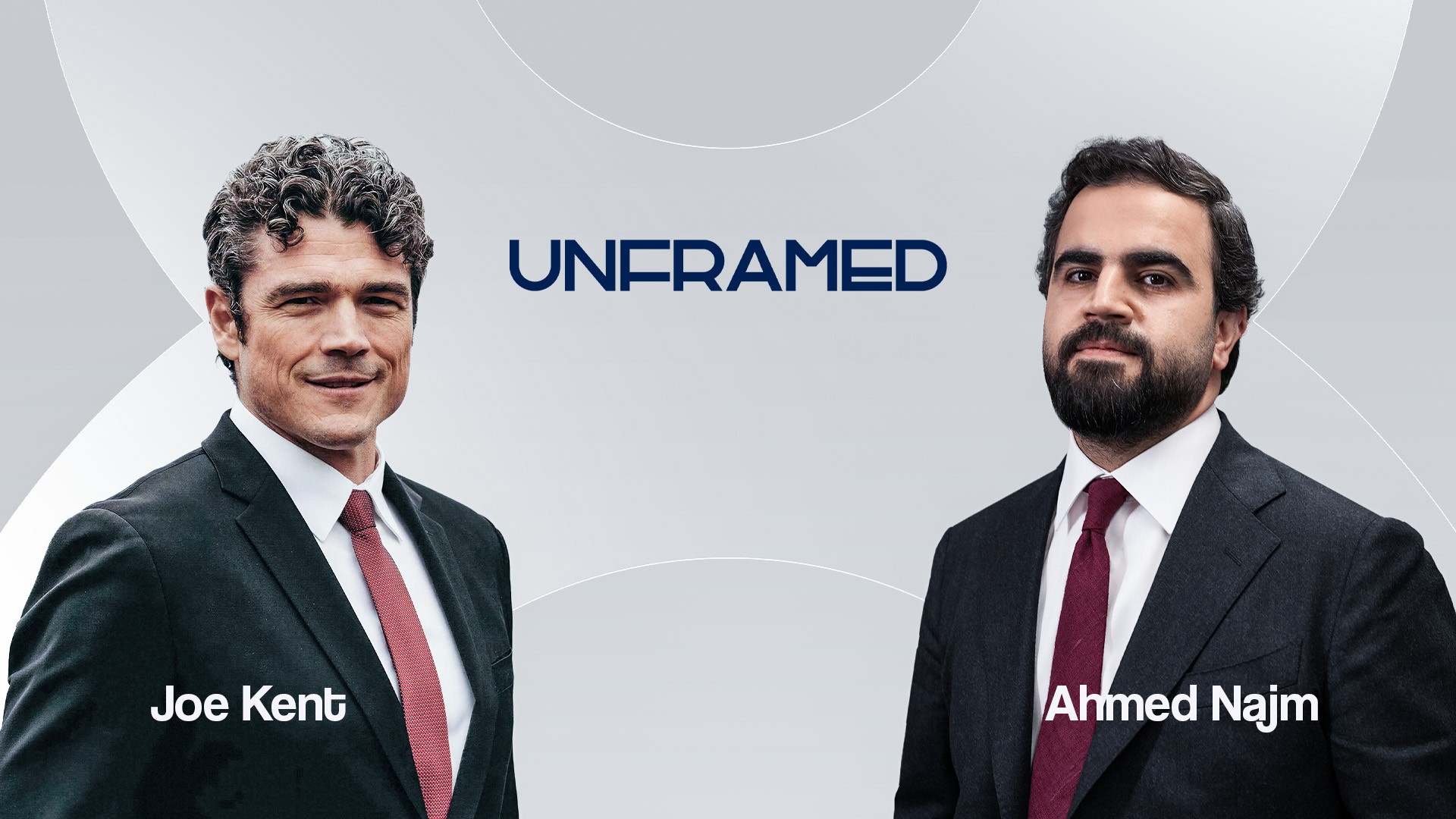
Joe Kent, the former Director of the United States National Counterterrorism Center and the highest-ranking official to resign from the Trump administration over the war in Iran, has said that Israel forced the United States into the current conflict, destroyed an existing diplomatic process, and continues to sabotage efforts to end the war.
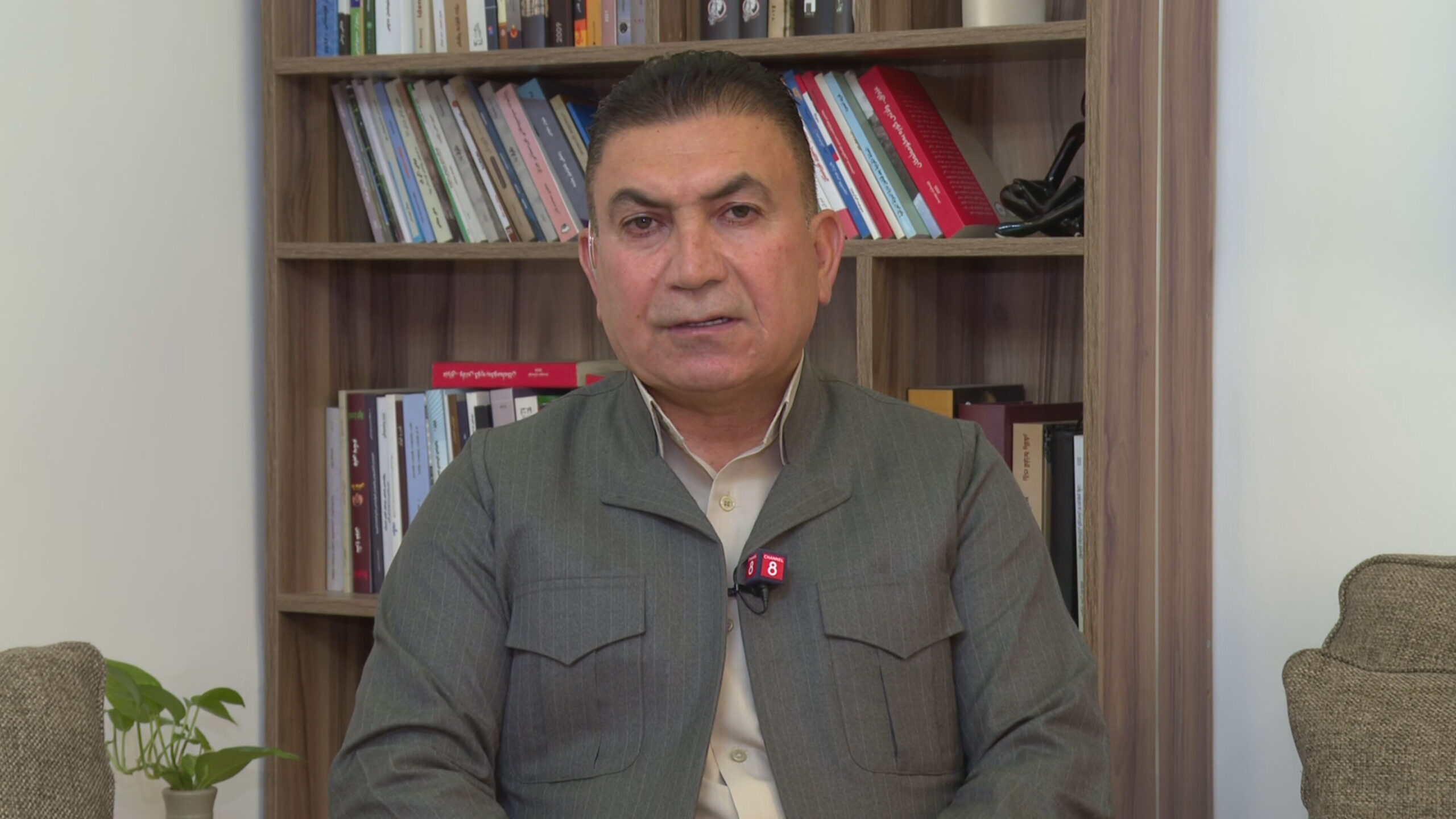
Speaking exclusively to Channel8 in his first appearance on Middle Eastern media, Kent, a retired Green Beret with 11 combat deployments and a former CIA paramilitary officer, delivered a sweeping and at times extraordinary account of how Washington's decision-making process unravelled, who drove it, and what it will cost the region.
The interview was conducted by Ahmed Najm, Chairman of Channel8’s Board of Directors, on Channel8’s UNFRAMED.
A War That Should Never Have Happened
Kent was unambiguous about the origins of the conflict. "Iran posed no imminent threat to our nation," he said, echoing the language of his resignation letter, which he submitted approximately two weeks after the war began.
He described a diplomatic track that had been gaining real momentum before it was dismantled. Prior to the killing of Iran's former Supreme Leader, he said, both Washington and Tehran had agreed on a foundational premise for negotiations: that Iran would not develop a nuclear weapon.
"President Trump has said this for a very long time. He said Iran can't have a nuclear weapon. That was his stated policy." On the Iranian side, he added, the former Supreme Leader had issued a religious decree to the same effect, enforcing it strictly from 2004 until his death.
From that shared starting point, Kent said, substantive talks had been underway. "There was a series, several series of negotiations between us and the Iranians that were discussing the details of what the enrichment would look like, to what percentage, how it would be monitored. These were very pragmatic and ongoing discussions, because we agreed on the main premise."
He said he strongly believed a deal was within reach before the Twelve Day War. Even during that conflict, he noted, Iran showed restraint. "When they knew that we were assisting the Israelis, they still didn't attack us. They didn't attack us until we struck the nuclear facilities." Iran's response, he said, was calculated and limited.
"They fired back an equal number of rockets that we dropped bombs on the nuclear facilities. They fired them at an empty sector of a base in Qatar, and then they immediately said that they wanted to get back to the negotiating table."
The conclusion Kent drew was direct. "It was clear, based on the Iranians' actions, that they wanted a deal. President Trump wanted a deal. But this was a threat to what the Israelis wanted."
Israel's Role: Lobbying, Pressure, and Sabotage
Kent's account of Israeli influence over the decision to go to war was detailed and pointed.
He said Israeli officials used their access to senior American decision-makers, allied voices in the American media, and supporters in Congress to push the president toward war. "The Israelis did a very effective job of using their senior level officials and then also many of their supporters in the American media to convince President Trump that we couldn't allow Iran to have any kind of enrichment, and also to convince President Trump that Iran posed an imminent threat."
The intelligence community, he said, did not support that assessment. "All of our intelligence said that Iran did not pose an imminent threat. They had no intention of actually attacking us."
He described what he called an illusion sold to the president. "They really sold the president a fake idea, or an illusion of an easy equation," saying Israeli officials and their allies pointed to the success of Operation Midnight Hammer and suggested a ground campaign would be equally swift and decisive.
Kent was equally direct about who bears responsibility for the collapse of diplomacy since the war began.
"The Israelis will ensure that anyone that we're negotiating with in Iran is on the chopping block to be targeted. They have already killed several negotiators." He added that every time President Trump signalled a willingness to pause strikes on civilian infrastructure and energy targets, Israeli forces immediately struck those same targets.
"We immediately see the Israelis start targeting those exact targets that the president said not to target, because we want to get to the negotiating table."
The implication, he said, was stark. "I don't personally think that the Iranians are going to take us seriously until we show that we can contain the Israelis."
When pressed by Najm on perhaps the most striking dimension of his account, that the most powerful country on earth cannot publicly name its own negotiating partners because its closest ally would eliminate them, Kent did not soften his response.
"This is why I had to leave the administration to speak about this publicly, because it's absurd. We pay for Israel's existence. We pay for their entire defense budget. We've given them the capability to go on the offensive, yet we are letting them drive this entire war that we're paying for, that we're losing soldiers and fighting."
He added: "Our country should not be led down this path by the Israelis. We have to fix this relationship or we will continue to find ourselves in situations like this in the Middle East."
The Echo Chamber and the Decision to Resign
Kent described the internal environment that preceded and followed the decision to go to war as one in which dissenting voices were systematically shut out.
"The echo chamber that surrounded President Trump following the Twelve Day War and Operation Midnight Hammer isolated him from a lot of this," he said, referring to concerns raised by officials about the effects of the conflict on Gulf states, Iraq, and the Kurdistan Region.
He said that after the war began, he and others worked to provide the president with options for de-escalation. "Myself and others worked pretty diligently to provide the president with some potential ways to just basically say, hey, these were limited strikes, and now we're gonna get back to the negotiating table." Those options, he said, never reached the president. "I don't believe they ever truly reached the president again because of the way the echo chamber was sheltering him."
After approximately a week to ten days, he said, it became clear that the options being developed at his level were not leaving the room. That realisation, combined with mounting casualties, drove his decision to resign. "Once the body bags started coming back and we started losing more soldiers, I thought to myself, if more officials had spoken out in the early phases of the Iraq War, we may have averted major tragedies in Iraq. Throughout the region. ISIS may never have even happened. The war in Syria may never have happened."
Iraq, Kurdistan, and a Region Caught in the Middle
Najm, speaking from Iraq, pressed Kent on how Washington views the country currently being struck from multiple directions simultaneously, by American and Israeli forces targeting militia positions, and by Iranian missiles and drones hitting the Kurdistan Region.
Kent said that before this war, the trajectory had been genuinely positive. "I feel before this war started, we were in a very good place with the Iraqi government. We had good relationships with the Iraqi military. We had great relationships with the Kurdish government." He cited Iraq's cooperation in the transfer of nearly 6,000 ISIS detainees from Syria as a recent example of the partnership functioning well, describing it as a very complicated operation that the Iraqi government handled in a very meaningful way.
That progress, he said, is now at risk. "Just when Iraq was starting to get back on its feet and potentially be a good counterterrorism partner and have some stability in the region, we are back into this cycle of war and chaos once again." He said he feared the conflict would reignite sectarian tensions and set back relations between Washington and both Baghdad and Erbil by several years.
On the question of Kurdish fighters being drawn into the conflict, Kent aligned himself firmly with the position taken by Patriotic Union of Kurdistan President Bafel Jalal Talabani. "Bafel Talabani summed it up very, very well, that the stability that has always been found in the Iraqi Kurdish regions should remain. It should remain as a very stable region, a place where people can go and meet and actually engage in diplomacy."
He raised the possibility that Kurdistan could yet serve as a venue for diplomacy, saying: "Sometime in the future, we can sit down with the Iranians in Erbil or Sulaymaniyah, and work this thing out without firing rockets at each other."
He was equally clear that sending Kurdish fighters into Iran was not a viable option. "There are not enough Kurdish fighters. Even if they wanted to, inside of Iran, to meaningfully take out any part of the Iranian regime. Introducing that instability would actually work against everyone's strategic goals."
He also praised the behind-the-scenes role played by Kurdish leadership in keeping the region out of the conflict. "What the Talabani brothers have done, and what has been done on the Barzani side as well, is going to be very, very key going forward. We have people up there that we can trust, that have great long-standing relationships with us, that understand how we think and also understand how the Iranians think. I think that's invaluable."
AIPAC, Political Financing, and the Question of Leverage
In one of the interview's most expansive passages, Kent laid out in precise terms how he believes Israeli influence operates within the American political system.
He described the American Israel Public Affairs Committee as a very powerful network of wealthy Americans supporting the government of Israel, capable of providing make-or-break money to congressional candidates. "Our congressmen get elected every two years. So they are in a constant cycle of having to fundraise. These PACs are able to come in and say, we can make it so that you don't have to raise any money. We'll do all that for you. We just need you to always vote in support of Israel."
He said the result was that entire political careers had essentially been funded by this very powerful lobby, and that AIPAC had very, very deep reach into a lot of our politicians.
When Najm asked what happens to a congressman or senator who votes against AIPAC's interests, Kent pointed to the example of Representative Thomas Massie. "There are millions of dollars every election cycle that are spent against that man." He added that the overwhelming majority of politicians will do kind of what they're told by whoever cuts the check for them.
On the question of whether the Epstein files formed part of the leverage Israel holds over American political figures, Kent said the matter deserved full transparency. "The more this goes on and the more that we cover up what's in the Epstein files, I think people are going to come to that conclusion whether it's accurate or not. We should just be transparent about the entire Epstein files, the Epstein network, what we know in terms of influence."
The Danger of Escalation and a Warning on Ground Troops
Kent issued a stark warning against any decision to deploy American ground forces inside Iran, describing the scenario as a strategic trap.
"The Iranians would let us land on whatever patch of ground it may be, whether it's one of the islands or whether it's further inside of Iran. I think they would let us come in, get comfortable, and say, hey, we just did a successful military operation." The response, he predicted, would come later. "Around the time that we would be looking to get our troops out, I think the Iranians would barrage our forces with drones and ballistic missiles, essentially trapping them, keeping them as hostages."
He said this dynamic would trigger the gambler's fallacy in American decision-making, with each new casualty used to justify further commitment rather than withdrawal, until the point of exhaustion and retreat. He noted that during the interview itself, reports emerged of an American fighter jet being shot down inside Iran, saying: "It looks like there's an American fighter jet that was just shot down inside of Iran. So they have this capability."
On the Future of the Region
Kent said he feared that if a swift diplomatic resolution was not reached, the region faced a hardening of the most extreme elements inside Iran, a resurgence of sectarian conflict in Iraq, and a decade or more of setback for the stability that had been painstakingly built.
"We are going to be set back by ten to fifteen years, and we're going to see increasing fractures in the sectarian conflict that we saw emerge from the Iraq War."
He said the path to ending the war required restraining Israel first, then using every available diplomatic channel, including Oman, Qatar, Iraq, and the Kurdistan Region, to bring Iran back to the table. "The continued bloodshed is just not in anyone's interest, except for the party that wants this war to continue. And that's the Israelis."
A Personal Reckoning
The interview opened with a moment of shared personal loss. Najm told Kent that his brother Kamaran Najm, a photojournalist, disappeared in 2014 while covering clashes between Peshmerga and ISIS forces, and remains missing to this day. Kent lost his wife Shannon, a fellow special operations soldier, in Rojava during the fight against ISIS.
"We lost people we love to the same war, in the same region," Najm said. "Now that region is burning again. Not because of ISIS. This time because of decisions being made in capitals far away from us."
Kent responded: "I've always felt a great connection to the people of Kurdistan, just because we fought for so long together, side by side, throughout the years."
Asked what keeps him going in the face of an FBI investigation and public accusations of treason, Kent answered simply. "Really, what keeps me going is everyone buried in Arlington National Cemetery. My late wife is there. Hundreds of my friends are there. I promised myself that if I ever was in a position of power to stop the next generation from being brutalized in a war like this, I would do everything I could to speak out about it."
His closing message to the people of the region was direct. "The American people are not being represented well right now by our government, and we haven't been in the past. We want nothing but peace for the region. We want partnership. We are going to do everything that we can to try and bring about an end to this war, so there can be some stabilization, some normalcy, that the people of Kurdistan, Iraq, Syria, and the rest of the region so desperately want and deserve."
Joe Kent spoke to Channel8 in his first appearance on Middle Eastern media. The interview was conducted by Ahmed Najm, Chairman of Channel8's Board of Directors.
There was no immediate response from Israeli or U.S. officials to Kent’s claims.
.jpg)
.webp)