Turkey Moves Closer to Peace Process Law as Parties Negotiate PKK Disarmament Framework
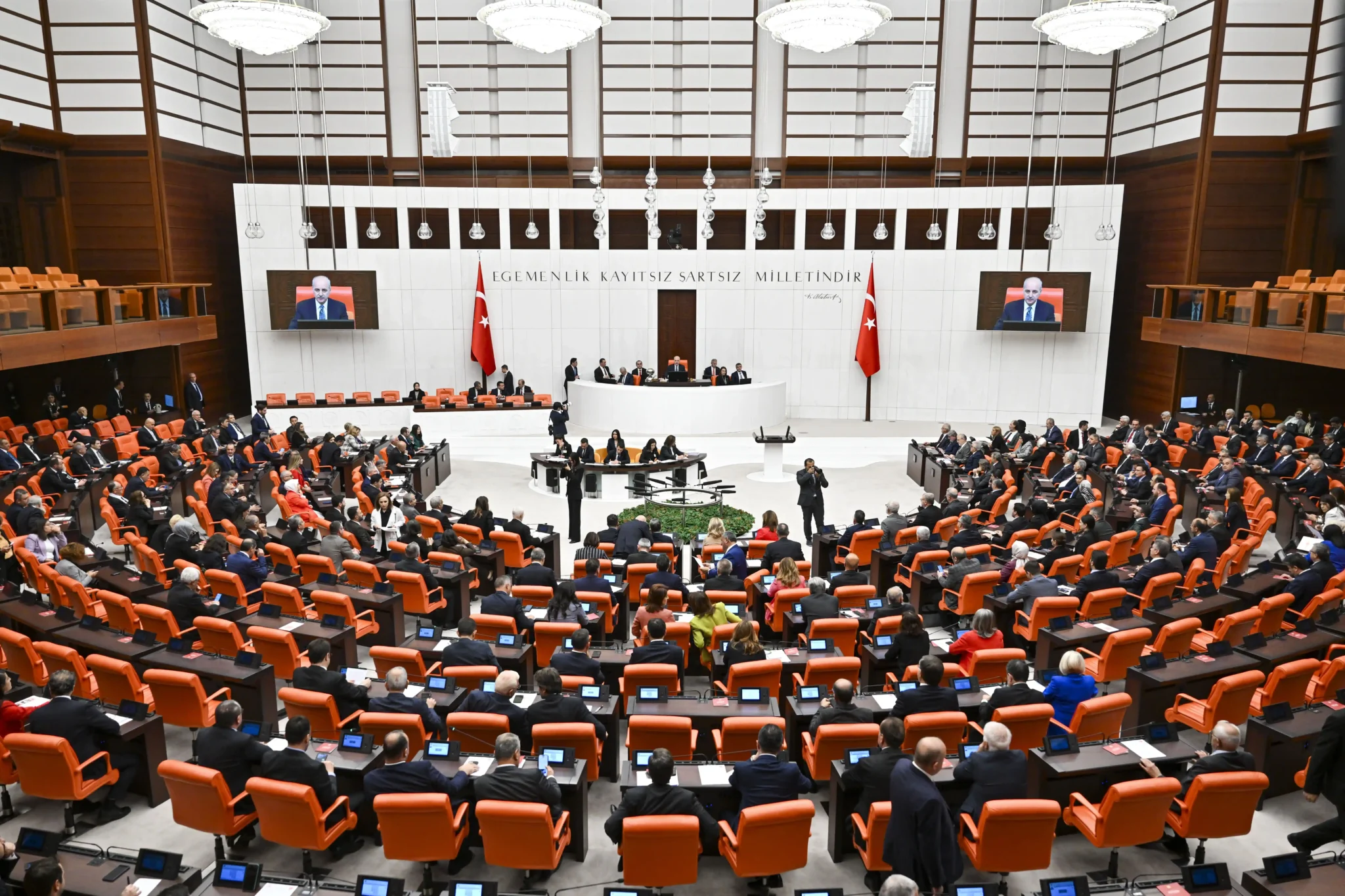
Turkey is moving closer to adopting a new Peace Process Framework Law that would establish the legal basis for the disarmament of the Kurdistan Workers' Party (PKK), regulate the return and legal status of its members, and oversee the implementation of the peace process.
While political negotiations have intensified and Parliament is expected to consider the legislation next month, significant disagreements remain over the treatment of PKK members and the future status of imprisoned PKK leader Abdullah Ocalan.
Parliament Prepares to Debate the Framework Law
According to information obtained by Channel8, the Grand National Assembly of Turkey has postponed its summer recess to allow additional time to finalize several major legislative packages, including the Peace Process Framework Law.
Parliament, which had originally been scheduled to begin its recess on July 24, is now expected to convene in mid-August to debate and vote on the legislation once a final political consensus is reached.
Although negotiations have intensified in recent weeks, the finalized version of the bill has not yet been officially distributed to parliamentary parties. Consultations led by Parliament Speaker Numan Kurtulmuş are continuing in an effort to bridge differences between political factions.
At the same time, Germany's Deutsche Welle Turkish reported that it had obtained key excerpts from the draft legislation, which was jointly prepared by the Turkish Presidency, the Grand National Assembly, and the Ministry of Justice. According to the report, the document will serve as the basis for the proposed law.
Ocalan Briefed as Parties Continue Negotiations
According to the report, imprisoned PKK leader Abdullah Ocalan has already been briefed on the contents of the draft while at Imrali Island prison.
During his latest meeting on July 21, Ocalan reportedly stated that the time has come to establish a formal legal framework for the peace process.
Meanwhile, Speaker Numan Kurtulmus has met with representatives from the Peoples' Equality and Democracy Party (DEM Party), the Nationalist Movement Party (MHP), the Republican People's Party (CHP), and the New Path (Rega Nwe) bloc to gather their proposals. Those recommendations are expected to be incorporated into the final draft.
Despite the ongoing consultations, major political parties maintain that they have not yet received the finalized text of the legislation.
Disarmament, Reintegration, and Oversight
The proposed legislation establishes the legal framework for disarming the PKK and managing the reintegration of its members into civilian life.
According to the draft, a specialized oversight commission headed by a presidential appointee will supervise the implementation of the peace process. The commission will oversee disarmament, coordinate implementation, and manage the reintegration process, with members appointed by relevant government ministries.
To formally conclude the disarmament process, the Turkish Presidency would issue an official decree certifying that all weapons have been surrendered and that PKK military activities have permanently ceased.
Major Disagreements Remain
Despite progress toward compromise, one of the most contentious issues remains the classification of PKK members.
The AK Party continues to insist on distinguishing between different categories of members, while the PKK and the DEM Party reject any framework that separates members into "guilty" and "innocent" groups or excludes senior political figures from legal protections.
These disagreements have yet to be resolved, although political sources expect further compromises over the coming weeks.
Judicial Process for Returning PKK Members
Under the proposed framework, disarmed PKK members returning to Turkey would appear before Ankara Heavy Penal Courts without being automatically placed in pretrial detention.
However, individuals accused of direct involvement in murder or torture would be excluded from any legal amnesty.
The draft also differentiates between violent offenses and political activities. Individuals accused only of political propaganda or organizational membership without direct involvement in violence would not face criminal prosecution.
For those covered by the legislation, prison sentences would be substantially reduced. Offenses currently punishable by ten years in prison would be reduced to four years, while sentences exceeding ten years would be lowered to six or seven years.
Rather than serving those reduced sentences in prison, eligible individuals would remain under judicial supervision. If they complete the supervision period without committing another offense, their criminal records will be cleared. Those who commit new crimes during that period would face cumulative sentencing for both offenses.
Ocalan's Status Still Unresolved
The future status of Abdullah Ocalan remains one of the most sensitive issues in the negotiations.
While the DEM Party and the PKK continue to demand improvements to Ocalan's detention conditions and the creation of legal mechanisms that could eventually lead to his release, the current draft contains no explicit provisions regarding his personal legal status.
According to Turkish news outlet T24, however, practical improvements to Ocalan's living conditions on Imrali Island are expected to be implemented administratively, even though they are not included in the legislation itself.
Legal Protections and Timeline
Unlike the 2012–2015 peace process, during which several members of the Imrali delegation later faced prosecution, the new draft explicitly provides legal immunity for delegates participating in negotiations.
The proposed Peace Process Framework Law would initially remain in force for three to four years. Under the draft, the Turkish Parliament would have the authority to extend its validity by up to four additional six-month periods if necessary.
While negotiations continue over several unresolved issues, government officials and political parties are working toward a final compromise before Parliament reconvenes next month to consider one of the most significant pieces of peace legislation in recent years.
22/07/2026