Iraqi Prime Minister Evaluates Air Defense Operations Readiness
At a Glance
- Prime Minister Ali Faleh al-Zaidi inspects Air Defense Operations Center overnight.
- Review focuses on implementation of the 2026–2031 Air Defense Capability Development Plan.
- Posture review aligns with the scheduled September 30 conclusion of the Global Coalition mission.
- Commander-in-Chief mandates full support to guarantee complete air sovereignty.
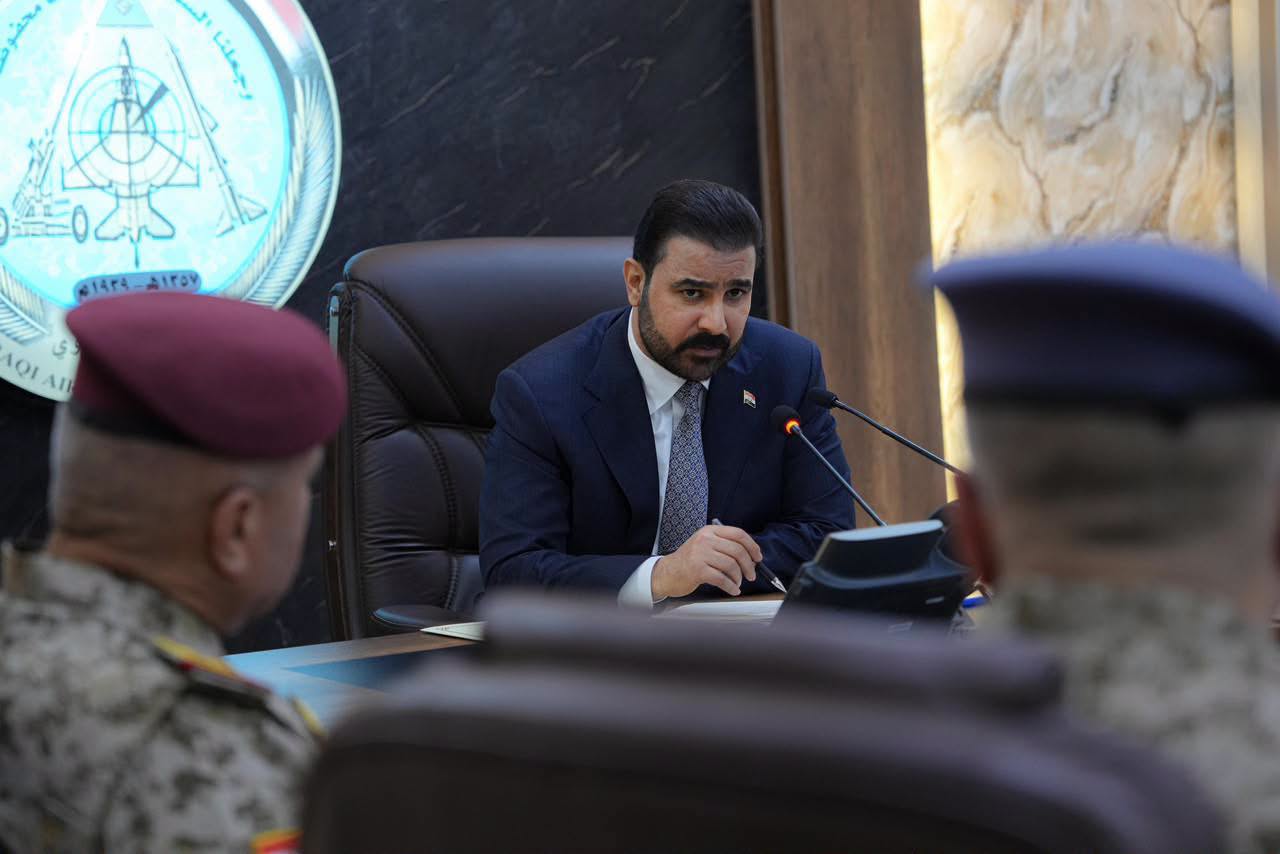
Prime Minister and Commander-in-Chief of the Armed Forces Ali Faleh al-Zaidi conducted a late-night operational inspection of the Air Defense Command Operations Center overnight Wednesday into Thursday, evaluating national readiness as Iraq prepares to assume total responsibility for its airspace ahead of the September 30 deadline for the full withdrawal of U.S.-led Global Coalition forces.
Key Statements and Focus Area
- National Sovereignty and Air Defense: Emphasizing the primary mission of the specialized branch, Al-Zaidi affirmed that "air defense represents the shield of Iraq’s skies and the first line of defense for its sovereignty," adding that robust armed forces form the foundation for maintaining "independent political and military decisions."
- Inviolability of National Airspace: Underscoring firm red lines regarding territory, the Prime Minister declared that "Iraq’s skies and sovereignty are inviolable and that no party will be permitted to violate its airspace or threaten its security."
- Regional Non-Aggression Principle: Addressing regional security dynamics, the Commander-in-Chief stressed that while safeguarding national security, Iraq "will not allow its territory or airspace to be used as a launching point for any attack against neighboring countries."
- Capabilities Expansion Directives: Ordering full executive backing, Al-Zaidi instructed defense leadership that all operational needs be met to deliver "an advanced system capable of protecting Iraqi airspace."
Late-Night Inspection and High-Level Briefings
The late-night visit to the Air Defense Command headquarters was attended by key defense officials, including the Director of the Office of the Commander-in-Chief of the Armed Forces, the Chief of Staff of the Army, and the Secretary-General of the Ministry of Defense. During the session, Prime Minister al-Zaidi received a detailed operational briefing from the Commander of the Air Defense Command detailing current system readiness, coverage across all operational sectors, and ongoing monitoring protocols designed to protect sovereign skies.
Sector Readiness and the 2026–2031 Development Plan
Central to the operational assessment was a detailed presentation on the 2026–2031 Air Defense Capability Development Plan. The multi-year strategic roadmap focuses on establishing an integrated national air defense framework by upgrading radar detection, expanding surveillance coverage, integrating modern surface-to-air weaponry, and enhancing centralized command-and-control infrastructure. The initiative is designed to ensure seamless tactical transitions as national forces assume standalone air domain management.
Strategic Autonomy and Regional Stability
Directing military leadership to accelerate technological and combat upgrades, the Prime Minister reaffirmed that bolstering the armed forces remains a fundamental pillar of state consolidation. Al-Zaidi noted that Iraq's defense capabilities serve as a stabilizing force across the Middle East, reiterating that national decision-making will remain independent and that security forces will continue to act as a bulwark protecting the nation's sovereign borders and airspace.
FYI
The Prime Minister's late-night inspection comes as Baghdad and Washington finalize terms for the formal conclusion of the Global Coalition's military mission by September 30, 2026. As foreign military personnel complete their final drawdown from Iraqi facilities, Baghdad has prioritized rapidly building up its organic radar and air defense shield. With broader regional conflicts frequently spilling into neighboring airspace, Iraqi authorities are seeking to demonstrate full sovereign control over their skies while reassuring regional neighbors that Iraqi territory will remain strictly neutral.
Dive Deeper: Handpicked Stories for You
Follow Channel8 for continuous updates:
Iraqi Prime Minister Meets CENTCOM Chief Over Coalition Withdrawal

.webp)