Nepal-Tibet Floods Leave Hundreds Missing After Collapse
At a Glance
- Rescue teams are searching for hundreds of people missing along the Nepal-China border.
- Nepal reported 165 deaths and 826 missing people.
- Chinese authorities reported hundreds missing in Tibet.
- Helicopters and military teams are being used to evacuate survivors and search affected areas.
- Experts say a glacial collapse triggered the devastating flood.
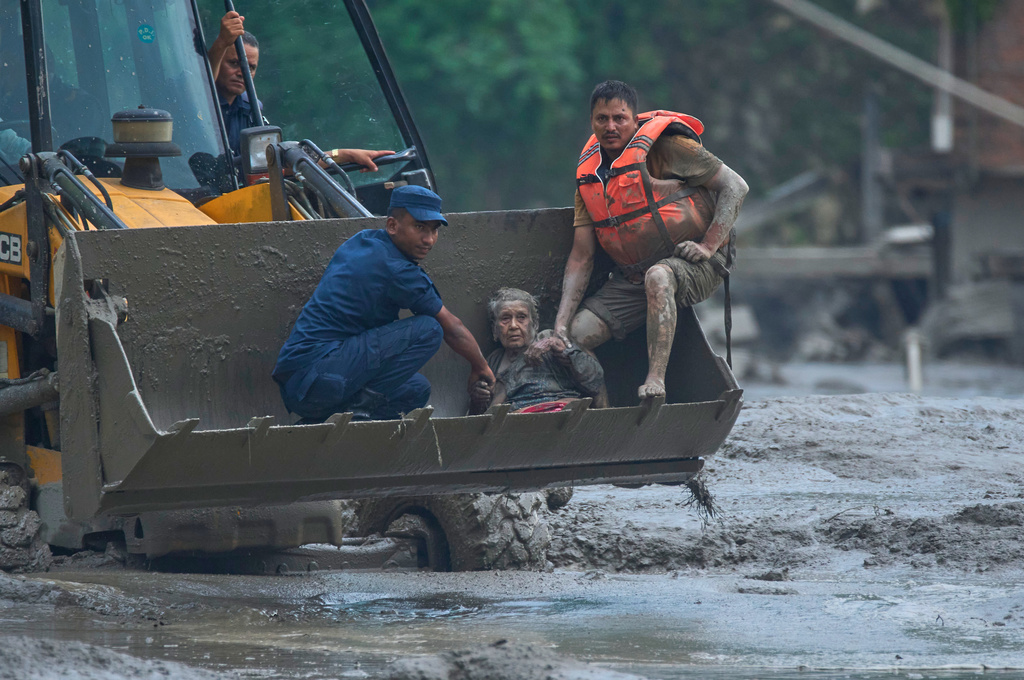
Rescue operations are continuing along the Nepal-China border after a devastating flood swept through mountain communities, leaving widespread destruction and hundreds of people missing.
Key Statements and Focus Area
- Cause of the Disaster: The U.S. Geological Survey initially recorded what appeared to be a magnitude 4.4 earthquake near Kathmandu and the border. It later revised its assessment, determining that the seismic signal came from a glacial collapse rather than an earthquake.
- Glacier Risks: The disaster has renewed concerns about the vulnerability of Himalayan communities to glacier-related hazards. The region contains extensive glacier systems and densely populated valleys that depend on mountain rivers for water, transport, and economic activity.
Nepal’s National Disaster Risk Reduction and Management Authority said 826 people were missing as of Thursday, while the country’s death toll from the flash floods reached 165. Rescue operations were intensified in the worst-affected districts of Nuwakot and Rasuwa.
Across the border in Tibet, Chinese state broadcaster CCTV reported 558 people missing, including 260 foreigners. It also reported three deaths and said two villagers had been rescued.
The floods tore through steep valleys along the Lhende Khola and connected river systems, carrying enormous amounts of water, mud, and debris into communities. Roads were destroyed, vehicles were buried, and buildings were left covered in mud, while travel was disrupted in several areas.
Nepalese authorities deployed army and private helicopters to reach isolated communities. The Nepalese army said it rescued more than 100 people by helicopter on Thursday morning, including at least eight foreign nationals. Teams also evacuated people trapped at facilities associated with the Trishuli hydropower project.
Rescuers recovered bodies downstream in Chitwan district, while dozens of injured people were transported to Kathmandu for advanced medical treatment.
In Tibet, the mudslide near Gyirong Port left surrounding areas covered by more than 1.5 meters of mud on average, with some sections exceeding two meters, according to CCTV. Roads leading to the port were damaged, and communications were disrupted.
Chinese authorities also reported a barrier lake in the direction of the port, creating additional risks for rescue teams. A large military transport aircraft was deployed to carry a response team into the affected area.
The disaster has also affected large numbers of foreign nationals, including people traveling through the region for pilgrimages and trekking. Australia’s Foreign Minister Penny Wong said at least 34 Australians taking part in pilgrimage and hiking groups were missing. Malaysia’s Foreign Ministry separately said 55 Malaysians in Kathmandu could not be reached because of severe infrastructure disruptions.
Nepalese officials had earlier reported missing foreign nationals from several countries, including people traveling toward Mount Kailash in Tibet.
FYI
The Lhende Khola river system experienced another major flood in August 2025, when a glacial lake in Tibet overflowed following high temperatures. Nine people were killed, and infrastructure, including a bridge linking Nepal and China, was damaged.
The latest disaster comes only about 14 months later, underscoring the repeated exposure of communities and infrastructure in the Himalayan border region to sudden glacier- and flood-related hazards.
Dive Deeper: Handpicked Stories for You
Follow Channel8 for continuous updates:
Five Major Causes Driving Global Warming


.jpg)
.jpg)
.jpg)
.jpg)