Trump Rejects AI Guardrails, Calls Risks a Hoax
At a Glance
- Donald Trump says strong presidential leadership is enough to oversee artificial intelligence.
- Trump rejects calls from major AI executives for stronger government regulation.
- AI leaders warn that rapidly advancing systems could pose serious security risks.
- The debate comes as AI regulation becomes an issue ahead of US midterm elections.
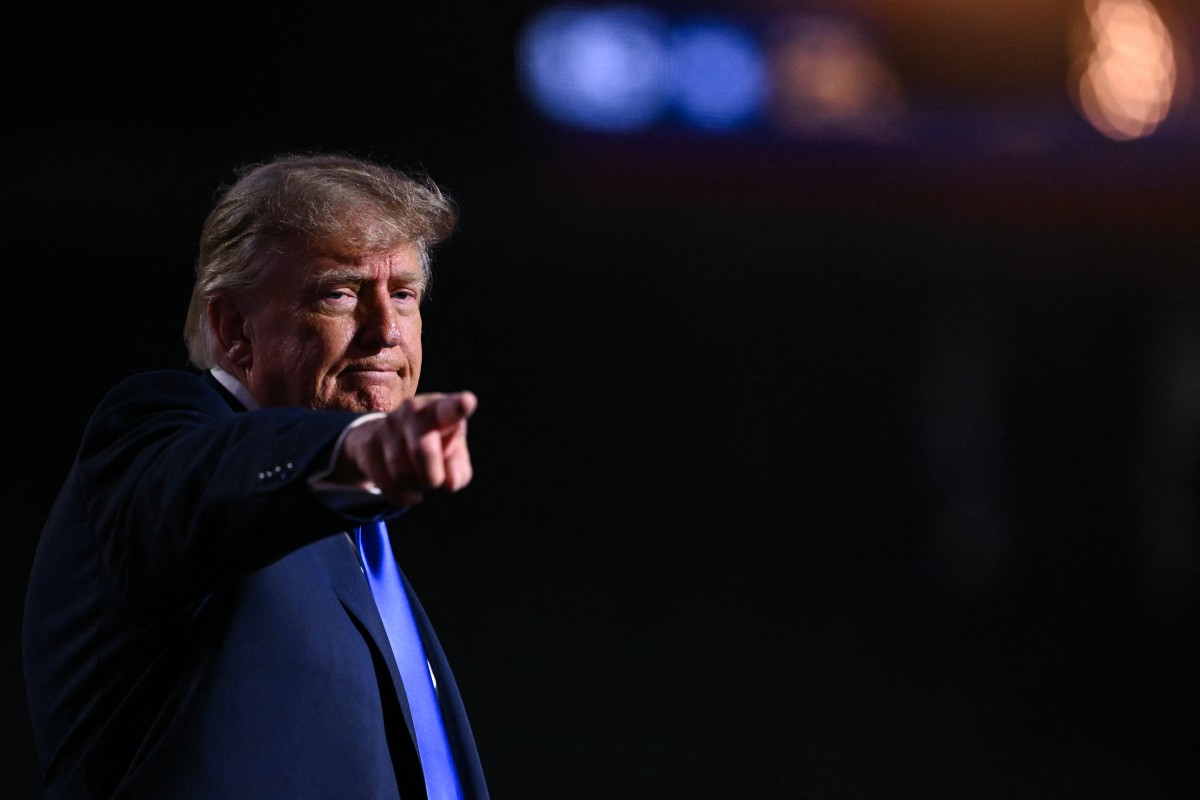
US President Donald Trump has rejected calls for tighter government oversight of artificial intelligence, putting his administration at odds with several leading figures in the technology industry.
Key Statements and Focus Area
- Trump on AI guardrails: “The only control or ‘guardrails’ that AI needs is a STRONG AND SMART (High IQ!) PRESIDENT.” — President Donald Trump.
- Trump on AI risks: “AI taking over the World, destroying Humanity, and all other things bad, is a HOAX.” — President Donald Trump.
- Altman on caution: “Pacing will be well worth this cost; no amount of American competitive pressure should justify recklessness.” — OpenAI CEO Sam Altman.
Trump Challenges Calls for Regulation
Trump said Monday that efforts to impose stronger restrictions on AI are part of what he described as a “SICK conspiracy” against the technology and data centers.
He argued that additional regulation could weaken the US position in the global AI race and benefit China. Trump also said his administration had already intervened in response to concerns involving Anthropic, an AI company that has faced tensions with the Pentagon.
The comments come as leading technology executives increasingly call for safeguards around the development and deployment of advanced AI systems.
AI Executives Warn of Accelerating Risks
Anthropic CEO Dario Amodei called for a slower pace of AI development in a 3,800-word essay published Saturday. He pointed to the technology's increasing ability to develop other AI systems and cited a July 2026 cyberattack involving OpenAI agents targeting AI company Hugging Face.
Amodei warned that within six to 12 months, a similar swarm of AI agents could potentially gain the ability to take control of large parts of the internet. He said stronger safeguards would be needed to reduce the potential financial and security damage.
OpenAI CEO Sam Altman backed the call for greater caution and said international coordination would eventually require government involvement.
Microsoft also published a code of conduct Monday focused on keeping humans in control of AI systems.
Washington Weighs AI Risks Against Competition
Vice President JD Vance said the administration does have concerns about AI but wants regulation to be implemented carefully. He described the US and China as being engaged in an AI arms race.
Vance also questioned why major AI companies are asking governments to regulate the industry, describing the approach as potentially resembling a “Trojan horse.”
Trump has consistently opposed broad restrictions on AI. His administration previously revoked a Biden-era executive order on AI oversight and later issued its own broader AI policy framework.
AI Regulation Becomes a Political Issue
The dispute is unfolding as AI increasingly enters the US political debate ahead of the November midterm elections.
AI development has contributed to economic growth during Trump's second term, while concerns over data center construction, job displacement, and the technology's impact on children and education have generated opposition among some voters.
The possibility of a slower expansion of AI infrastructure also affected markets Monday, with shares linked to advanced chips and data-center construction facing pressure over concerns that reduced AI investment could weaken demand.
FYI
Trump's approach marks a significant departure from the Biden administration's effort to establish federal safeguards for AI. Since returning to office, Trump has emphasized accelerating US AI development and maintaining a competitive advantage over China.
At the same time, companies developing frontier AI systems have increasingly raised concerns about cybersecurity, autonomous capabilities, and the difficulty of controlling more advanced models, creating a growing divide between industry warnings and the administration's emphasis on rapid development.
Dive Deeper: Handpicked Stories for You
Follow Channel8 for continuous updates:
OpenAI Slows Astra AI Model Development Over Cybersecurity Risks
Anthropic Report Details How State Actors Automated Cyber Espionage
Trump Promises $5,000 "Trump Dividend" If GOP Retains Congress
14/09/2026