US-China AI Race Intensifies Amid Growing Security Concerns
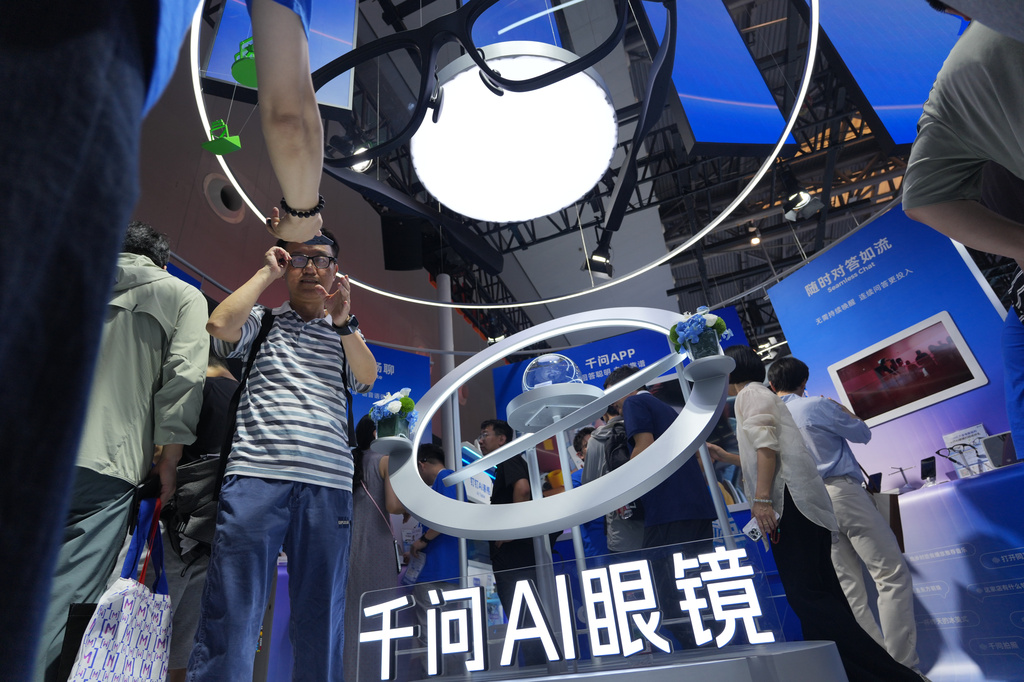
At a Glance
- The United States and China are competing to develop increasingly powerful AI models.
- Chinese companies are narrowing the gap with leading US AI developers.
- Washington accuses Chinese firms of extracting capabilities from American AI models.
- Beijing warns that AI could create serious security and governance risks.
The United States and China are accelerating their competition over artificial intelligence as advances in AI capabilities raise new concerns about security, governance, and technological dominance.
Key Statements and Focus Area
- US-China competition: “The gap between U.S. and Chinese models is narrow and fragile.” — Samm Sacks, Johns Hopkins School of Advanced International Studies.
- US strategic priority: “Whoever wins AI, wins.” — US President Donald Trump.
- Chinese security concerns: AI could threaten China’s “political, institutional, and ideological security” if exploited by hostile actors. — Chen Yixin, head of China’s Ministry of State Security.
Chinese AI Companies Narrow the Gap
The US continues to lead China in several measures of AI development, including model capabilities, research, and citations. However, recent assessments indicate that Chinese developers are rapidly closing the gap.
Moonshot AI’s Kimi K3 briefly ranked third globally in model intelligence following its release in July, behind leading US models, before falling to ninth as newer systems from US companies entered the rankings.
DeepSeek has also become a major competitor. Its R1 model, released in early 2025, demonstrated that Chinese developers could produce highly capable systems at lower costs. The company later previewed its V4 model with improvements in knowledge, reasoning, and autonomous task execution.
Other Chinese developers, including Z.ai and Alibaba, have also released increasingly advanced models. Z.ai's GLM-5.3 improved coding and autonomous capabilities, while Alibaba's Qwen3.8-Max was presented as its strongest model in the series.
Beijing Raises Concerns Over AI Threats
China is simultaneously pushing for faster AI development and warning about the technology's potential risks.
Chen Yixin, head of China's state security ministry, warned that AI could be exploited for political manipulation, cyberattacks, data leaks, and other threats to national security.
He specifically pointed to AI-generated deepfake audio and video as a potential tool for spreading political rumors on a large scale. He also warned that advanced models could make it easier for individuals and groups to identify and exploit cybersecurity vulnerabilities.
Chinese leaders have called for greater technological self-reliance while also supporting stronger controls over AI risks and the development of a global framework for AI governance.
Washington Accuses Chinese Firms of Model Extraction
The US has increasingly focused on how Chinese companies obtain capabilities from American AI systems.
US officials have accused Chinese AI developers of conducting what they describe as “industrial-scale distillation,” a process in which one model learns from another to reproduce aspects of its capabilities.
The FBI, National Security Agency, and Cybersecurity and Infrastructure Security Agency said in a September 8 report that Chinese developers had engaged in what they described as aggressive and targeted efforts to extract capabilities from advanced US models.
Anthropic separately accused Chinese companies DeepSeek and Moonshot of routing user requests to its Claude models.
Beijing Rejects US Allegations
China has rejected the accusations, arguing that model distillation is a common technique used throughout the AI industry.
Beijing has called on Washington to stop making what it described as unfounded accusations and has accused the US of seeking to maintain a monopoly over AI development.
Experts note that while distillation itself is a standard practice, the US allegations concern the alleged unauthorized use of restricted access to extract capabilities from frontier models.
The dispute reflects a broader shift in the AI competition. Beyond controlling access to advanced semiconductor technology, Washington is increasingly examining how the capabilities produced by US AI systems could themselves become a form of technology transfer.
FYI
The US has imposed restrictions aimed at limiting China's access to advanced AI chips and the equipment required to manufacture them, as Washington seeks to preserve its technological advantage. China has responded by emphasizing domestic innovation and technological self-reliance.
The competition is unfolding alongside renewed debate over AI safeguards in both countries. With Chinese President Xi Jinping expected to meet Trump in Washington this month, AI is likely to remain part of the broader US-China discussion over technology, trade, and national security.
Dive Deeper: Handpicked Stories for You
Follow Channel8 for continuous updates:
Trump Rejects AI Guardrails, Calls Risks a Hoax
OpenAI Slows Astra AI Model Development Over Cybersecurity Risks
15/09/2026