Joe Kent Warns Israeli Actions Risk ISIS Resurgence
At a Glance:
- Joe Kent warns that Israeli actions in Syria could trigger a resurgence of ISIS and al-Qaeda.
- He calls on the United States to cut off aid to Israel to restrain further escalation in the region.
- Kent argues that Syrian President Ahmed al-Sharaa faces an unwinnable situation if Israel continues its attacks.
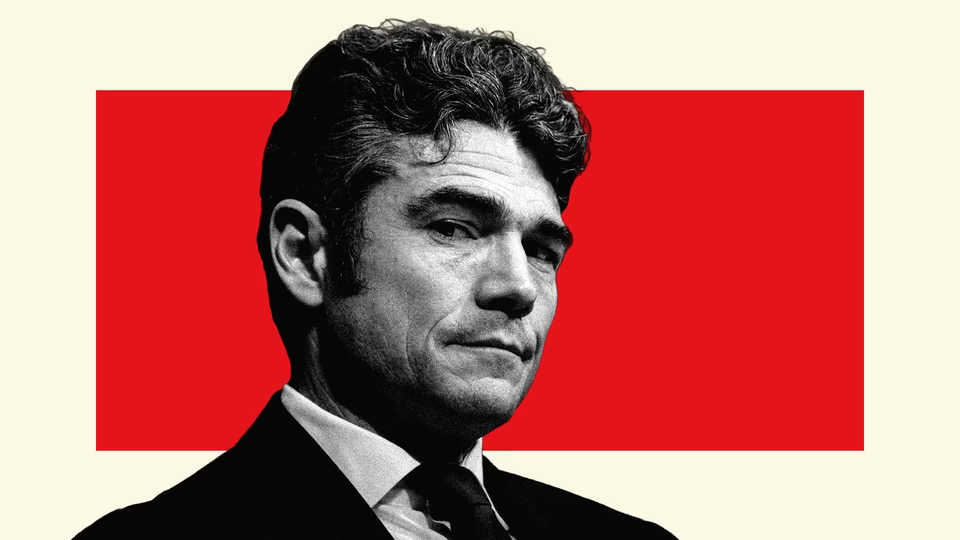
Commenting on Israeli PM Netanyahu's address during the UNGA, a former top US counterterrorism official is warning that continued Israeli military action in Syria could destabilize the country's government and pave the way for a resurgence of extremist groups in the region.
Key Statements and Focus Area:
- Warning on Regional Consequences: "If Israel conducts attacks in Syria, Sharaa will be forced to either respond & then be targeted by Israel, or face hostility from his base of hardline Sunnis. This is an un-winnable situation for Sharaa, and for us." — Joe Kent, former Director, National Counterterrorism Center.
- Call to Restrain Israel: "To prevent this, and to stop all Israeli aggression, the U.S. must restrain the Israelis by cutting off all aid. Israel's actions are sabotaging U.S. interests in the region, full stop." — Joe Kent.
- Focus of the Statement: Kent's remarks center on the risks posed by continued Israeli military activity in Syria, arguing that destabilizing President Sharaa's government could reverse US counterterrorism gains in the region.
Kent, who previously led the National Counterterrorism Center, stresses that his concerns are not rooted in support for al-Sharaa, saying he does not back the Syrian leader or welcome his presence in Washington.
However, he argues that since the US played a role in legitimizing al-Sharaa's rise to power, it now bears responsibility for managing the fallout should his government collapse. Kent warns that if al-Sharaa is killed or militarily challenged, the resulting power vacuum could allow ISIS to reestablish itself, potentially drawing the United States back into direct involvement in Syria.
Despite voicing wariness toward al-Sharaa given his past, Kent maintains that the instability likely to follow his removal poses a greater danger to US interests than the current arrangement.
FYI
The Golan Heights, a strategic plateau on the border between Israel and Syria, has been a flashpoint since Israel captured most of the territory from Syria during the 1967 Arab-Israeli War.
Israel formally annexed the Golan Heights in 1981, a move not recognized by most of the international community, though the United States formally acknowledged Israeli sovereignty over the territory in 2019.
Since the fall of the Assad government, Israel has expanded its military footprint in and around the Golan Heights, including moving troops into a UN-monitored buffer zone in southern Syria, and has carried out airstrikes in the area for roughly a year, citing security concerns over instability and the potential for hostile forces to entrench themselves near its border.
These moves have added to tensions with Damascus's new leadership and raised concerns among regional and Western officials about further escalation.
Dive Deeper: Handpicked Stories for You
Follow Channel8 for continuous updates:
Joe Kent Highlights Bafel Jalal Talabani’s Diplomatic Role In Tehran
.jpg)