Al-Zaidi Unveils Six Pillars Of Iraq’s Sovereignty
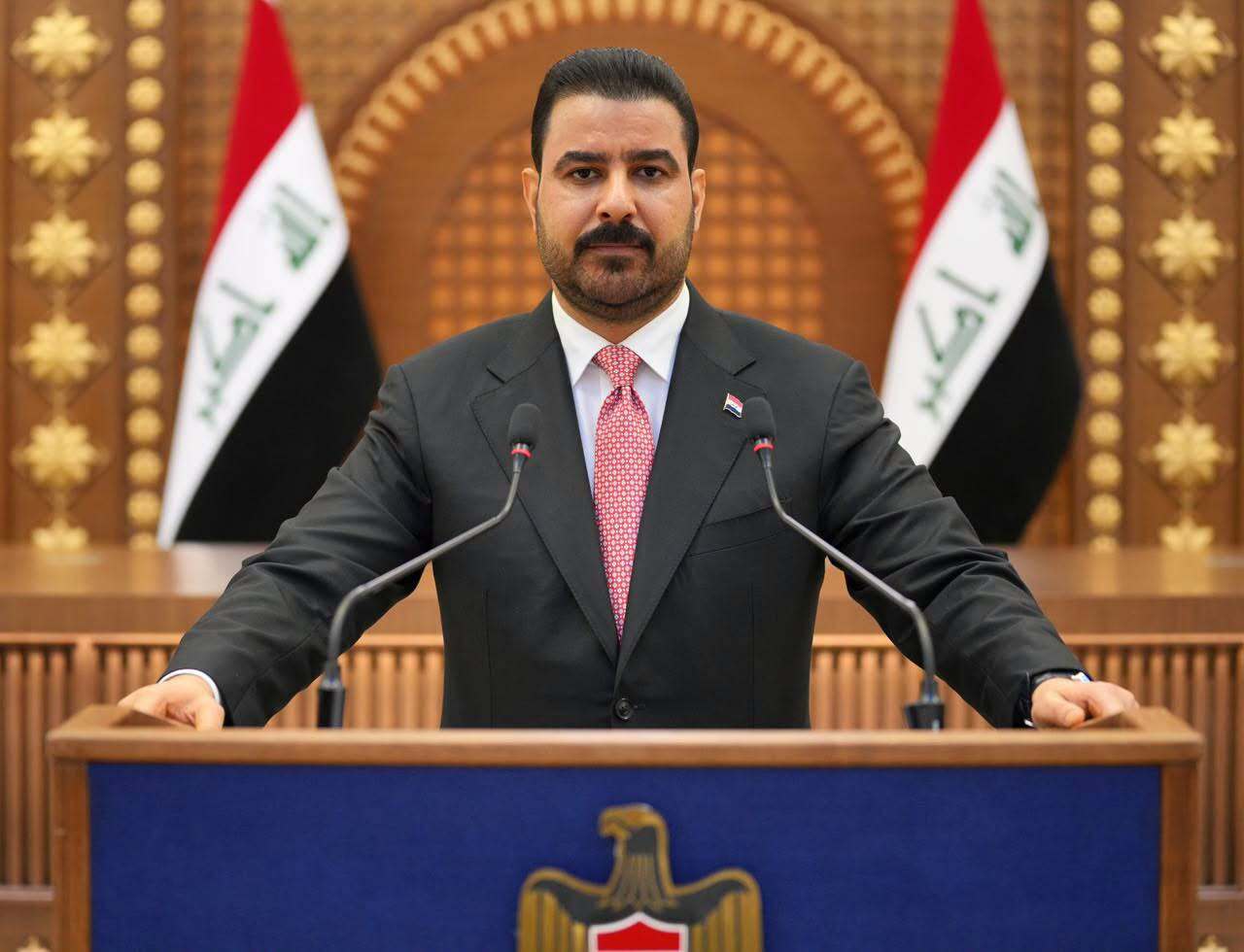
At a Glance
- Prime Minister Ali Faleh Al-Zaidi sponsored the Sovereignty Day Conference, marking the conclusion of the U.S.-led International Coalition’s military mission in Iraq and the start of a new phase centered on state authority.
- Al-Zaidi said Iraq has strengthened control over its territory, airspace and territorial waters, while emphasizing that political, economic and security sovereignty must be protected through state institutions and the rule of law.
- The Prime Minister identified foreign military withdrawals, Peshmerga unification, weapons control, the removal of foreign armed groups and development of a national air-defense system among the government’s sovereignty priorities.
- He also linked sovereignty to economic diversification, protection of national wealth, anti-corruption measures and greater integration with the international economy.
Prime Minister Ali al-Zaidi has declared the beginning of what he described as a new phase of Iraqi sovereignty, emphasizing state authority, constitutional rule and national control over security and economic decisions.
Speaking at the Sovereignty Day Conference, attended by senior Iraqi and Kurdistan Region officials, political leaders and diplomatic representatives, Al-Zaidi said Iraq had reached a milestone after years of conflict, foreign military involvement and efforts to rebuild state institutions.
The conference comes immediately after the formal conclusion of the U.S.-led International Coalition’s military mission in Iraq on September 30. Washington says its military presence has ended, while bilateral cooperation with Baghdad, including training and intelligence support, is set to continue.
Key Statements
“Today, we announce the beginning of a new phase of sovereignty protected by the state, guaranteed by law, and built with the participation of all Iraqis.”
— Prime Minister Ali Faleh Al-Zaidi
“Sovereignty represents the will of the people and their determination to uphold the state and its authority.”
— Prime Minister Ali Faleh Al-Zaidi
“The time has come to fulfill our pledge to safeguard Iraq’s security and protect every inch of its territory.”
— Prime Minister Ali Faleh Al-Zaidi
“Today, our Armed Forces, across all branches and formations, stand as an honorable symbol of Iraq’s sovereignty.”
— Prime Minister Ali Faleh Al-Zaidi
Sovereignty And The State
Al-Zaidi framed sovereignty as extending beyond the departure of foreign forces, describing it as a broader process involving political authority, economic independence, security control and the enforcement of law throughout Iraq.
He said the foundations of political, economic and security sovereignty are being consolidated, with state authority extending across the country and national wealth remaining under Iraqi control in accordance with the Constitution.
The Prime Minister also linked sovereignty to the will of the Iraqi people, describing it as an expression of national identity and a commitment to preserving the state and its institutions.
He recalled the adoption of Iraq’s permanent Constitution 20 years ago, saying Iraqis had made that choice during a period marked by terrorism, the remnants of dictatorship and widespread instability.
According to Al-Zaidi, the challenges that followed tested the country's political and institutional system but ultimately brought Iraq to what he described as a renewed commitment to protecting the state and preventing the exploitation of public interests for private gain.
Six Security And Sovereignty Milestones
Al-Zaidi outlined six developments that he said represent the principal achievements underpinning Iraq’s current sovereignty.
1. End Of The International Coalition Mission
The Prime Minister identified the withdrawal of foreign forces and the formal conclusion of the International Coalition’s mission in Iraq as the first major milestone.
The U.S.-led coalition was established in 2014 to fight ISIS after the group seized large areas of Iraq and Syria. Its military mission in Iraq formally ended on September 30, following the withdrawal of the remaining U.S. forces, including the final departure from Erbil.
The end of the coalition mission does not mean the end of all U.S.-Iraq security cooperation. Washington has said the relationship is moving toward bilateral cooperation, including training and intelligence support.
2. Turkish Forces And Foreign Armed Groups
Al-Zaidi also cited an agreement concerning the withdrawal of Turkish forces and members of the Kurdistan Workers’ Party, or PKK, alongside the stated objective of ending the presence of foreign armed groups on Iraqi territory.
The issue remains part of Iraq’s broader effort to assert state authority over territory and prevent Iraqi soil from being used in conflicts involving neighboring countries.
The Iraqi Council of Representatives has also described the establishment of a timeline for the presence of Turkish forces as part of the wider sovereignty process.
3. Peshmerga Unification
The Prime Minister listed the unification of the Peshmerga forces as another step toward strengthening unified military and security decision-making.
The development has particular significance for relations between Baghdad and the Kurdistan Region because the Peshmerga is constitutionally linked to Iraq’s broader defense structure while remaining administered by the Kurdistan Regional Government.
The Kurdistan Region recently announced the completion of a major phase of Peshmerga unification, bringing forces historically associated with the two major Kurdish political parties under a unified structure. Regional officials have presented the process as an effort to strengthen institutional command and reduce party-based divisions within the security establishment.
The KRG Ministry of Peshmerga Affairs has also emphasized continued coordination with the Iraqi Army following the coalition withdrawal.
4. Foreign Armed Opposition Groups
Al-Zaidi said Iraq is also committed to ending the presence of armed foreign opposition groups on its territory and preventing Iraqi territory from being used as a launch point for attacks against neighboring states.
The position reflects a longstanding challenge for Baghdad: balancing its constitutional commitment to national sovereignty with the security concerns of neighboring countries and the activities of armed groups operating along Iraq’s borders.
5. Weapons Under State Control
A central element of Al-Zaidi’s speech was the issue of weapons outside direct state control.
He said Iraq is moving toward bringing weapons under constitutional and legal authority according to a government-approved timeline addressing the status of armed factions and their integration into state institutions.
The Prime Minister welcomed factions that have already announced their commitment to the process and called on other armed groups to make similar commitments.
The issue remains politically sensitive, particularly because several powerful armed factions are deeply integrated into Iraq’s political and security landscape. Recent reporting indicates that the government is pursuing the issue through a combination of dialogue, legislation and institutional arrangements rather than through an immediate nationwide disarmament operation.
6. National Air Defense
Al-Zaidi also announced the beginning of work toward an integrated national air-defense system, describing it as necessary to strengthen Iraq’s ability to protect its airspace and sovereignty.
The issue has become particularly significant following repeated drone and missile attacks across Iraq and the Kurdistan Region during the recent regional conflict.
The KRG Ministry of Peshmerga Affairs has separately warned that the withdrawal of coalition forces leaves the Kurdistan Region without an alternative air-defense system, while arguing that protection of Iraqi airspace is ultimately a federal responsibility.
The Role Of The Peshmerga
Al-Zaidi's reference to Peshmerga unification places the Kurdistan Region within Baghdad's broader vision of an integrated Iraqi security structure.
The recent unification process has been presented by Kurdish officials as a major institutional step, although analysts continue to point to political and command challenges surrounding the integration of forces historically affiliated with the Kurdistan Democratic Party and Patriotic Union of Kurdistan.
The Peshmerga Ministry has said it maintains constitutional and security ties with the Iraqi Army and is prepared to continue coordination following the coalition's departure.
For Baghdad, greater coordination between federal forces and the Peshmerga is particularly important in disputed areas and in countering remaining ISIS activity, especially as international coalition support shifts toward a bilateral security relationship.
Law, Institutions And Weapons
Beyond military issues, Al-Zaidi presented sovereignty as an institutional question.
He said the government had made combating corruption a central part of its effort to strengthen sovereignty, arguing that protecting public funds is inseparable from protecting the authority of the state.
He also called for the state to remain the central framework through which national capabilities are organized, emphasizing the Constitution and law as the basis for managing weapons, security institutions and public resources.
The message comes as Baghdad assumes greater responsibility for national security following the coalition's military withdrawal. The end of the coalition mission transfers the primary security burden to Iraqi institutions, although U.S. officials say intelligence and training cooperation will continue.
Economic Sovereignty
Al-Zaidi also gave sovereignty an economic dimension, arguing that a sovereign Iraq must have an economy capable of responding to global changes and participating effectively in international markets.
He said the government would continue efforts to diversify the economy, expand international partnerships and make greater use of Iraq’s young population.
Oil remains at the center of Iraq’s economy, and Al-Zaidi said consolidating sovereignty requires protecting national wealth—particularly oil—and maximizing its returns for Iraqi citizens.
The Prime Minister also linked economic sovereignty to successful and equitable international partnerships, suggesting that Iraq's future relationship with the global economy should be based on cooperation while maintaining control over national resources and decisions.
From Conflict To State-Building
Al-Zaidi presented the Sovereignty Day moment as the culmination of a much longer national trajectory.
Iraq's modern security landscape has been shaped by the 2003 invasion, the subsequent insurgency, the withdrawal of U.S. forces in 2011, the emergence of ISIS in 2014 and the return of an international military coalition to fight the group.
ISIS lost its territorial control in Iraq in 2017, but coalition forces remained to support Iraqi and Kurdish forces against the group's remnants. The coalition's military mission has now ended after a phased withdrawal agreed between Baghdad and Washington in 2024.
That transition leaves Iraqi institutions responsible for maintaining security while continuing to confront threats from ISIS remnants, armed groups outside full state control, border security challenges and regional conflicts that can spill into Iraqi territory.
National Security After The Coalition
The timing of Sovereignty Day therefore gives the Prime Minister’s remarks significance beyond the symbolism of the coalition's departure.
Iraq now faces the task of demonstrating that its security institutions can independently manage threats while maintaining coordination between the federal armed forces, the Peshmerga and other officially recognized security institutions.
The government has emphasized intelligence, military readiness, air defense and institutional coordination as part of that transition.
At the same time, Kurdish officials have stressed that the Peshmerga remains ready and that coordination with Baghdad must continue. The KRG has also raised concerns over air-defense capabilities following the coalition withdrawal.
A New Phase Of Sovereignty
Al-Zaidi concluded by calling for Iraqis to transform the symbolism of Sovereignty Day into a continuing national project.
He said sovereignty should be reflected in stronger institutions, respect for law, protection of national resources, economic development and the ability of the state to safeguard its territory.
He described Iraq’s armed forces as the principal guardians of its land and people and said the country had reached this point through the sacrifices of Iraqis.
The government's next challenge will be implementation: translating commitments on weapons control, foreign armed groups, air defense, Peshmerga coordination, economic diversification and institutional reform into durable state policies.
For Iraq, the end of the coalition's military mission marks a major institutional transition. The government is now seeking to define sovereignty not simply as the absence of foreign forces, but as the capacity of Iraqi state institutions to exercise authority, protect the country and manage its political, security and economic affairs under the Constitution and law.
FYI
Iraq's Sovereignty Day comes at a significant transition point. The U.S.-led coalition has formally completed its military mission, ending the principal international military campaign against ISIS in Iraq, while Washington says security cooperation with Baghdad will continue through bilateral channels.
Al-Zaidi's speech defines the next phase broadly: foreign military withdrawals are presented alongside Peshmerga unification, weapons control, air-defense development, protection of national resources and economic diversification. These are not all completed developments; several remain ongoing political, security or institutional processes.
The Peshmerga component is particularly relevant to Baghdad-Erbil relations. Kurdish authorities say their forces are now more unified and remain coordinated with the Iraqi Army, while Baghdad is presenting that unification as part of a wider effort toward coherent national security decision-making.
The central question of the new phase will therefore be implementation: whether Iraq can translate the formal restoration of sovereignty into effective and consistent state authority across its territory, while managing relations between Baghdad and Erbil, armed groups, neighboring states and international partners.
Dive Deeper: Handpicked Stories for You
Follow Channel8 for continuous updates:
Turkey to Hand Over Bashiqa-Zilkan Base to Iraq in Phases
IRGC Hails US Withdrawal From Iraq as Victory
CENTCOM Commander: ISIS no longer poses a systemic threat to Iraq
2 hours ago