Shanghai Unveils Grand Opera House With Spiral Staircase
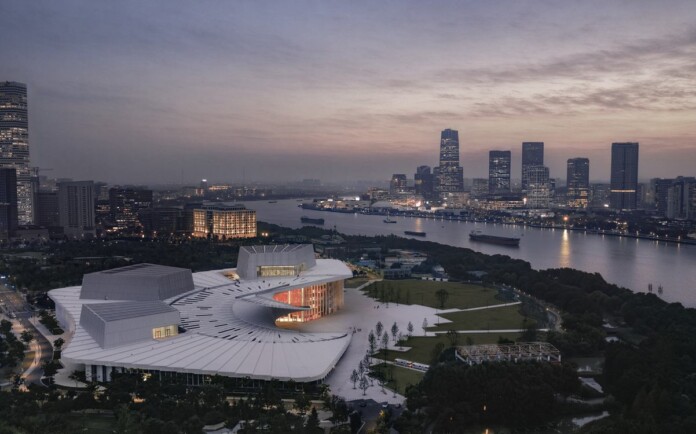
At a Glance:
Shanghai's new opera house has opened along the Huangpu River.
The building has drawn international attention for its striking design.
It will host a wide range of performances across three auditoriums.
Shanghai has opened its new Grand Opera House on the banks of the Huangpu River, a Snøhetta-designed venue whose striking exterior spiral staircase has quickly put it among the year’s most talked-about architectural debuts.
Key Statements and Focus Area:
Design Philosophy: "Movement acts as both an architectural and social connector at the opera house and shapes the ways people approach, enter, and move through the building." — Statement from Snøhetta, the Norwegian architecture firm behind the project.
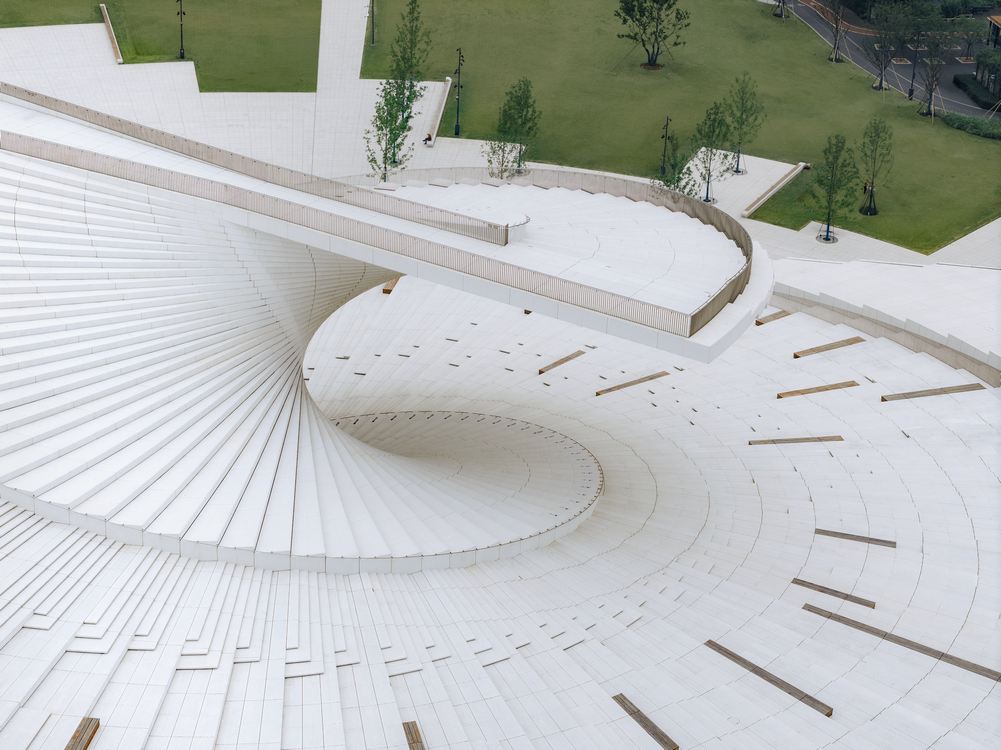
Public Access: The firm aimed to remove the "thresholds" that typically separate opera houses from the public, with an exterior spiral staircase open to ticket holders and non-ticket holders alike. — Snøhetta design team.
Focus Area: The article focuses on the opening of Shanghai's Grand Opera House, its design, its three performance halls, and its upcoming performance schedule.
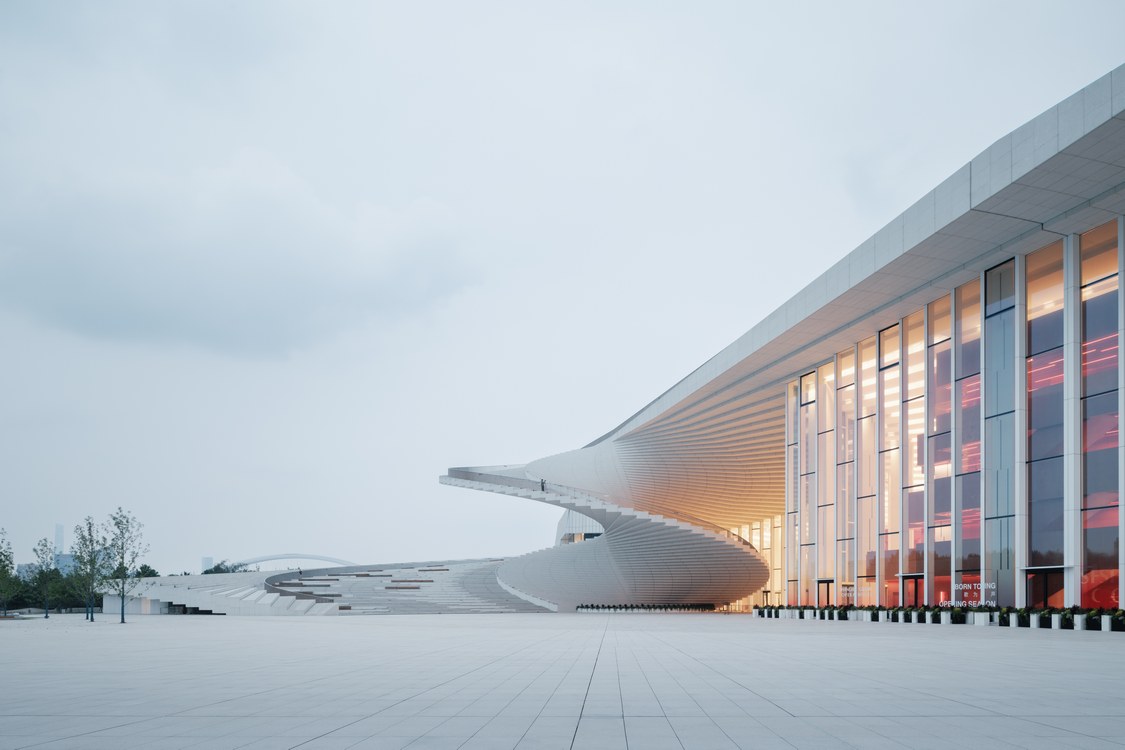
Awarded to Snøhetta a decade ago, the 1.6 million-square-foot Grand Opera House combines performance, rehearsal, production, education, exhibition, and hospitality under one roof, with a total seating capacity of 4,200. Its signature feature is a fan-inspired exterior spiral staircase that leads to an observation platform overlooking the city's central business district.
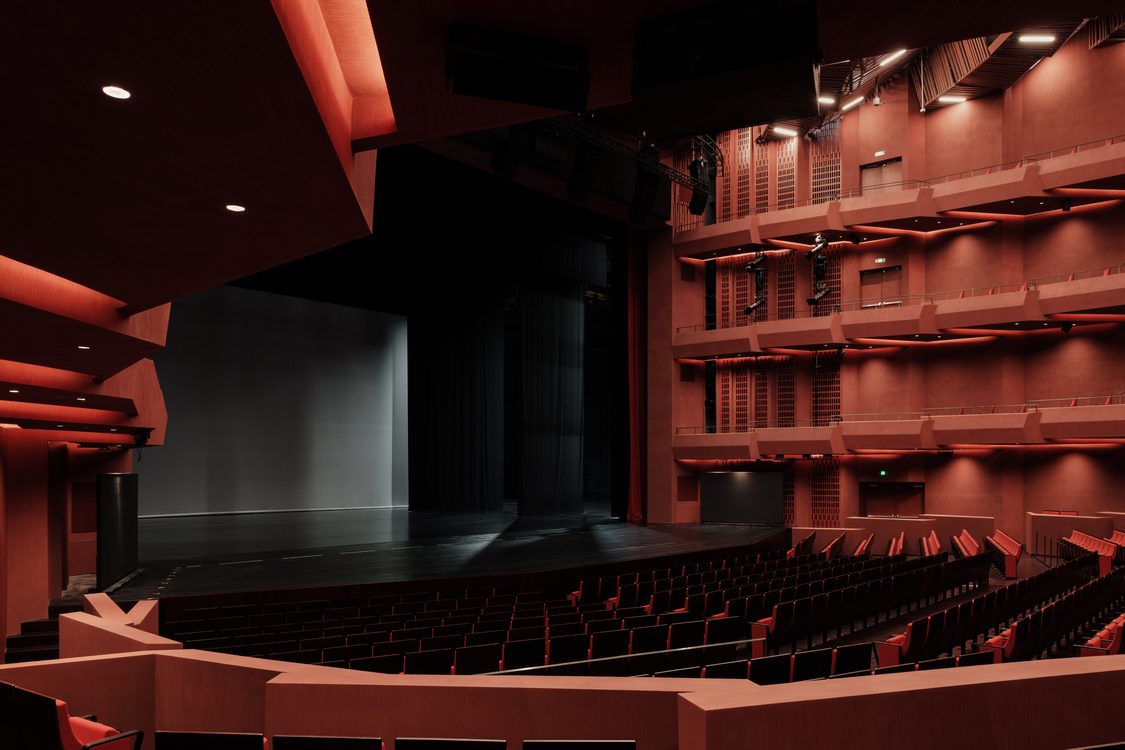
Inside, the 2,000-seat Harmony auditorium, designed with Nagata Acoustics, is finished in red and spans five levels and three terraces. The 1,200-seat Soar Theater suits baroque and classical opera, operetta, and regional productions and is expected to host traditional Chinese Xiqu. The 1,000-seat Open Stage offers flexible configurations for experimental work, with floor-to-ceiling windows framing the river.
The venue opened last weekend with Puccini's Tosca, followed this weekend by Verdi's Aida, and the American Ballet Company will bring Swan Lake in about three weeks.
FYI
Background: Snøhetta, founded in Oslo, is known for culturally significant public buildings, including the Oslo Opera House, whose sloping roof is open for the public to walk on, an approach that echoes the accessibility goals behind the Shanghai design.
China has invested heavily in large performing arts venues in recent decades, as major cities compete to establish themselves as international cultural hubs. Shanghai's Huangpu Riverfront, long a center of commerce and finance, has increasingly been developed with public cultural spaces alongside its skyline of towers.