Scientists Find Strongest Evidence Yet of Dinosaur Red Blood Cells
At a Glance
Researchers say they have found the strongest evidence yet of red blood cells preserved in a 115-million-year-old dinosaur fossil.
The study identified microscopic structures resembling red blood cells and chemical traces of heme, a molecule found in hemoglobin.
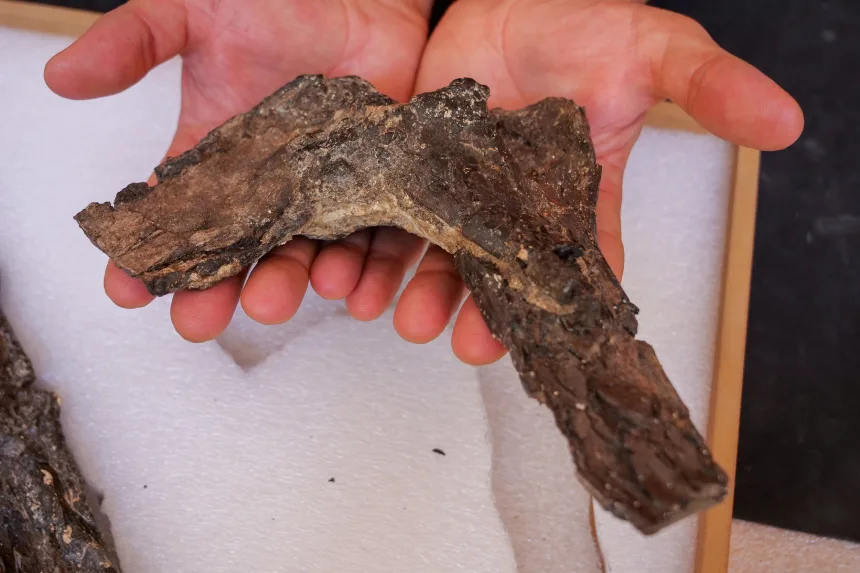
The findings come from a fossilized hind limb of Aratasaurus museunacionali, discovered in northeastern Brazil.
Some experts remain cautious, saying further evidence is needed to confirm that the structures are fossilized blood cells.
Scientists studying a 115-million-year-old dinosaur fossil say they have identified the strongest evidence yet of preserved red blood cells, potentially opening new avenues for investigating the biology of extinct species.
Key Statements and Focus Areas
New Evidence of Preserved Blood Cells
Researchers combined advanced microscopic imaging with chemical analyses to identify oval-shaped structures resembling red blood cells inside a dinosaur bone. They also detected heme, a molecule found in hemoglobin, the protein responsible for carrying oxygen in red blood cells.
The study's authors say this is the first time heme has been detected directly within structures identified as potential blood cells in a dinosaur fossil.
The Fossil and Its Preservation
The specimen comes from a partial hind limb of Aratasaurus museunacionali, a theropod dinosaur that lived during the Early Cretaceous period.
The bone was discovered in 2008 at the Mina Pedra Branca geological site in northeastern Brazil, within the Romualdo Formation, an area known for exceptionally preserved fossils.
Researchers suggest that low-oxygen conditions in stagnant waters may have slowed decomposition and helped preserve biological material. They also identified manganese oxide minerals that may have contributed to the preservation process.
Scientific Debate Over the Findings
Although the study presents multiple lines of evidence, some experts question whether the microscopic structures can conclusively be identified as red blood cells.
Critics have raised concerns about their size and shape, as well as the significance of the manganese minerals detected in the fossil. The researchers, however, argue that these minerals likely formed during fossilization rather than being original components of the cells.
Scientists also caution that the structures may have changed shape over millions of years, making direct comparisons with the blood cells of modern birds and crocodilians difficult.
The study, published in the Proceedings of the National Academy of Sciences, combines microscopic observations, mineral analysis and chemical evidence to investigate the possibility that biological structures have survived inside dinosaur fossils for more than 100 million years.
Within the bone's vascular canals — tiny channels that carry blood vessels and nerve fibers — researchers identified numerous oval-shaped microstructures resembling red blood cells. Chemical testing also detected heme, providing an additional line of evidence beyond the structures' appearance.
Previous studies dating back to the late 1990s have reported possible red blood cell-like structures in dinosaur and other reptile fossils. However, these findings have remained controversial, partly because soft tissues and cellular material rarely survive the fossilization process.
The research team believes the preservation conditions at the Brazilian site may explain how some of the biological material survived. Low oxygen levels could have slowed decomposition, while manganese oxide minerals may have helped stabilize the structures.
Lead author Kliti Grice, an organic geochemist and distinguished professor at Curtin University in Australia, said the findings could provide a method for investigating other fossils that may contain previously overlooked biological information.
However, Grice cautioned that one specimen is not enough to draw conclusions about the physiology of Aratasaurus. The team plans to examine fossils from other species, geological periods and environments to determine whether similar preservation is more widespread.
Researchers say further discoveries could eventually help investigate how dinosaurs transported oxygen, how their tissues functioned and how their biological processes compared with those of living animals.
The findings do not, however, indicate that dinosaur DNA has survived. Heme and DNA are different molecules and undergo different preservation processes. Evidence of one does not establish the survival of the other.
FYI
The study adds to a growing area of paleontological research examining whether microscopic and molecular traces of ancient life can survive long after the disappearance of an organism. While the findings remain subject to scientific debate, they could encourage researchers to re-examine museum fossil collections using advanced imaging and chemical techniques. Any future conclusions about dinosaur physiology will depend on whether similar evidence can be confirmed in additional specimens.
Dive Deeper: Handpicked Stories for You
Follow Channel8 for continuous updates:
Groundbreaking 7,000-Year-Old Architectural Roof Remains Unearthed In Kurdistan
Shanidar Cave Research Examines Neanderthal Violence and Social Bonds