Kamala Harris Campaigns for Democrats as Midterm Races Intensify
At a Glance
Kamala Harris is campaigning for Democratic candidates in five states ahead of the November 3 US midterm elections.
Her appearances come as Democrats seek to challenge Republican control of Congress and compete in closely contested races.
Harris has not decided whether to seek the presidency again in 2028, as her previous campaigns remain part of the political debate.
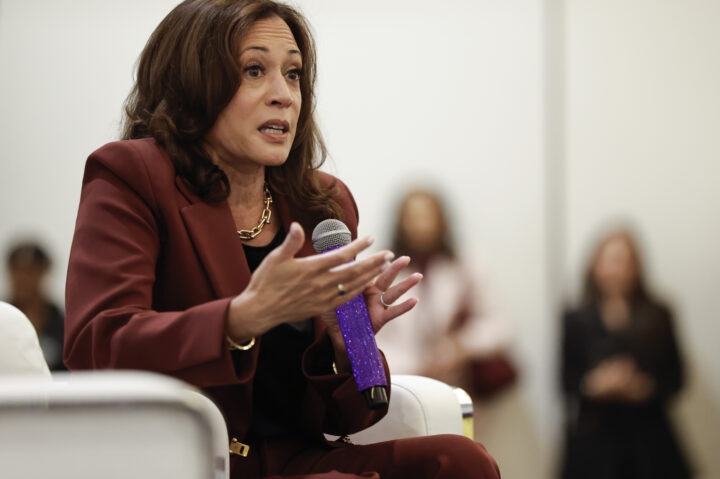
Former US Vice President Kamala Harris has returned to the campaign trail to support Democrats ahead of the November 3 midterm elections, renewing questions about her political future and the possibility of a third presidential campaign in 2028. Her appearances across five states are aimed at helping Democratic candidates while bringing her back into public view after a relatively limited number of appearances this year.
Key Statements and Focus Areas
Harris Criticizes Trump Administration
Speaking to Culinary Workers Union members in Las Vegas alongside Nevada gubernatorial candidate Aaron Ford, Harris criticized President Donald Trump's administration.
“We got a serious fight in front of us. We are witnessing pure brutality come out of what is undoubtedly the most corrupt, callous and incompetent presidential administration.”
— Kamala Harris, as reported by Reuters.
Her remarks combined criticism of the administration with calls for supporters to remain engaged in the electoral process.
Supporting Democratic Candidates
Harris has campaigned in Nevada and Mississippi and is scheduled to appear in New Hampshire, Wisconsin and Georgia as part of the Democrats' broader effort ahead of Election Day.
In Mississippi, she supported Democratic Senate candidate Scott Colom, who is challenging Republican Senator Cindy Hyde-Smith. Colom's campaign has drawn attention because a victory would make him the first Democrat elected to represent Mississippi in the US Senate since 1982.
Harris also sought to encourage supporters by emphasizing ambition and the need to resist other people's expectations.
“Never let someone else's limited ability to see your capacity be a limitation on your ambition.”
— Kamala Harris, as reported by Reuters.
Political Future Remains Undecided
Harris's return to campaigning has renewed speculation about whether she will seek the Democratic presidential nomination in 2028. However, she has not announced a decision.
Her political standing includes strong support among Democrats but a less favorable reception among the wider electorate. A June Reuters/Ipsos poll found that 39% of Americans viewed her favorably, compared with 82% of Democrats, 33% of independents and 7% of Republicans. These figures reflect favorability at the time of the poll, not voting intentions in a future presidential election.
Harris's campaign appearances come as Democrats seek to make gains in the House of Representatives and Senate in the November 3 midterm elections. The party is challenging Republican control of Congress, with competitive races across several states putting national political figures back on the campaign trail.
Her itinerary includes Georgia, Mississippi, Nevada, New Hampshire and Wisconsin. The visits allow Harris to support candidates in different contests while reconnecting with voters and Democratic activists. Her schedule also takes her to states that are expected to play a role in the party's 2028 presidential nomination process, adding another dimension to the attention surrounding her appearances.
In Nevada, Harris appeared with Aaron Ford, the state's attorney general and Democratic candidate for governor. She used the event to criticize Trump's administration and encourage supporters to mobilize ahead of the midterms.
The following day, she travelled to Mississippi to campaign for Colom, whose Senate race against Hyde-Smith has attracted increased national attention. A Democratic victory would mark a significant change in the state's Senate representation, although the outcome will be decided by voters.
Harris's involvement reflects a broader pattern in US election campaigns, where prominent national figures are deployed to support candidates and energize party supporters. Democratic National Committee member Elaine Kamarck told Reuters that established political figures often take a more prominent role toward the end of a campaign.
However, the attention surrounding Harris extends beyond the immediate elections. Her 2024 defeat to Trump followed her replacement of President Joe Biden as the Democratic nominee, while her first presidential campaign ended before the 2020 Democratic primaries began. Those experiences are likely to remain part of any discussion about a possible new bid.
Harris has also faced questions about the Biden administration's record, including her knowledge of Biden's health and the administration's response to the war in Gaza. She has publicly criticized Biden's decision to seek reelection and argued that the United States should have acted earlier and more forcefully over Gaza.
For now, Harris has emphasized the importance of the midterms rather than announcing a decision about 2028. Her immediate political role is to support Democratic candidates, while any future presidential campaign remains uncertain.
FYI
Harris's return to the campaign trail comes at a consequential point in the US political calendar. The November 3 midterms will determine control of Congress for the remainder of Trump's current term and shape the legislative environment in Washington. Democrats are seeking gains in both chambers, while Republicans are defending their congressional majorities.
For Harris, the campaign appearances provide an opportunity to remain active in Democratic politics without committing to another presidential run. Her favorable standing among Democrats contrasts with her lower favorability among independents and Republicans, highlighting the distinction between support within her party and broader public opinion. Whether she seeks the nomination in 2028 remains an open question, and the outcome of the midterms may influence the political debate that follows.
Dive Deeper: Handpicked Stories for You
Follow Channel8 for continuous updates:

.jpg)
.jfif)