France Braces for Nationwide Protests as Political Pressure Mounts
At a Glance
French authorities expected up to 170,000 people to demonstrate nationwide, including 60,000 in Paris.
Around 70,000 security personnel were deployed amid fears of renewed violence.
The Yellow Vests movement called for a banned rally near the presidential palace.
Protests entered their fourth consecutive weekend, driven by student, labor and public-sector grievances.
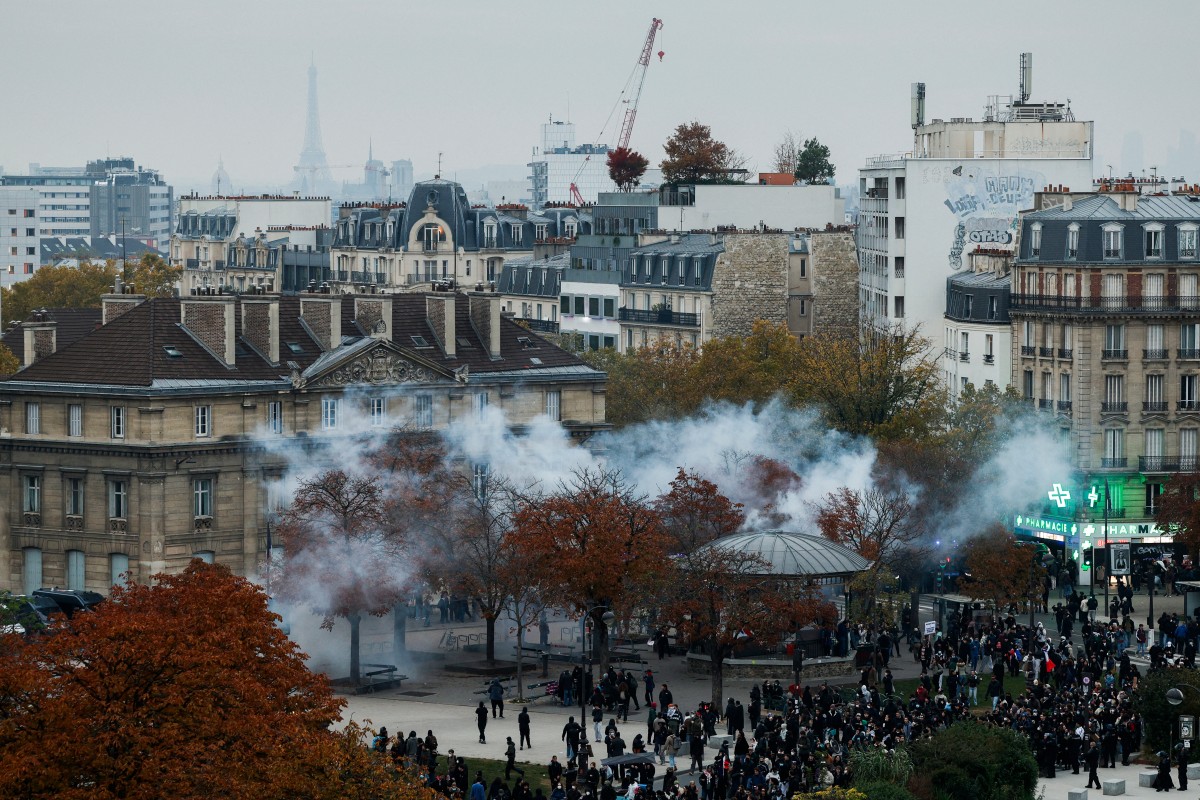
France prepared for another weekend of nationwide demonstrations on Saturday, with authorities deploying tens of thousands of security personnel as public anger against the government continued to grow. The protests, entering their fourth consecutive weekend, come amid mounting political pressure ahead of the country's 2027 presidential election.
Key Statements and Focus Areas
Security Measures and Protest Expectations
French authorities estimated that up to 170,000 people could take part in demonstrations across the country, including approximately 60,000 in Paris.
Around 70,000 members of the security forces were deployed nationwide to prevent unrest, following violent clashes during demonstrations on October 17.
Interior Minister Laurent Nunez warned that authorities remained alert to the possibility of further violence.
“The risk is exactly the same as on previous Saturdays,”
Nunez said, urging security forces to remain prepared for sporadic incidents.
Yellow Vests Challenge Rally Ban
The Yellow Vests movement called for a demonstration at Place de la Concorde in central Paris, close to the Elysee Palace and the National Assembly.
Authorities banned the gathering, prompting a significant police deployment in the area to prevent protesters from approaching the presidential residence.
Benjamin Ball, a member of the movement's coordinating committee, called for what he described as “mass disobedience,” arguing that the ban restricted the right to protest.
Students and Workers Maintain Pressure
The latest demonstrations follow mass protests and strikes organized by trade unions on November 5.
The broader protest movement initially gained momentum in late September, when high school students demonstrated over conditions at their schools. University students later joined, with education spending and public services among the issues driving the mobilization.
Student and teacher organizations have also called for another strike on Tuesday, demanding increased investment in education.
Protests were reported in several French cities on Saturday, including Marseille, Bordeaux and Lille, as demonstrations continued across the country.
In Paris and other urban centers, some businesses had again covered their shop windows with wooden barriers in anticipation of possible vandalism and looting.
Police carried out more than 840 checks on individuals at railway stations in Paris and its surrounding suburbs by late Saturday morning, according to the Paris police department.
The security measures follow demonstrations on October 17 that escalated into some of the most serious rioting France has experienced in recent years.
The police response has also come under scrutiny, with dozens of internal investigations launched into allegations of excessive force against demonstrators. Agence France-Presse has separately called for greater protection for its journalists after several of its reporters were apparently subjected to police violence while covering the protests.
The government is under pressure to address demands over wages, purchasing power, education spending and public services, while facing constraints from France's substantial public debt.
Prime Minister Sebastien Lecornu was scheduled to meet trade union and employer representatives on Monday to discuss wages and purchasing power.
In a statement on Friday, an inter-union coalition argued that demonstrations would continue until authorities addressed demands raised by workers, civil servants, young people and pensioners.
Political Implications
The unrest comes as France approaches its 2027 presidential election, with opinion polls cited in the report showing far-right leader Marine Le Pen as a leading contender.
Her main challenger in current polling is reportedly left-wing leader Jean-Luc Melenchon, rather than one of President Emmanuel Macron's former centrist allies. Melenchon was scheduled to address a rally later on Saturday.
The protests are unfolding amid broader political uncertainty, potentially adding pressure to the government as it seeks to respond to public discontent while managing economic and fiscal challenges.
FYI
France's latest demonstrations bring together several sources of public discontent, including education, wages, purchasing power and concerns over public services. The return of the Yellow Vests also revives a movement that previously challenged Macron's presidency, while the government's response faces scrutiny over public order and the handling of demonstrations. The political significance of the unrest may grow as the 2027 presidential election approaches, although protest participation alone does not establish how voters will behave at the ballot box.
Dive Deeper: Handpicked Stories for You
Follow Channel8 for continuous updates: