Massive Security Forces Deployed Across Baghdad Last Night as Amiri Urges Retaliation Delay
At a Glance:
- The Iraqi PM placed elite forces on high alert across Baghdad and Basra.
- Badr leader urged armed groups to delay retaliation against U.S.-Saudi strikes.
- The ruling coalition threatened anti-terror prosecutions for non-state actors failing to disarm by September 30.
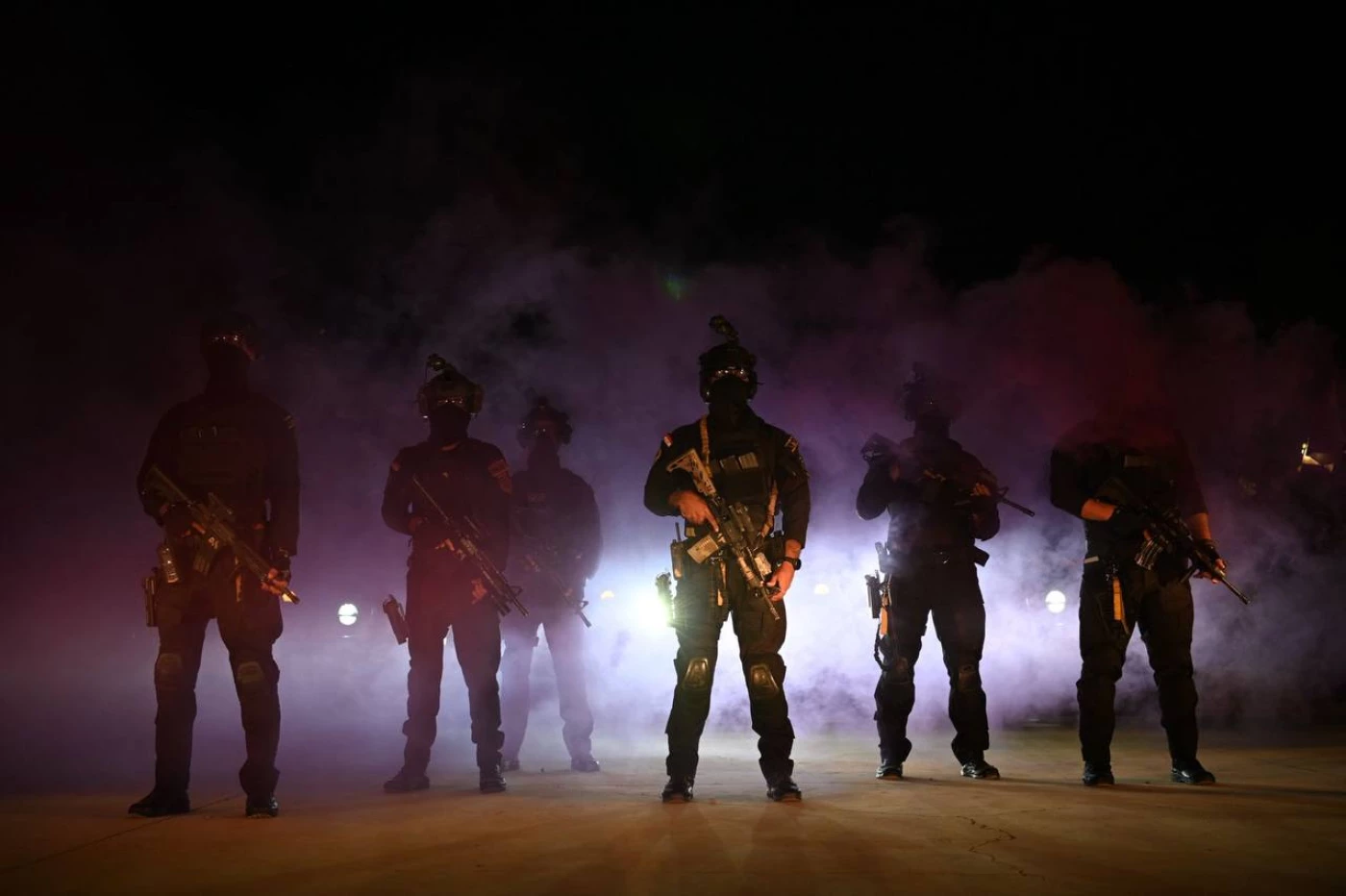
Under the orders of Iraqi Prime Minister Ali Faleh al-Zaidi, Commander-in-Chief of the Armed Forces, a large deployment of Iraqi security forces was placed on high alert last night, while Hadi al-Amiri, head of the Badr Organization, urged armed groups to postpone their retaliation against recent joint U.S.-Saudi strikes.
Key Statements and Focus Areas
- Prime Minister al-Zaidi directed security forces, including Counter-Terrorism and Rapid Response units, to maximum alert in Baghdad and several other provinces, particularly Basra.
- Hadi al-Amiri released a video message addressing the Islamic Resistance in Iraq, calling on them to delay their retaliation and exercise restraint to protect Iraq's supreme national interests.
The Iraqi Security Media Cell announced that all security and military forces have raised their combat and readiness levels through tactical training exercises and strategic troop movements.
This mobilization was prompted by the expiration of the August 7 deadline set by the Islamic Resistance to respond to the July 29 U.S.-Saudi strike on Iraq, which killed 20 Popular Mobilization Forces (PMF) members and wounded over 30 others.
Circulating footages have shown the movement of heavily armed vehicles across the streets of Baghdad and other areas.
Sabah al-Numan, spokesperson for the Commander-in-Chief of the Iraqi Armed Forces, confirmed that dialogue with the armed factions is ongoing and that the state security apparatus will prevent any unilateral military retaliation.
Meanwhile, Saudi Arabia, Jordan, and Syria placed their forces on high alert to counter potential cross-border strikes originating from Iraq, with sources indicating that the neighboring countries warned Baghdad of retaliation in the event of any attacks by non-state armed groups.
FYI
During its August 5 meeting, the State Administration Coalition ,Iraq’s ruling political alliance, which includes almost all major political parties, reaffirmed its commitment to disarm non-state actors by September 30, warning that any actions outside the state framework would be dealt with under the Counter-Terrorism Law.
Subsequently, Iraq's state media published the Counter-Terrorism Law as a direct warning to armed groups that any unilateral retaliation would face legal prosecution.
Following the U.S.-Saudi attack, the Ministerial Council for National Security also convened an emergency meeting to implement a comprehensive security plan focused on territorial control and filling security vacuums.
Spokesperson al-Numan stated that the authority to declare war rests solely with the state, affirming that all security forces remain under the command of the Commander-in-Chief to prevent attacks both against Iraq and from Iraqi territory against neighboring countries.
Dive Deeper: Handpicked Stories for You
Follow Channel8 for continuous updates:
Iraq Raises Military Readiness as Armed Factions' Ultimatum Expires
State Administration Coalition Backs September 30 Deadline on Arms
Iraqi Resistance Sets Disarmament Deadline, Warns of Retaliation
07/08/2026