Over 550 Dead Following Catastrophic Nepal-Tibet Glacial Collapse
At a Glance:
- Nepal’s police reported at least 547 fatalities, with Chinese state media confirming five deaths in Tibet, bringing the confirmed regional total to at least 552.
- Over 1,400 people remain missing, including hundreds of international tourists and pilgrims.
- The US Geological Survey (USGS) determined the disaster was caused by a magnitude 5.2 glacial collapse that unleashed an "inland tsunami" of ice, mud, and debris.
- Indian authorities recovered seven uncounted bodies from downstream rivers originating in Nepal.
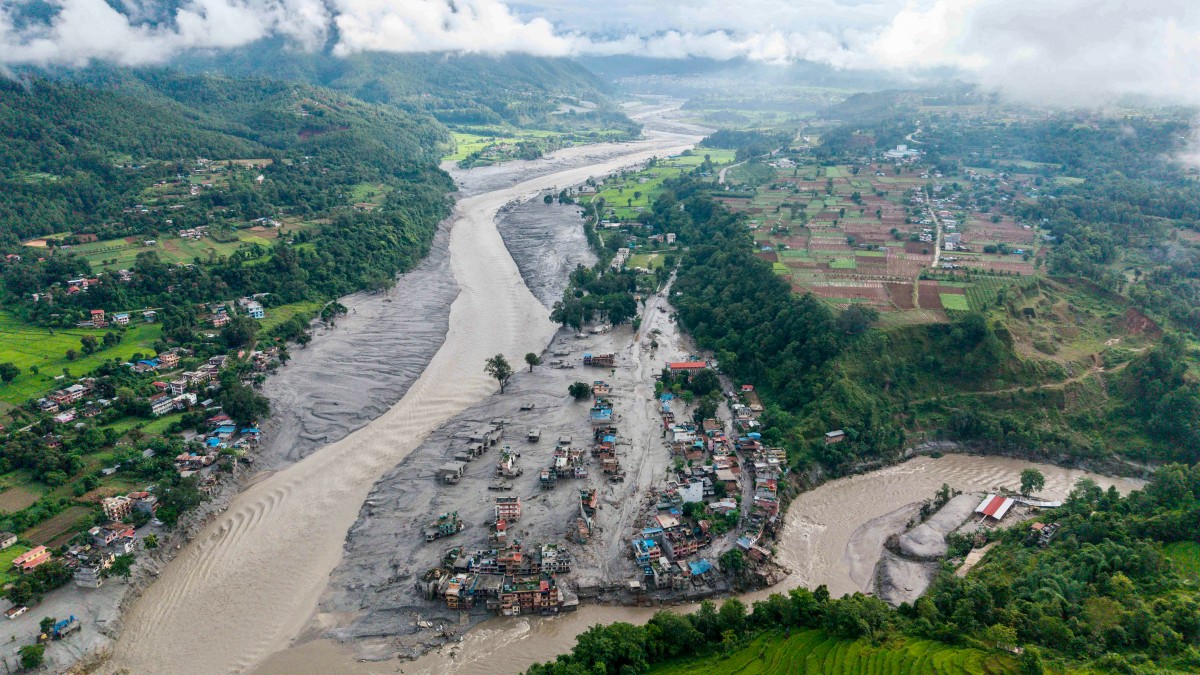
A catastrophic glacial collapse on the Nepal-Tibet border triggered a torrent of icy mud and water that swept through mountain valleys, killing at least 552 people and leaving over 1,400 missing across Nepal and China’s Tibet region. The event has become Nepal’s deadliest natural disaster since the 2015 earthquake.
Key Statements:
"Additional analysis of nearby seismic stations, long-period seismic waves, and satellite imagery led to the determination that the seismic event was a glacial collapse and debris flow, and that no earthquake had occurred." — US Geological Survey (USGS) Statement.
"The power, volume, and speed of the surging waters gave little time for anyone to flee. Entire villages and market areas have been virtually wiped out." — Red Cross & Local Rescue Response.
Glacial Collapse and Debris Flow
The disaster struck when a massive section of a glacier collapsed near the Nepal-Tibet border, channeling thousands of tons of ice, rock, and mud down the Bhote Koshi and Trishuli river valleys. Initially registered on global seismometers as a magnitude 4.4 to 5.2 seismic event, scientific agencies confirmed the tremor was caused by the sheer kinetic energy of the avalanche rather than a tectonic earthquake. The resulting wall of water obliterated bridges, roads, power infrastructure, and whole villages.
High Number of Foreign Nationals and Pilgrims Missing
Emergency rescue operations in Nepal’s hard-hit Rasuwa and Nuwakot districts are racing against time. Among the 1,400 unaccounted for are hundreds of foreign nationals, including pilgrims traveling to Tibet's sacred Mount Kailash, from India, the United States, Australia, Britain, and Canada. Downstream in India, border authorities recovered seven additional bodies from swollen cross-border rivers, though these remain unverified and separate from Nepal's official death count.
FYI
Climate scientists highlight that accelerating temperature rises in the Himalayas are destabilizing high-altitude glaciers, greatly increasing the frequency and intensity of catastrophic glacial lake outburst floods and glacier failures. Beyond immediate search-and-rescue efforts, the disaster exposes the severe vulnerability of mountain communities and critical infrastructure to climate-induced hazards.
Dive Deeper: Handpicked Stories for You
Follow Channel8 for continuous updates:
Nepal-Tibet Floods Leave Hundreds Missing After Collapse
Nepal Appoints Interim PM Amid Youth Protests, Vows to Fight Corruption
Nepal’s Prime Minister Resigns as Gen-Z Protests Escalate, Dozens Killed in Clashes


.jpg)
.jpg)
.jpg)
.jpg)