UN Report Links Clean Air Action to Economic Gains
At a Glance:
- A new UN-backed assessment says tackling air pollution and climate change together delivers far greater economic and health returns than treating them separately.
- The report was released to mark the International Day of Clean Air for Blue Skies, observed annually on September 7.
- It outlines 25 measures across six sectors that could prevent millions of premature deaths and slow global warming if adopted at scale.
- Researchers warn that weak coordination and enforcement could delay full implementation of these measures by nearly eight years.
A joint assessment from the UN Environment Programme (UNEP) and the Climate and Clean Air Coalition (CCAC) has laid out the economic and health case for combining climate and clean-air action, arguing that the two crises are deeply intertwined and far more cost-effective to address together than apart.
Key Statements and Focus Area:
- Economic Case for Action: "For too long, we have treated climate action as a cost to be managed and air pollution as the unfortunate outcome of development. This report shows the opposite: clean air is a key driver of development, health, food and energy security, and climate stability." — Inger Andersen, Executive Director, UNEP.
- Global Call to Action: "Reducing air pollution protects health, boosts productivity, and builds more resilient and prosperous societies," while "accelerating the transition away from fossil fuels is one of the fastest and most effective ways to clean the air while tackling the climate crisis." — UN Secretary-General António Guterres.
- Investment Urgency: "A benefit-cost ratio of 15 to 1 would attract capital instantly in almost any other sector. Every year of delay costs the world more than $1.5 trillion in benefits we will not get back." — Elliott Harris, independent co-chair of the assessment.
According to the assessment, titled Hidden Assets: The Economic and Health Case for Climate and Clean Air Action, the financial upside of coordinated action is substantial. Annual benefits from implementing all 25 measures are projected to reach 2.8 percent of global GDP by 2035, climbing to 4.5 percent by 2050 and 11.4 percent by 2100.
For context, the report notes that explicit fossil fuel subsidies consumed 2.18 percent of global GDP in 2022, while global healthcare spending stood at 9.3 percent in 2023. Even when broader welfare gains, such as longer, healthier lives, are excluded, the measures still yield about four dollars in return for every dollar invested.
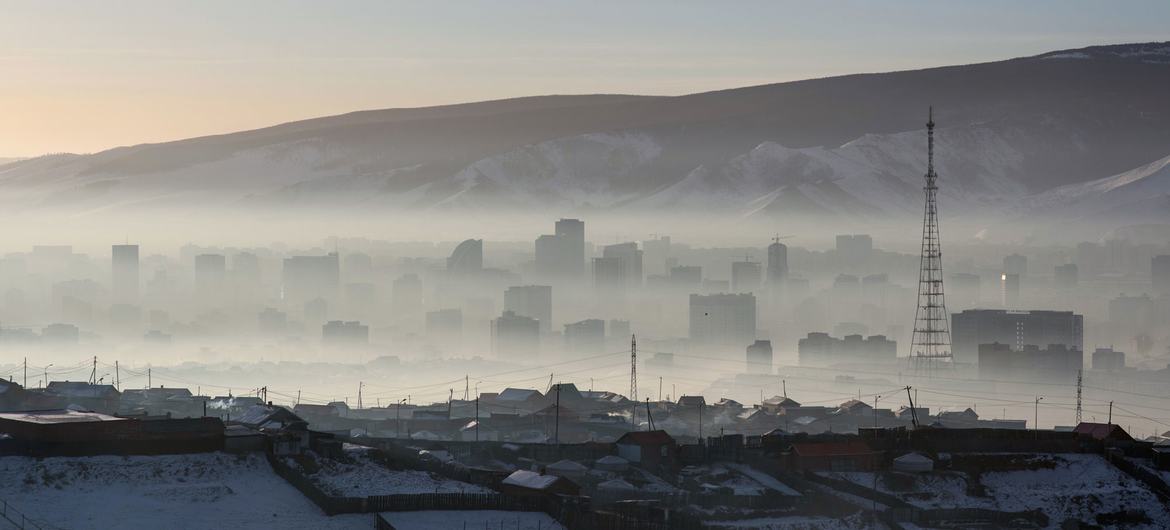
The human toll of inaction is described in stark terms. The report estimates that outdoor air pollution was linked to 6.4 million premature deaths globally in 2025, with household air pollution responsible for two million more, including roughly 300,000 children.
Outdoor pollution alone was also tied to 5.5 million new childhood asthma cases and two million new dementia cases that year, alongside widespread heart disease, stroke, diabetes, and lung cancer. Full implementation of the proposed measures could cumulatively prevent 144 million pollution-related deaths by 2050.
The 25 measures span energy, industry, transport, agriculture, residential cooking and heating, and waste management, ranging from renewable power and electric vehicles to cleaner cooking fuels and stricter vehicle emissions standards. Many also target short-lived climate pollutants like methane and black carbon.
Modeling suggests that immediate, combined implementation could halve global carbon dioxide emissions by 2050, cut methane emissions by 60 percent, and reduce black carbon, sulfur dioxide, and nitrogen oxide levels by roughly 70 percent, avoiding an estimated 0.34°C of warming by 2050 and 1.4°C by 2100.
FYI
The International Day of Clean Air for Blue Skies has been observed annually on September 7 since the UN General Assembly established it in 2019 to raise awareness of the health and environmental costs of air pollution.
The CCAC, hosted by UNEP, brings together governments, scientists, and industry to reduce short-lived climate pollutants such as methane and black carbon, which contribute significantly to both warming and poor air quality.
Air pollution has long been recognized by the World Health Organization as one of the leading environmental risks to human health worldwide, disproportionately affecting low- and middle-income countries where reliance on solid fuels for cooking and heating remains widespread.
The report's release coincided with warnings from the World Meteorological Organization (WMO) that rising pollution from wildfires and heatwaves is increasingly threatening global efforts to improve air quality, adding urgency to the coordinated approach UNEP and CCAC are recommending.
Dive Deeper: Handpicked Stories for You
Follow Channel8 for continuous updates:
Five Major Causes Driving Global Warming
.jpg)
.jpg)
.jpg)
.jpg)