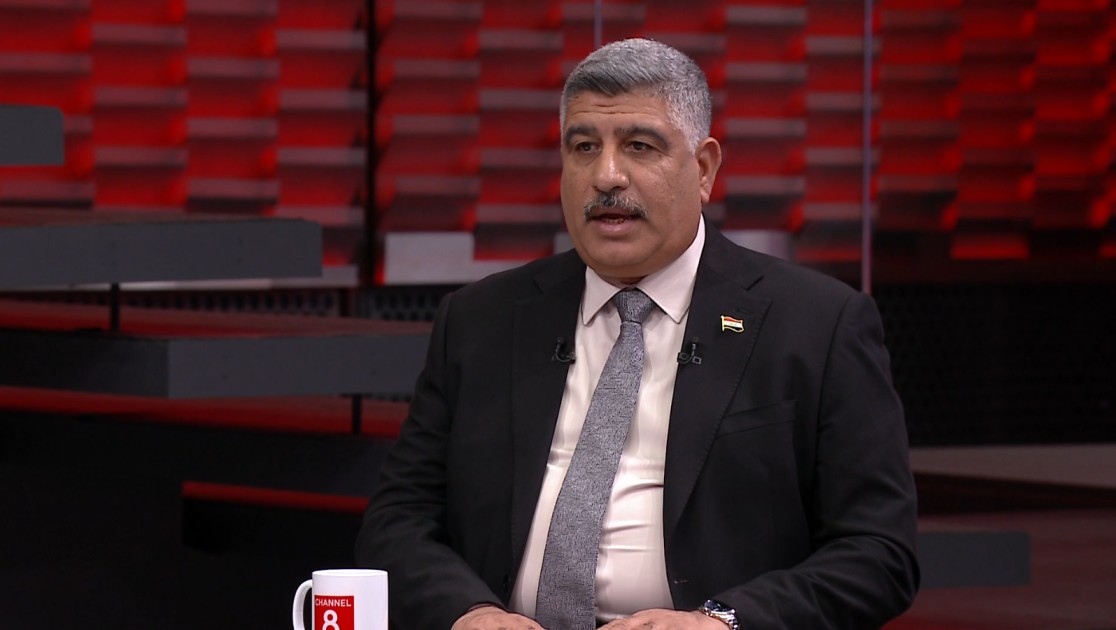
'Peshmerga Are Constitutional Forces,' Sabah al-Numan Tells Channel8 Exclusively
At a Glance
- Iraq condensed its air defense modernization roadmap from six to three years, procuring integrated systems from the US, South Korea, and Turkey under a dedicated sovereign fund.
- Joint security response brigades have resolved previous operational gaps across Kirkuk and Nineveh, placing the demarcation line with the Kurdistan Region under full control.
- All armed factions face a definitive integration and disarmament deadline by September 30, 2026, removing legal justifications for weapons outside state authority.
- Baghdad dismissed reports of foreign Israeli installations, reiterating that regional defense plans centrally cover both federal territory and the Kurdistan Region.
In an exclusive interview with Channel8, Sabah al-Numan, spokesperson for the Commander-in-Chief of the Iraqi Armed Forces, announced that Iraq is executing an accelerated three-year air defense plan while working systematically to bring all non-state weapons under sovereign control.
Key Statements and Focus Area
"His Excellency the Prime Minister, during his recent visit, instructed that these six years be condensed into three years, while maintaining the same requirements, the same goals, and the same efficiency. He also instructed the creation of a special fund to finance the purchase of air defense systems very soon." — Sabah al-Numan, Spokesperson for the Commander-in-Chief of the Iraqi Armed Forces
"We have contracted with the United States of America, South Korea, and Turkey. Very soon, the first of these systems will arrive and will be installed and deployed according to the central plan of the Iraqi Air Defense Command." — Sabah al-Numan, Spokesperson for the Commander-in-Chief of the Iraqi Armed Forces
"Today, there is no security gap that the enemy can exploit. While this gap existed more than two years ago, today there is no area outside the control of Iraqi security forces. These two brigades are operating with high efficiency to secure the area." — Sabah al-Numan, Spokesperson for the Commander-in-Chief of the Iraqi Armed Forces
"After September 30, 2026, there will no longer be any pretext or excuse for the continuation of weapons existing outside the state's framework in the absence of foreign forces. Therefore, I am convinced that after September 30, we will witness an acceleration in the surrendering of weapons and the integration of these factions." — Sabah al-Numan, Spokesperson for the Commander-in-Chief of the Iraqi Armed Forces
Data Table
| Strategic Portfolio | Current Operational Status | Responsible Command / Partners | Core Objective / Timeline |
| Air Defense Modernization | Condensed 3-year acquisition cycle; systems arriving soon | Air Defense Command, MoD (Suppliers: US, South Korea, Turkey) | Establish centralized radar and interceptor umbrella nationwide |
| Federal-KRG Boundary Seams | Fully secured; zero operational gaps identified | 1st & 2nd Joint Response Brigades (Kirkuk & Nineveh Commands) | Prevent militant infiltration via thermal monitoring and shared patrols |
| Peshmerga Coordination | Active joint committees and 5 coordination centers | Iraqi Armed Forces & KRG Ministry of Peshmerga | Secure international frontiers and reinforce constitutional defense roles |
| Factional Arms Integration | Phased transition toward total state control | Federal Government & Judicial Authorities | Conclude non-state armament post-September 30, 2026 |
| Disarmed Group Status | Weapons surrendered under media and official oversight | Federal Government, International Agencies, Turkey | Purely humanitarian stay pending voluntary return or third-country resettlement |
FYI
Baghdad's strategic acceleration of its comprehensive air defense roadmap from six years down to three, coupled with the firm September 30, 2026 deadline to eliminate arms outside state authority, underscores the Prime Minister's guiding principle that sustained economic growth and national security reinforce each other.
The federal government's economic agenda centers on diversifying vital oil export channels and drawing multinational corporations into key domestic sectors.
These commercial footprints directly yield essential international intelligence-sharing channels and high-level security cooperation, cementing domestic cohesion across Iraq's armed branches.
Simultaneously, holding the Arab League presidency allows Iraq to leverage its constructive, balanced diplomacy with both Washington and Tehran, working to defuse external escalations that threaten regional waterways like the Strait of Hormuz where maritime disruptions immediately trigger domestic economic setbacks.
Domestically, the full integration of the Peshmerga within the constitutional security framework and the active deployment of joint response brigades across Kirkuk and Nineveh demonstrate that national air defense, border monitoring, and internal stability operate as a single, indivisible sovereign asset spanning both federal territory and the Kurdistan Region.
Dive Deeper: Handpicked Stories for You
Follow Channel8 for continuous updates:
Sabah al-Numan: Peshmerga and Federal Forces Jointly Protecting Oil Companies
Al-Nujaba Movement Leader Threatens Decisive Conflict Against US Forces After September 30