Peshmerga Ministry Raises Air Defense Concerns Ahead Of US Withdrawal
At a Glance
- The Peshmerga Ministry says US forces will withdraw from Iraq, including the Kurdistan Region, on September 30.
- The ministry says the withdrawal comes at a sensitive time amid continued regional instability.
- It warns that leaving Kurdistan without an alternative air-defense system is a concern.
- The ministry reaffirms coordination with Iraq’s federal security institutions and says Peshmerga forces remain prepared for emerging threats.
The Kurdistan Region’s Ministry of Peshmerga Affairs has raised concerns over the withdrawal of US and coalition forces from Iraq, particularly the removal of air-defense capabilities, as the September 30 deadline approaches.
In a statement issued Sunday, the ministry said the withdrawal is the result of an agreement between the Iraqi federal government, the United States and coalition partners, and comes at a sensitive time given the security situation in Iraq and the wider Middle East.
Key Statements
“Leaving the Kurdistan Region by the United States in such a complicated regional situation, without providing any air-defense system, is a matter of concern.”
— Kurdistan Region Ministry of Peshmerga Affairs
The ministry said it is confident that protecting the airspace of the Kurdistan Region, as part of Iraq’s federal airspace, remains the responsibility of the federal government.
“The airspace of the Kurdistan Region, as part of the airspace of the federal government, is a priority for the federal government, which must assume responsibility for protecting it when necessary.”
— Ministry of Peshmerga Affairs
US Withdrawal: The ministry said the withdrawal of US forces from Iraq and the Kurdistan Region is scheduled for September 30 under an understanding between Baghdad, Washington and coalition partners. Iraq and the United States have repeatedly confirmed the deadline.
Air Defense: The ministry expressed particular concern about Kurdistan being left without an air-defense system. Iraqi National Security Adviser Qasim al-Araji previously said the withdrawal would include US air-defense systems such as Patriot and C-RAM.
Regional Security: The ministry pointed to the broader instability across Iraq and the Middle East, saying the situation requires heightened vigilance and appropriate political decisions.
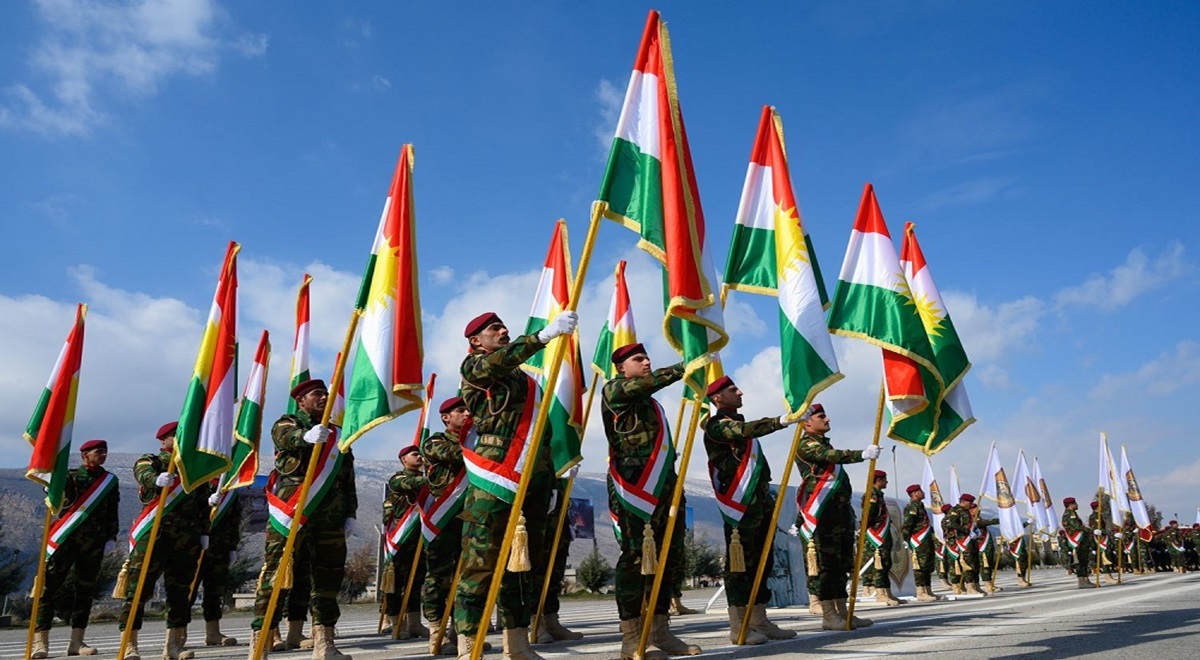
Peshmerga Readiness: The ministry said Peshmerga forces remain prepared to respond to new developments and adapt to potential security threats.
The Kurdistan Region’s Ministry of Peshmerga Affairs has expressed concern over the planned withdrawal of US and coalition forces from Iraq, saying the departure is taking place amid continued instability across the region.
In a statement dated September 27, the ministry said the withdrawal, scheduled for September 30, follows an understanding between the Iraqi federal government, the United States and coalition partners.
The ministry highlighted what it described as the sensitive security environment in Iraq and the Middle East, warning that continued regional instability could pose risks beyond national borders.
It also referred to the attacks the Kurdistan Region experienced during the recent US-Iran conflict. According to the ministry, the region came under more than 1,000 drone and ballistic-missile attacks, some of which struck civilian areas, causing deaths, injuries and material damage.
The ministry said the departure of US forces without an alternative air-defense system is a source of concern. It nevertheless said it is confident that the Iraqi federal government, which is responsible for Iraq’s airspace, will assume responsibility for protecting the Kurdistan Region when necessary.
The issue of air-defense capabilities has also been raised by Iraqi officials. National Security Adviser Qasim al-Araji said earlier this month that US forces would withdraw remaining air-defense systems from the Kurdistan Region as part of the September 30 pullout.
At the same time, the United States has said the end of the coalition mission in Iraq does not mean an end to security cooperation. A CENTCOM spokesperson told Rudaw that US forces based elsewhere in the region would remain prepared to respond to emerging threats and continue working with Iraqi security forces and the Peshmerga.
The Peshmerga Ministry also reaffirmed its security relationship with Iraq’s federal forces, describing its ties with the Iraqi Army as constitutional and security-based. It said coordination and joint operations would continue.
The ministry thanked the United States and coalition partners for their previous support to the Kurdistan Region and Peshmerga forces, while stressing that Peshmerga forces remain prepared for future developments.
FYI
The September 30 withdrawal marks the end of the US-led coalition's military mission in Iraq, but Washington says security cooperation with Iraqi and Peshmerga forces will continue after the mission concludes.
For the Kurdistan Region, the immediate concern highlighted by officials is the loss of US-provided air-defense capabilities at a time when the region says it has faced repeated drone and missile attacks. The longer-term issue is whether Baghdad and Erbil can establish effective national air-defense and security arrangements following the coalition's departure. Earlier, the Peshmerga Ministry itself called for a unified defense mechanism involving drones and advanced radar systems.
Dive Deeper: Handpicked Stories for You
Follow Channel8 for continuous updates:
Iraq Prepares for US-Led Coalition Withdrawal by September 30
Iraq’s Four Presidencies To Discuss Post-US Withdrawal Security
.jpg)
.webp)