Indigenous Communities Cut Wildfires Across Peru’s Forests
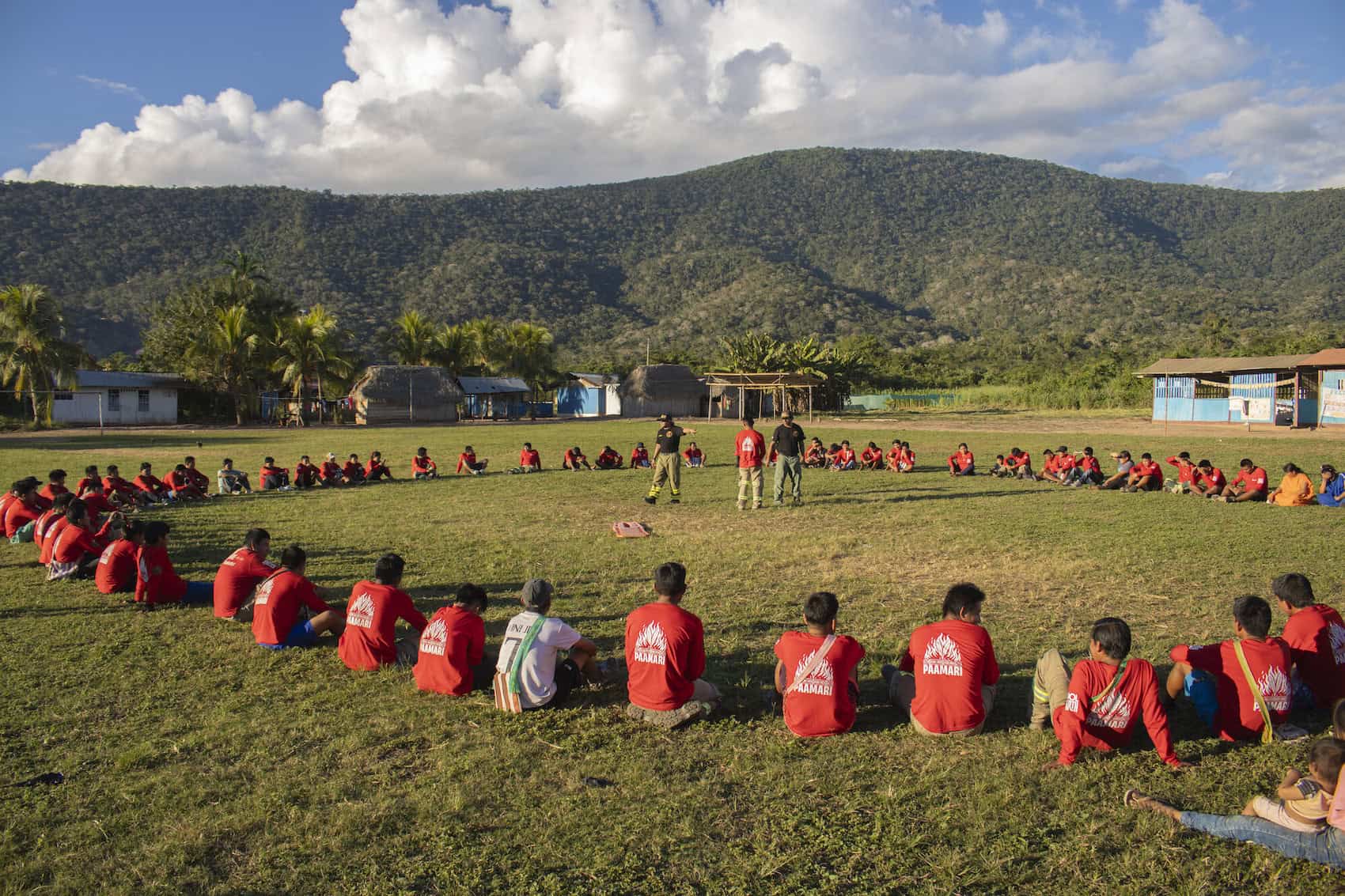
At a Glance
- Indigenous communities in Peru have sharply reduced wildfires across their territory.
- The Paamari program combines Indigenous knowledge with satellite imagery, drones, and radio systems.
- Community fire brigades are trained to detect and respond to fires before they spread.
- The approach is now being expanded to other Indigenous communities in the region.
Indigenous communities in Peru’s Amazon are using a combination of traditional knowledge and modern technology to strengthen wildfire prevention and protect their forests.
Key Statements and Focus Area
- Indigenous Stewardship: “We are the ones who take care of the forest.” — Romer Quentimari Garcia, Ashaninka community leader and brigadista.
- Community Ownership: “If you want to ensure that a project sustains over time, I think it’s important that local people are going to own that project.” — Julio Acosta, forest data manager at Cool Earth.
- Focus Area: The Paamari program is centered on Indigenous-led wildfire prevention, combining local knowledge with early-warning systems and rapid response tools.
Wildfire Numbers Fall
The Paamari program was launched in 2023 through a partnership between the Central Ashaninka of the Ene River, known as CARE, and Cool Earth.
The program operates across 45 communities and trains local residents as brigadistas. They use satellite imagery, drones, and radio communications to identify smoke and determine whether a fire is controlled or spreading.
The number of recorded wildfires fell from 25 in 2023 to nine in 2024. The area affected declined from 2,648 hectares to 492 hectares during the same period.
In 2025, no wildfires were recorded across the CARE territory, although community teams responded to and extinguished several potential threats.
Technology Meets Traditional Knowledge
David Torres, a CARE coordinator and monitoring specialist, said the effectiveness of the program depends on combining modern equipment with knowledge accumulated by Indigenous communities about their own territories.
That local knowledge is particularly important in remote areas where national firefighting teams can face difficulties reaching fires quickly. Community members can identify threats and respond before outside crews arrive.
The approach also intersects with regulations governing the use of fire. Government rules generally prohibit burning without an exemption or permit, including some prescribed burning practices traditionally used by communities to manage crops.
Violations can result in fines, community service, or prison sentences.
Programs Expand Beyond CARE
Cool Earth plans to extend its fire-prevention training to the nearby Indigenous communities of Cutivireni and Oviri, with local residents taking leading roles in the programs.
The expansion comes as scientists warn of potentially difficult climate conditions and continued wildfire risks across the Amazon.
Research is also adding to the evidence surrounding Indigenous-led conservation. A 2026 analysis by researchers from the University of British Columbia examined 111 peer-reviewed studies and found that Indigenous-managed lands produced conservation outcomes comparable to or exceeding those of protected areas in the studies reviewed.
Fire Prevention Within a Wider Crisis
Wildfires are only one part of the pressure facing Peru’s forests. Mining, logging, and illicit crops also contribute to deforestation across the Amazon.
Cool Earth has also used direct cash transfers to people living in rainforest communities, allowing recipients to decide independently how the money is used. The organization says such programs cannot address the wider challenges alone and require broader government support.
FYI
Peru experienced an unprecedented wildfire season during a severe drought that led the government to declare a state of emergency. More than 10,000 fires were recorded, with about 63,000 hectares of tree cover lost.
Forest fires have consequences beyond the immediate destruction of vegetation. They damage habitats and reduce forest areas that absorb and store carbon, increasing pressure on ecosystems already affected by rising temperatures, deforestation, and changing weather patterns.
Dive Deeper: Handpicked Stories for You
Follow Channel8 for continuous updates:
Climate Action Now Hinges on Speed, Finance, and Cooperation


.jpg)
.jpg)
.jpg)