On This Day in History: Fyodor Dostoevsky, Literary Genius, Passes Away (February 9 [January 28 O.S.], 1881)
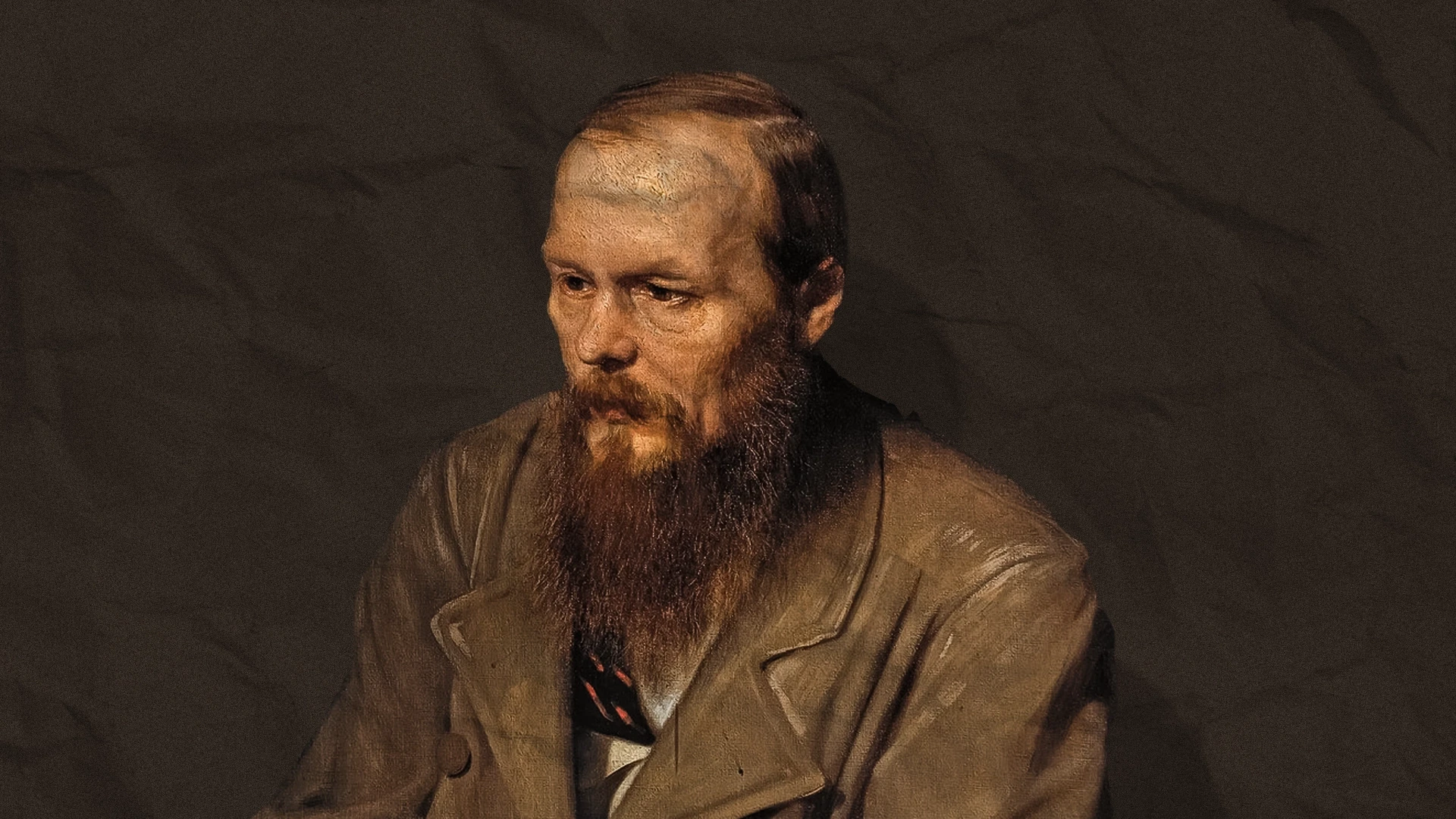
On February 9, 1881 (January 28, Old Style), Russian novelist and short-story writer Fyodor Dostoevsky passed away in St. Petersburg at the age of 59.
Widely regarded as one of the greatest literary minds in history, Dostoevsky’s works continue to resonate deeply, exploring the complexities of human nature, morality, and redemption.
A Life Marked by Struggle and Genius
Born on November 11, 1821 (October 30, Old Style) in Moscow, Dostoevsky was raised in a family that valued literature and intellectual exploration. His early exposure to works by Pushkin, Goethe, and Schiller influenced his creative vision. However, his life was marred by personal tragedies, starting with the death of his mother in 1837 and the alleged murder of his father by serfs in 1839. These formative events deeply shaped Dostoevsky’s worldview, fueling his lifelong exploration of themes like suffering, moral conflict, and spiritual awakening.
In 1849, Dostoevsky was arrested for participating in the Petrashevsky Circle, a group that discussed politically progressive and subversive ideas. Sentenced to death, he faced a mock execution and stood before a firing squad, only to have his sentence commuted at the last minute to hard labor in Siberia. This near-death experience profoundly affected his psyche and strengthened his faith, paving the way for the existential and spiritual themes that permeate his works.
Literary Achievements and Contributions
Returning from exile in the 1860s, Dostoevsky penned some of the most celebrated works in world literature. His novels delved into psychological depth, moral dilemmas, and the struggle for redemption. Among his iconic works are:
"Crime and Punishment" (1866): A psychological exploration of guilt and redemption through the story of Raskolnikov, a student who justifies murder as a means to achieve greatness.
"The Idiot" (1869): A profound commentary on innocence and societal decay through the Christ-like figure of Prince Myshkin.
"Demons" (1872): A political novel critiquing nihilism and the revolutionary ideologies of 19th-century Russia.
"The Brothers Karamazov" (1880): A philosophical masterpiece exploring faith, family conflict, and morality, featuring the celebrated “Grand Inquisitor” chapter.
"Notes from Underground" (1864): Considered one of the first existentialist works, it critiques rationalism and explores the inner struggles of a bitter, isolated narrator.
Dostoevsky and Freud: A Complex Intersection
Dostoevsky's psychological depth captivated not only writers and philosophers but also psychoanalysts, notably Sigmund Freud. Freud wrote extensively about Dostoevsky’s works, particularly in his essay “Dostoevsky and Parricide” (1928). Freud regarded Dostoevsky’s life and writings as a profound case study in human psychology, drawing parallels between Dostoevsky’s personal traumas and the themes of guilt, punishment, and redemption in his novels. Freud referred to Dostoevsky as “one of the greatest geniuses of literature,” acknowledging his unparalleled ability to portray the intricacies of the human mind.
Nietzsche’s Admiration
Friedrich Nietzsche, the German philosopher, held Dostoevsky in the highest regard, famously stating, “Dostoevsky is the only psychologist from whom I had something to learn.” Nietzsche was particularly struck by Dostoevsky’s exploration of human suffering, morality, and the darker corners of the soul—areas that aligned with Nietzsche’s own philosophical inquiries into the nature of existence.
Legacy and Global Influence
Dostoevsky’s works have left a profound impact on literature, philosophy, and psychology. His influence extends to writers like Franz Kafka, Virginia Woolf, and Albert Camus, as well as philosophers such as Jean-Paul Sartre and Martin Heidegger. His ability to probe existential and moral questions has made him a cornerstone of modern thought.
Dostoevsky’s exploration of the human condition—guilt, faith, redemption, and free will—continues to inspire and challenge readers worldwide. His works are not merely literary achievements but also profound meditations on the struggles of humanity.
Death and Commemoration
Dostoevsky passed away on February 9, 1881, due to complications from a pulmonary hemorrhage. His funeral drew tens of thousands of mourners, a testament to his impact on Russian society. He was laid to rest in Tikhvin Cemetery at the Alexander Nevsky Monastery in St. Petersburg, near other Russian literary giants.
A Timeless Genius
Dostoevsky remains a towering figure in global literature, whose works transcend time and geography. As Nietzsche noted, Dostoevsky was not merely a novelist but a psychologist of unparalleled depth. His ability to dissect the human soul ensures that his writings remain as relevant today as they were in his own time.
What Does Old Style and New Style Mean?
The Old Style (O.S.) refers to the Julian calendar, which was used in Russia until 1918.
The New Style (N.S.) refers to the Gregorian calendar, which replaced the Julian calendar and is now used globally.
When referring to events from that period in Russia, both dates are often provided to align with both systems. This dual dating helps clarify when events occurred, as the Julian calendar was 13 days behind the Gregorian calendar in the 19th century.
Explanation of Dostoevsky’s Dates
Birth Date:
Old Style (Julian calendar): October 30, 1821
New Style (Gregorian calendar): November 11, 1821
This means Dostoevsky was born on October 30 in Russia according to the Julian calendar, but when aligned with the Gregorian calendar, it corresponds to November 11.
Death Date:
Old Style (Julian calendar): January 28, 1881
New Style (Gregorian calendar): February 9, 1881
Dostoevsky passed away on January 28 according to the Julian calendar, which was still in use in Russia at the time. However, this date aligns with February 9 in the Gregorian calendar, which is why modern references to his death often use February 9.
Why the Difference Matters
The distinction is crucial for historical accuracy. When studying or writing about events that took place in Russia before 1918, historians often mention both dates to avoid confusion. After 1918, the Gregorian calendar became the standard in Russia, aligning it with the rest of the world.
Conclusion
To sum up, January 28 (Old Style) corresponds to February 9 (New Style), so both dates refer to Dostoevsky’s death. Modern references typically use February 9, but the Julian calendar date (January 28) is also accurate within its historical context.
Sources:
Frank, Joseph. Dostoevsky: A Writer in His Time. Princeton University Press, 2009.
The British Library, "Fyodor Dostoevsky – Life and Works.


![[Undefined encoding]](https://media.channel8.com/en/1793043071206-1792581456343-16hanar.jpg)