On This Day in History: James Joyce’s Ulysses Published in Paris, A Landmark in Modernist Literature - February 2, 1922
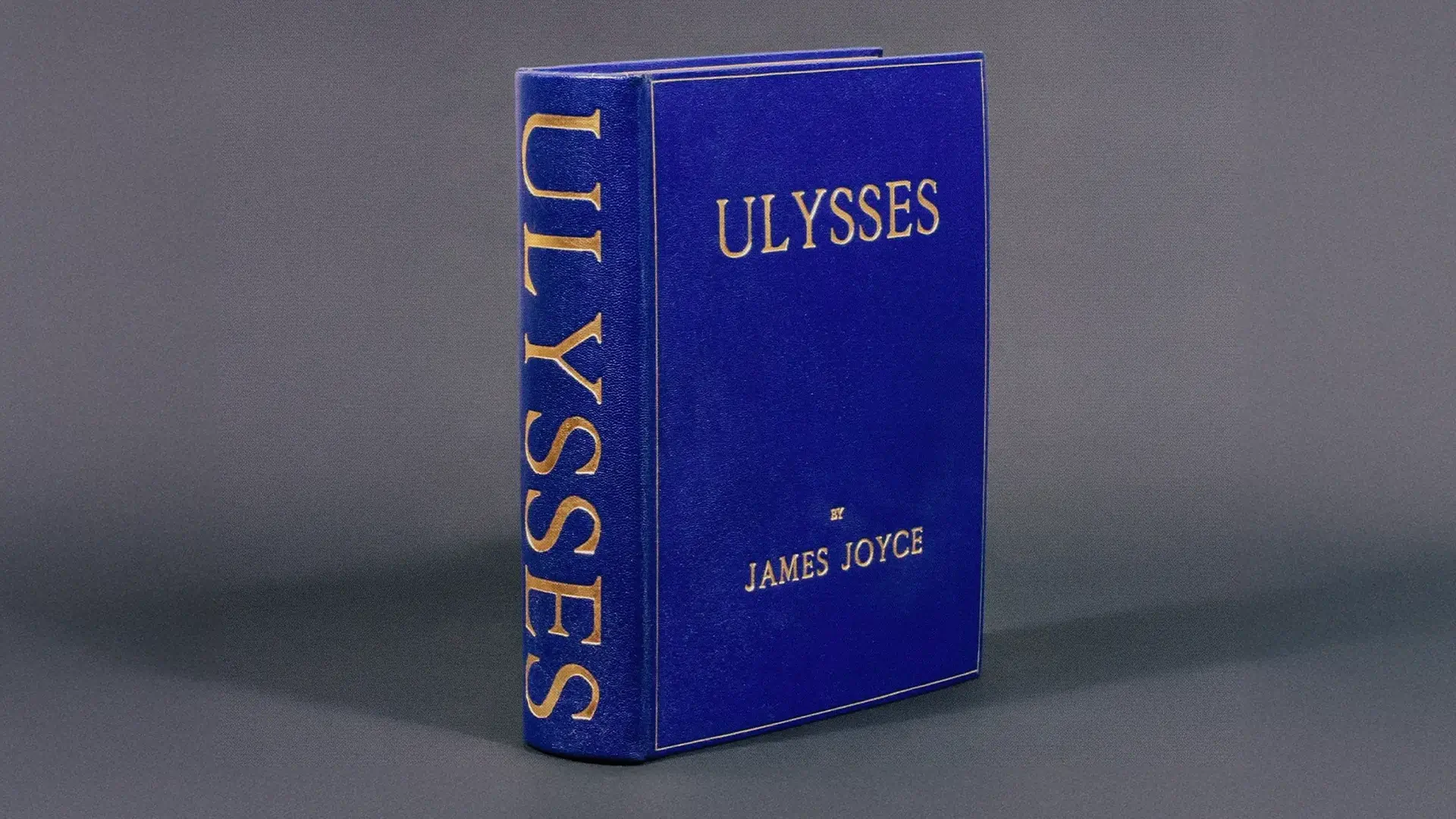
On February 2, 1922, James Joyce’s groundbreaking novel Ulysses was first published in Paris by Sylvia Beach, the American expatriate owner of the legendary Shakespeare and Company bookstore.
The novel’s release was deliberately timed to coincide with Joyce’s 40th birthday, marking a pivotal moment in literary history.
A Struggle for Publication
Due to its experimental style and controversial content, Ulysses faced severe censorship issues in the English-speaking world. Publishers in Britain and the United States rejected the novel, with parts of it being deemed obscene and subject to legal bans. In 1919, excerpts from Ulysses published in The Little Review led to an obscenity trial in New York, prompting Sylvia Beach to personally finance and publish the book herself.
The first edition consisted of 1,000 hand-printed copies, meticulously crafted to reflect the novel’s literary significance. Each book was numbered, and the initial price was 150 francs (about $750 in today’s value).
Revolutionizing Literature
Ulysses is widely regarded as a masterpiece of modernist literature due to its:
Stream-of-consciousness narrative – A technique that immerses readers in the unfiltered thoughts and emotions of its characters.
Homeric parallels – The novel loosely follows the structure of Homer’s Odyssey, with protagonist Leopold Bloom mirroring Odysseus on an ordinary yet profound one-day journey through Dublin on June 16, 1904 (now celebrated as Bloomsday).
Linguistic experimentation – Joyce pushed the boundaries of language, incorporating multiple literary styles, interior monologues, and complex wordplay that challenge conventional storytelling.
A Legacy of Controversy and Influence
Despite initial censorship and being banned in the U.S. and Britain for over a decade, Ulysses gained international recognition as a literary triumph. In 1933, the U.S. ban was lifted after a historic court ruling (United States v. One Book Called Ulysses), in which Judge John M. Woolsey declared that the novel was not obscene and had literary merit.
Since then, Ulysses has been widely studied and praised for its depth, humor, and psychological insight, influencing generations of writers including Samuel Beckett, William Faulkner, and Virginia Woolf.
The Role of Sylvia Beach
Joyce’s success might not have been possible without Sylvia Beach, who took an immense financial and personal risk to publish Ulysses. Her Shakespeare and Company bookshop in Paris became a hub for modernist writers, hosting literary icons like Ernest Hemingway, T.S. Eliot, and F. Scott Fitzgerald.
Beach’s dedication to Joyce’s work ensured that Ulysses reached readers despite societal and legal barriers, cementing its place as one of the most revolutionary novels of the 20th century.
A Lasting Literary Landmark
Today, Ulysses remains a cornerstone of modern literature, studied in universities worldwide and revered for its bold innovation. The novel’s legacy endures, with annual Bloomsday celebrations in Dublin and beyond, honoring Joyce’s extraordinary contribution to storytelling.
James Joyce's Ulysses has elicited a wide range of reactions from literary figures and philosophers since its publication. Some have lauded its innovation and depth, while others have critiqued its complexity and style.
Praise for Ulysses
Ezra Pound, a prominent modernist poet, hailed Ulysses as a monumental work, stating, "All men should 'Unite to give praise to Ulysses'; those who will not, may content themselves with a place in the lower intellectual orders." He further asserted that Joyce, in writing this "super-novel," had surpassed literary giants like Gustave Flaubert and Marcel Proust.
T.S. Eliot, another leading modernist, emphasized the novel's significance, writing, "I hold [Ulysses] to be the most important expression which the present age has found; it is a book to which we are all indebted, and from which none of us can escape."
Vladimir Nabokov, the acclaimed author of Lolita, praised Ulysses as "a divine work of art [that] will live on despite the academic nonentities who turn it into a collection of symbols or Greek myths." He regarded it as the greatest masterpiece of 20th-century prose.
Critiques of Ulysses
Virginia Woolf, a contemporary of Joyce, offered a mixed review, describing Ulysses as "a memorable catastrophe—immense in daring, terrific in disaster."
Arnold Bennett, a British novelist, criticized the novel's length and detail, remarking, "Given sufficient time, paper, childish caprice, and obstinacy, one might easily write over seven thousand pages about twenty hours of life." He expressed skepticism about the novel's elaborate structure and its focus on minutiae.
Paulo Coelho, author of The Alchemist, expressed a strong aversion to Ulysses, labeling it as "harmful" to literature. He argued that the book is a "twit," suggesting that its complexity alienates readers.
Notable Quotes from Ulysses
Joyce's Ulysses is replete with memorable lines that capture its themes and stylistic innovations:
"Think you're escaping and run into yourself. Longest way round is the shortest way home."
"History, Stephen said, is a nightmare from which I am trying to awake."
"A man of genius makes no mistakes. His errors are volitional and are the portals of discovery."
These diverse perspectives and quotes underscore the profound impact Ulysses has had on literature, inspiring both admiration and debate among readers and scholars alike.
Sources:
https://www.themorgan.org/exhibitions/online/ulysses/publishing-ulysses
02/02/2025