Senior Leaders Urge Khamenei to Reconsider Fatwa on Nuclear Weapons
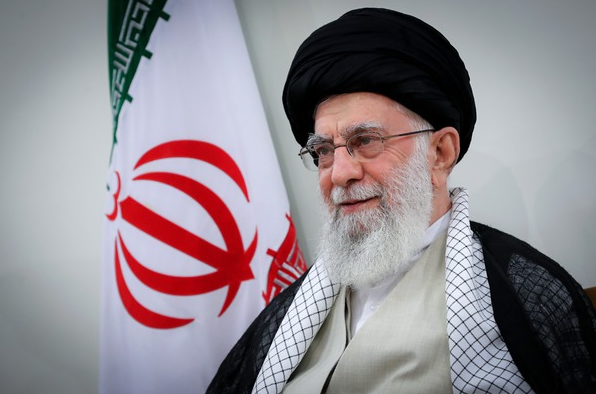
With the return of the U.S. President Donald Trump to the White House and the reimposition of a "maximum pressure" policy against Tehran earlier this week, some voices within Iran are demanding the acquisition of nuclear weapons as a means of ensuring the regime's survival.
Senior Iranian military leaders, including commanders from the Revolutionary Guard, have called on Supreme Leader Ali Khamenei to rescind his long-standing fatwa prohibiting the development of nuclear weapons, warning that adhering to the ban could threaten the existence of the regime.
Calls for Nuclear Weapons Amid "Existential Threats"
The Revolutionary Guard leaders argued that nuclear weapons are necessary to confront what they describe as "existential threats" from the West. According to The Telegraph, one senior official reportedly stated: "We have never been this weak before, and this may be our last chance to obtain one before it is too late."
An Iranian official in Tehran highlighted that Khamenei’s prohibition of negotiations with the U.S. and his ban on nuclear weapons development have left the country vulnerable. “The existential threat we now face has led many senior leaders – who previously insisted on following the Supreme Leader’s instructions – to push for a nuclear weapon,” the official said.
A member of Iran's paramilitary Basij force echoed these sentiments, stating: “Why don’t we have [a nuclear bomb]? It is our absolute right, and it is unfair to deprive ourselves of it. The world needs a shock to reset itself, and Iran would do it a favor by testing an atomic bomb.”
The Fatwa Against Nuclear Weapons
The fatwa, issued by Khamenei in 2005 during a meeting of the International Atomic Energy Agency (IAEA), declared nuclear weapons “completely haram,” or forbidden in Islam. The decree has served as a religious justification for Iran's official stance against the development of such weapons. However, many hardline politicians and military figures are now openly questioning its applicability.
Shia Islamic principles allow rulings to adapt to changing circumstances, as noted by a member of Iran's parliament. One MP commented, “The fatwa still stands, but rulings can change depending on time and circumstances.”
Pressure to Amend Military Doctrine
In recent years, hardline politicians have increasingly pressured Khamenei to revise the fatwa. Last year, several Iranian lawmakers urged the Supreme National Security Council to reconsider the country’s nuclear policy in light of mounting external threats.
Kamal Kharrazi, a senior adviser to Khamenei, confirmed in November that the fatwa was the only limitation preventing Iran from pursuing nuclear weapons. He stated, “If Iran faces an existential threat, we will have no choice but to amend our military doctrine. We already have the technical capabilities to produce weapons — only the religious edict banning nuclear weapons prevents us from doing so.”
Technical Capabilities in Place
A Telegram channel linked to the Islamic Revolutionary Guard Corps recently claimed that Iran possesses the technical know-how to produce nuclear weapons. While the country has not officially pursued weaponization, such statements underline the growing internal debate about Iran’s nuclear future.
The Global Implications
If Khamenei were to amend or revoke the fatwa, it would signal a dramatic shift in Iran’s nuclear policy and could have far-reaching consequences for regional and global security. The possibility of Iran testing a nuclear weapon, as suggested by some of its officials, would likely trigger severe international backlash and escalate tensions in an already volatile region.
This internal push to reconsider the fatwa highlights the growing divide within Iran's leadership over how to address mounting external pressures while safeguarding the regime's survival.
09/02/2025