Syrian President Al-Sharaa Admits Joining al-Qaeda in Iraq to Gain Experience and "Defend" the People
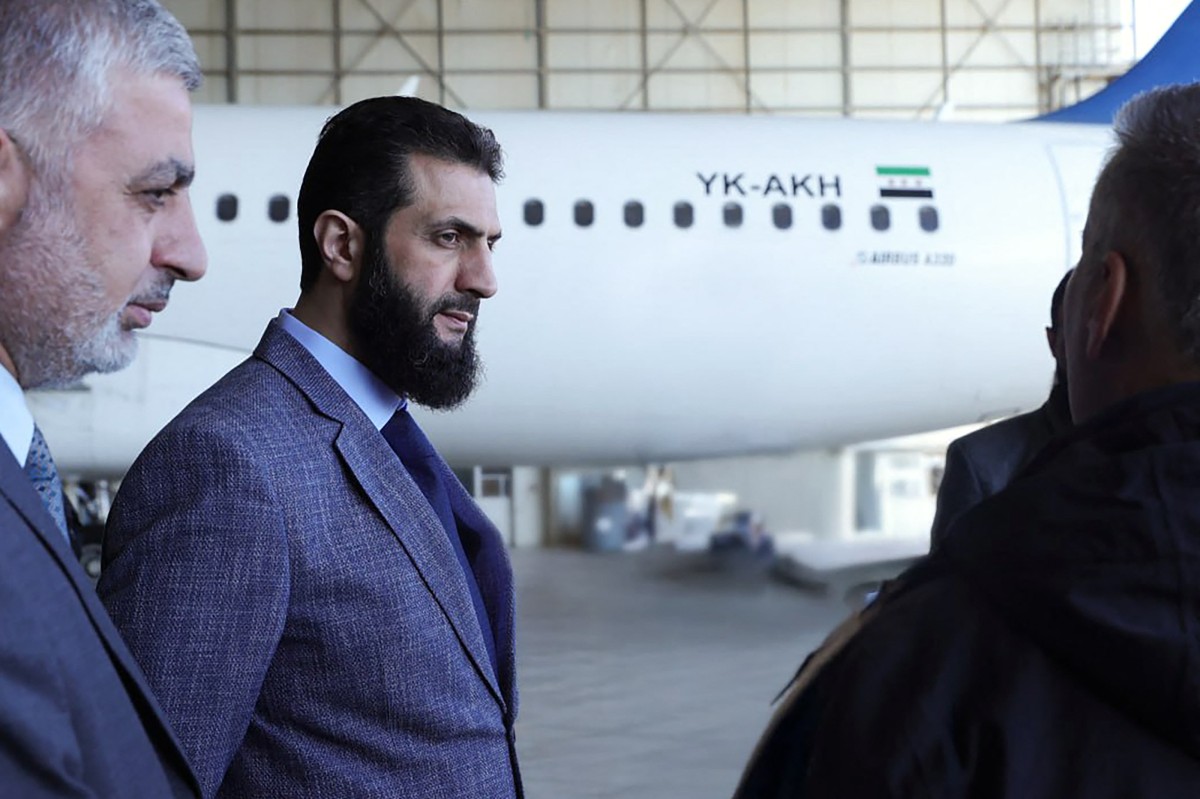
Syrian President Ahmed Al-Sharaa acknowledged that his time in Iraq and involvement with al-Qaeda were driven by a desire to gain experience and "defend" the Iraqi people.
“We didn’t have the capabilities or enough experience, so I decided to go wherever I could gain experience,” Al-Sharaa said in an interview on "The Rest of Politics" podcast, as reported by the American Al-Hurra TV. “The timing coincided with the build-up of US forces entering Iraq, and there was a strong Arab and Islamic response against this intervention.”
He stated that his objectives for going to Iraq were twofold: first, to gain experience in warfare, and second, to "defend" the Iraqi people. “I worked with several factions, but they began to dwindle until I found myself with al-Qaeda in Iraq.”
Reflecting on his time in prison, Al-Sharaa described his incarceration in facilities such as Abu Ghraib, Camp Bucca, Kober, and Taji. “During this period, my awareness grew, and I noticed a significant change in my personality... I encountered strange ideas in prison and rejected the sectarian war that emerged in Iraq at the time... Some factions inside the prison criticized me for not adopting ISIS's ideology later on,” he said.
Al-Sharaa was reportedly released from prison just two days before the Syrian revolution began and quickly arranged his return, setting clear conditions for his activities: first, to avoid repeating the Iraq experience, and second, to refrain from engaging in any sectarian conflict, focusing instead on toppling the Syrian regime. “We started with just six people, but within a year, we grew to five thousand and spread across various Syrian provinces.”
He noted that al-Qaeda in Iraq was surprised by this rapid expansion and attempted to impose its experience on the Syrian conflict, but he opposed implementing the Iraqi model in Syria. “A rift formed between us, and a large war broke out in which we lost over 1,200 fighters and 70% of our strength. However, we rebuilt ourselves, focusing on fighting the regime and addressing other threats such as ISIS,” he stated.
Al-Sharaa, previously known as Abu Mohammed Al-Joulani, traveled to Iraq after the US-led invasion in 2003 to join the fighting. He became a member of al-Qaeda in Iraq under the leadership of Abu Musab al-Zarqawi but was imprisoned for five years, halting his advancement within the group.
The US had placed a $10 million bounty on Al-Sharaa but later withdrew the reward after a US delegation visited Damascus and met with him.
11/02/2025