Ancient Canals in Southern Iraq Linked to Centuries of Slave Labor, New Study Finds
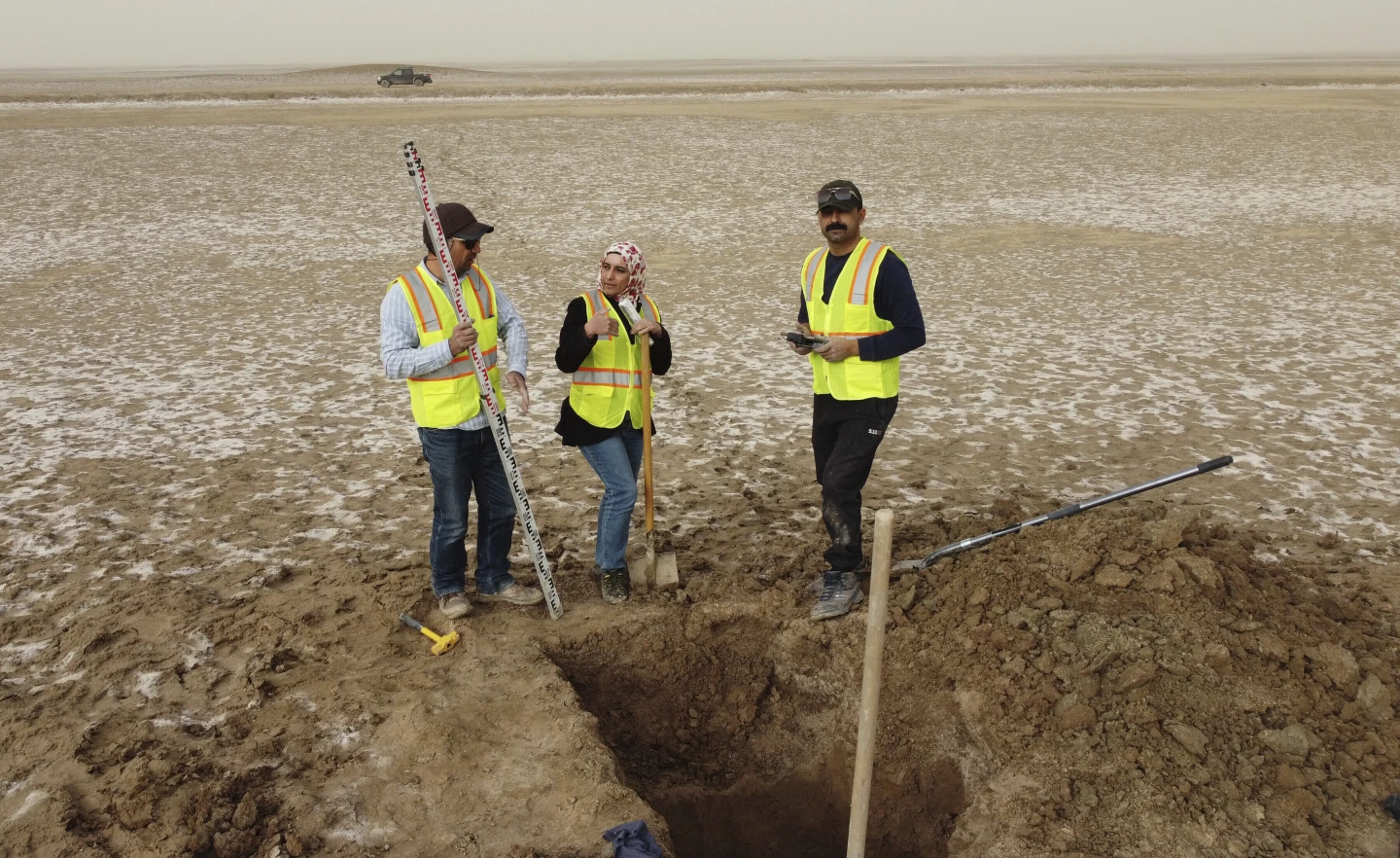
A sprawling network of over 7,000 ridges and canals across the Shaṭṭ al-Arab floodplain in southern Iraq has long intrigued archaeologists, believed to be remnants of a massive agricultural system built by enslaved laborers.
Now, fresh evidence confirms those suspicions.
An international team of researchers has revealed that the construction of these massive earthworks likely began around the time of the 9th-century Zanj Rebellion and continued for several centuries afterward. Their findings, published Monday in the journal Antiquity, provide new insight into the extent and duration of slave labor in the region.
“Their history has not been actually written or documented very well in our history,” said Jaafar Jotheri, an archaeologist from Iraq’s University of Al-Qadisiyah and a co-author of the study. “That’s why this finding is very important. What’s next is to protect at least some of these huge structures for future work. It is minority heritage.”
The enslaved people, referred to as the “Zanj,” came from the East African coast and were brought to Iraq under the Abbasid Caliphate. In 869 A.D., they launched the Zanj Rebellion—one of the largest slave uprisings in world history—which lasted over a decade until the Abbasid forces suppressed it in 883 A.D.
Despite the end of the rebellion, the new dating analysis—using radiocarbon and optically stimulated luminescence techniques—shows that ridge construction continued well into the 13th century. The researchers selected four ridge crests for testing, all of which dated from the late 9th to mid-13th century A.D.
According to the report, the sheer size and complexity of the canal system point to the “investment of human labour on a grand scale,” reinforcing the theory that forced labor persisted long after the rebellion’s end.
The research is the result of collaboration between archaeologists from the UK’s Durham and Newcastle universities, Radboud University in the Netherlands, and Iraq’s University of Basra.
“This discovery,” the team noted, “shows that these features were in use for a substantially longer period than previously assumed and, as such, they represent an important piece of Iraqi landscape heritage.”
The findings come amid a renaissance in Iraqi archaeology. After decades of conflict that stalled excavations and led to widespread looting, archaeologists have resumed fieldwork, and thousands of looted artifacts have been repatriated.
Many descendants of the Zanj community still live in modern-day Basra, forming part of Iraq’s complex cultural mosaic—though their historical narrative remains largely untold.
02/06/2025