Iraq’s Council of Ministers to Discuss Kurdistan’s Oil Revenues and Salaries Amid Ongoing Disputes
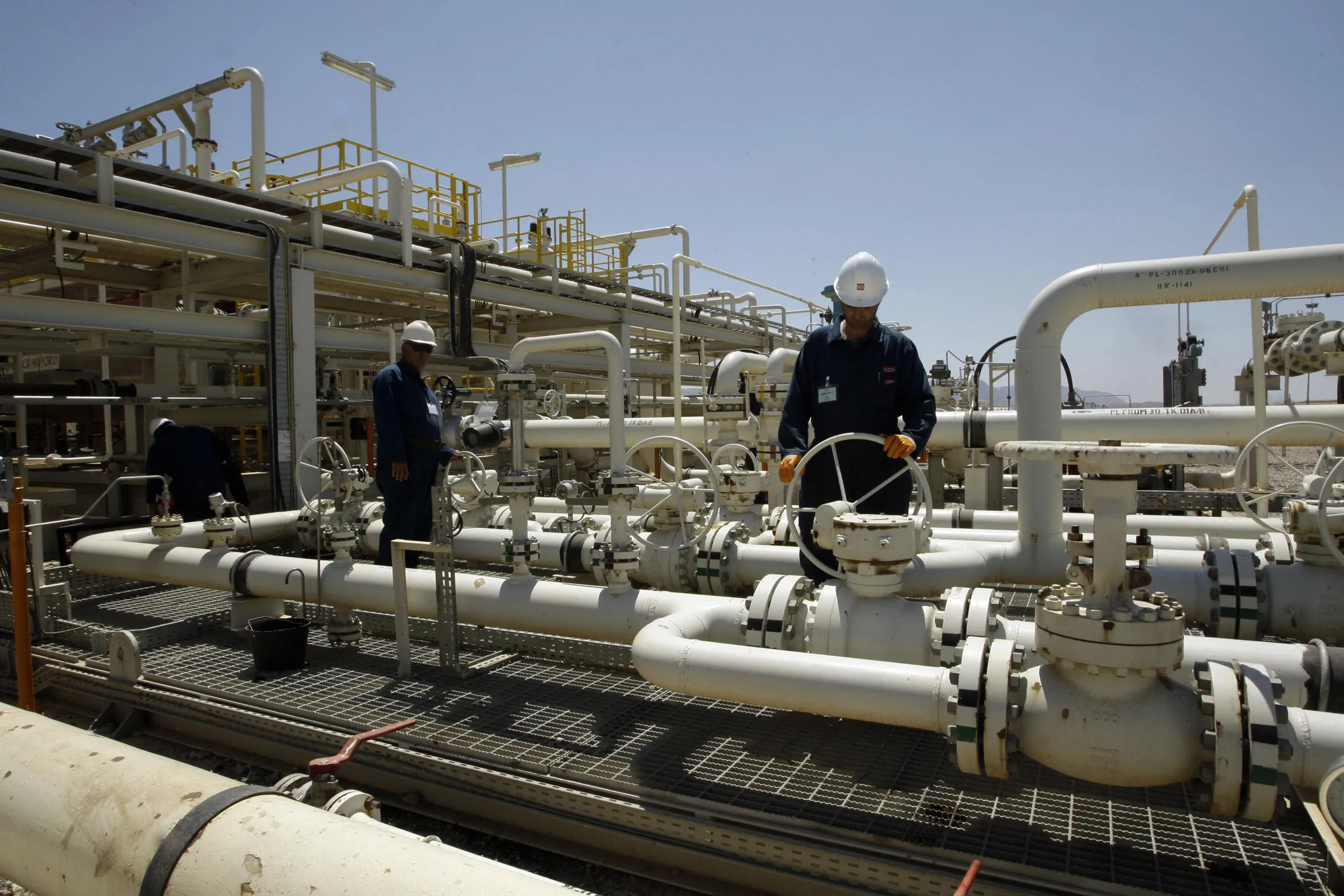
Today, Iraq’s Council of Ministers is holding its regular meeting, where it is expected to address the issue of the Kurdistan Region’s oil revenues, which are directly linked to the salaries of public sector employees.
The matter has been formally referred to the federal cabinet for discussion, as negotiations over Kurdistan’s oil exports and financial entitlements continue.
Salaries in Kurdistan Awaiting Federal Decision
According to available information, Prime Minister Mohammed Shia al-Sudani met with Kurdish ministers on the sidelines of the Arab-Islamic summit in Qatar. The discussions focused on the salary issue, Kurdistan’s oil revenues, and the agreements between Erbil and Baghdad.
A source from the Kurdish negotiating team had previously indicated that if no agreement is reached, only three out of the last six salaries of the year will be disbursed, while the fate of the remaining three will remain uncertain. The main obstacle in disbursing salaries lies in disagreements between Baghdad and Erbil regarding oil and non-oil revenues, hence the matter has been elevated to the Council of Ministers.
Kurdistan Oil and APIKUR’s Demands: A Lingering Deadlock
On the question of resuming Kurdistan’s oil exports, Iraq’s Oil Minister Hayan Abdulghani emphasized that a new proposal has been presented to the APIKUR oil companies and that a fresh draft is ready. An APIKUR spokesperson told Channel8 that they are currently working on a formal, written agreement that secures their rights and financial entitlements.
APIKUR’s demands remain unchanged: repayment of $1 billion in previous debt, guarantees for future entitlements, reopening of a U.S. bank account, compensation for incurred losses, and settlement of disputes in accordance with international law.
Baghdad and Erbil: Divergent Approaches and a Backup Plan
In response, Iraq’s SOMO and the Oil Ministry stress that Iraq’s constitution and federal budget must prevail, and disputes should be settled under Iraqi law and courts. Baghdad is requesting that 50,000 barrels per day be allocated to cover Kurdistan’s domestic needs, and 180,000 barrels per day be prepared for export through Turkey.
Due to ongoing disputes with APIKUR, Baghdad has offered an alternative plan to Erbil: “Keep 50,000 barrels per day for domestic use, deliver the rest to our refineries for processing, and end exports via Turkey.” However, Baghdad is not willing to pay the same $16 per barrel production and transportation cost for Kurdistan’s domestic oil.
Ministry of Natural Resources’ Position
In an official statement to Iraq’s Oil Ministry, Kurdistan’s Ministry of Natural Resources announced that the Region’s total daily oil production stands at 270,000 barrels. Of this, around 110,000–120,000 barrels are produced by local companies. The ministry expressed readiness to allocate 60,000–70,000 barrels to SOMO in addition to the 50,000 barrels set aside for domestic consumption.
It also confirmed that exports could resume without APIKUR’s oil and explicitly told Baghdad that oil companies’ claims must be resolved to ensure that the entire 270,000 barrels, after subtracting local consumption, can be delivered.
Costs and Uncertainty
Iraq’s federal budget law sets the cost of production and transportation of Kurdistan’s oil at $16 per barrel. However, APIKUR’s financial demands from Baghdad have delayed the resumption of exports. If Kurdistan delivers oil independently of APIKUR (about 60,000–70,000 barrels), Iraq will instead process it in domestic refineries, since exporting less than 100,000 barrels per day through Ceyhan port would be prohibitively expensive.
16/09/2025