Antifa: A Leaderless Movement at the Heart of America’s Debate
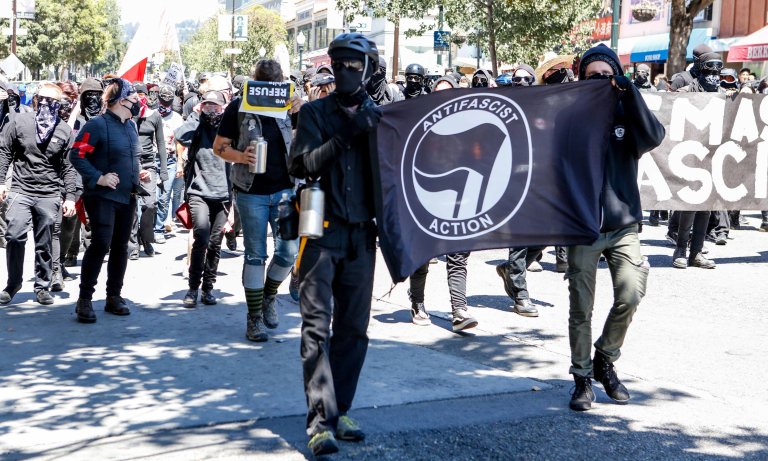
Say the word Antifa and you’ll likely trigger an argument. For some, it’s shorthand for chaos in the streets; for others, a last line of defense against creeping fascism. What it isn’t, though, is an organization in the traditional sense. There are no national committees, offices, or membership cards. More akin to a banner, Antifa is a name pieced together by informal networks of activists, many of whom are young, enraged, and committed to taking on the far right wherever it manifests.
Investigations have found no evidence of big donors or foreign governments bankrolling Antifa. Instead, activists raise money through small donations, crowdfunding, and defense funds. One of the best-known, the International Anti-Fascist Defense Fund, has distributed about $250,000 globally since 2015 enough to cover legal and medical bills, not to finance a shadowy conspiracy.
History
Before and during World War II, fascism eventually gained control of the majority of western Europe through political or military conquest, and partisan resistance forces fought with varying degrees of success across the continent. In response, tens of thousands of Zionists, socialists, anarchists, and outraged residents formed a blockade and fought Mosley’s fascists and the nearly 6,000 police officers protecting them.
The anti-fascist crowd lobbed homemade bombs, threw an assortment of projectiles ranging from rocks to chamber pots, and tossed marbles at the feet of police horses. While Mosley and his supporters were forced to retreat, fascism itself was at least temporarily on the ascendancy with the rise of Adolf Hitler in Germany and the onset of World War II.
However, fascist Germany was overthrown by the US, UK, USSR, and other allies by 1945, and Hitler took his own life. However, in the 1970s, anti-fascist networks reappeared in reaction to an increase in neo-Nazi activity.
Counting the Uncountable
No one knows how many people “belong” to Antifa because belonging itself is murky. There are no rosters or initiation rites. Analysts estimate that dedicated activists in some cities may number in the hundreds, while online networks of sympathizers stretch far wider.
But numbers aren’t the point. Visibility is. A handful of clashes caught on camera, amplified across social media have given Antifa an outsized cultural footprint. During the George Floyd protests, officials accused Antifa of fomenting violence nationwide. Yet an Axios review of arrest records and FBI findings suggested otherwise: most of those arrested had no ties to Antifa or other left-wing networks.
A Legal and Political Fault Line
The bigger fight now isn’t just about Antifa’s tactics, but about what it represents. To critics on the right, the masked activists are proof of left-wing extremism run amok. To many on the left, they are a blunt but necessary counterweight to white supremacist violence.
The U.S. government has tools to designate foreign groups as terrorist organizations, but not domestic ones. That hasn’t stopped calls to do so, even as civil liberties groups warn that branding Antifa as “terrorist” could set a dangerous precedent turning protest into prosecutable extremism.
A Symbol, Not an Institution
Antifa is ultimately more of a reflection than an organization. Advocates witness bravery and a will to resist bigotry and oppression. Critics perceive lawlessness and turmoil. What exists in reality is a patchwork: small, local, improvised, but highly visible.
That makes Antifa difficult to pin down and perhaps that’s the point. It thrives in the cracks of America’s fractured politics, a movement without leaders that has nonetheless become impossible to ignore.
18/09/2025