Syrian Pound Undergoes Historic Redenomination as New Banknotes Are Unveiled
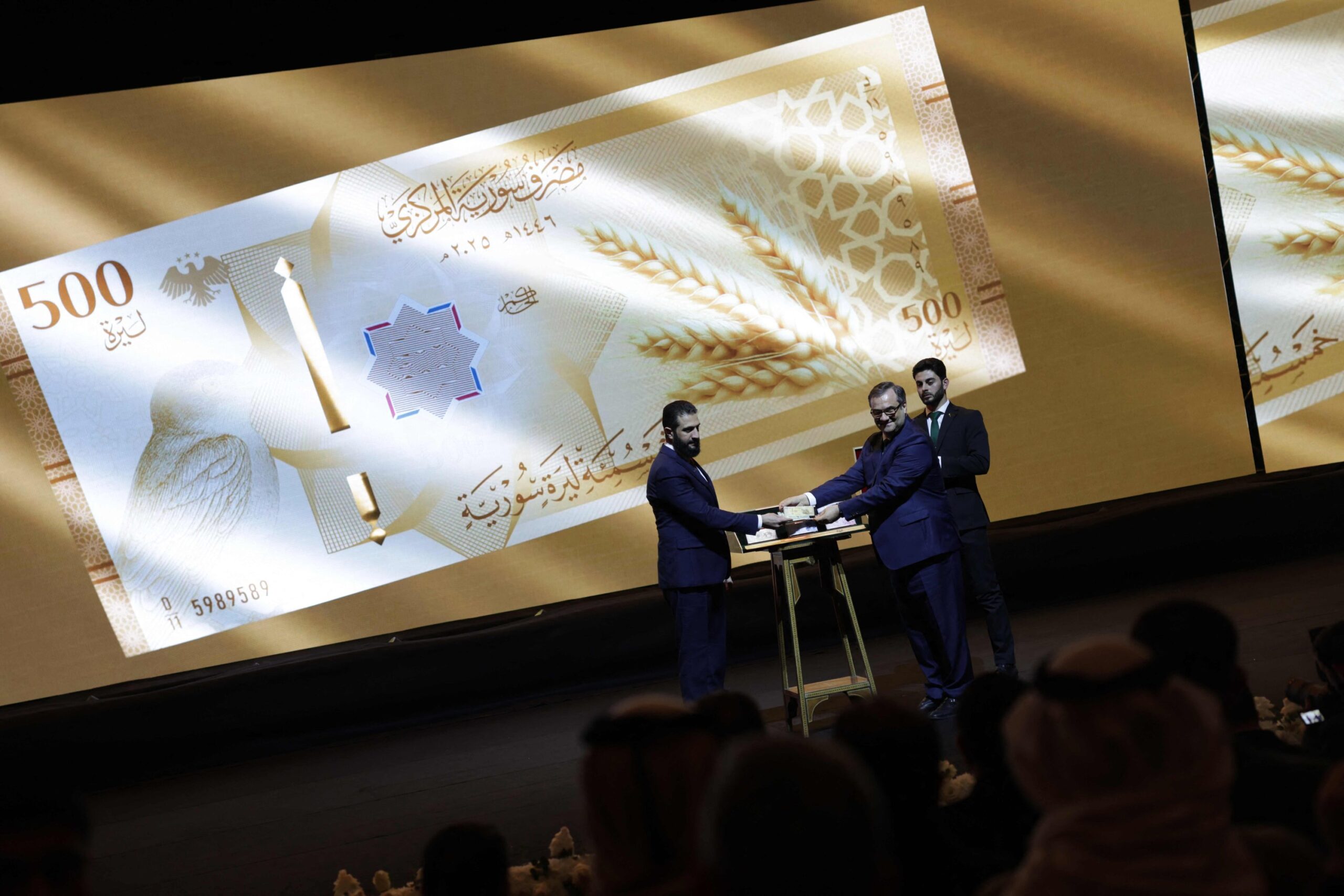
Syria has launched its most significant monetary reform in decades, unveiling newly designed banknotes and confirming a redenomination of the Syrian pound, a move aimed at simplifying transactions and restoring confidence in a currency that has lost most of its value since the start of the civil war in 2011.
The Central Bank of Syria announced that the new banknotes, which have already been publicly presented, will officially enter circulation on January 1, 2026, marking the start of a nationwide currency swap and the removal of two zeros from the pound’s face value.
Under the redenomination, 100 old Syrian pounds will be exchanged for 1 new Syrian pound, a technical adjustment that does not change real purchasing power but reduces the large numerical figures that have dominated daily transactions after years of inflation.
New Designs, New Denominations
The newly issued banknotes come in denominations of 10, 25, 50, 100, 200 and 500 pounds. They replace older notes that had remained in circulation despite severe depreciation.
Unlike previous series, the new designs exclude portraits of political leaders, instead featuring symbols of Syria’s agricultural and natural heritage, including wheat, olives, roses, citrus fruit and mulberry trees. Syrian officials said the redesign is intended to reflect national identity and economic recovery rather than political authority.
The notes were officially unveiled in Damascus in late December, with images released to the public ahead of the rollout. Authorities said old and new banknotes will circulate simultaneously during a transition period to allow businesses and households to adjust.
A Currency Shaped by Conflict
Before the outbreak of war in 2011, the Syrian pound traded at about 47–50 per U.S. dollar. As fighting intensified, state revenues collapsed and international sanctions tightened, the currency entered a prolonged decline.
By 2013, the pound had fallen into the hundreds per dollar, and by the early 2020s it was trading in the thousands. In late 2025, the unofficial market rate hovered around 11,000–12,000 pounds per dollar, underscoring the scale of the devaluation.
Economists say the pound lost more than 99% of its value over the past decade, driven by conflict, capital flight, sanctions, and a sharp contraction in domestic production.
Sanctions, Isolation and Limited Relief
Western sanctions, including U.S. and European measures tied to Syria’s political situation and past leadership, severely restricted access to international banking and foreign currency, weakening the central bank’s ability to manage the exchange rate.
In recent months, partial easing of certain restrictions and renewed regional engagement have provided modest relief, helping stabilize the pound after periods of extreme volatility. However, analysts caution that currency reforms alone cannot reverse years of economic damage.
What the Redenomination Can — and Cannot — Do
Financial experts note that removing zeros is largely a technical and psychological measure, aimed at simplifying accounting, pricing and cash handling in an economy that remains heavily cash-based.
The reform does not address underlying challenges such as low productivity, limited foreign investment, unemployment or inflationary pressures. Its success, economists say, will depend on broader fiscal discipline, trade recovery and sustained economic reforms.
Still, officials argue the move is a necessary step toward normalizing daily economic life and rebuilding trust in the national currency after years of instability.
A Symbolic Reset
Beyond economics, the new banknotes carry symbolic weight. The absence of political imagery and the emphasis on shared cultural and agricultural symbols are being presented as part of a broader effort to reframe the state’s institutions following years of turmoil.
As the January rollout approaches, Syrians are watching closely to see whether the redesigned pound can help anchor stability, or whether deeper structural reforms will be needed to turn the page on one of the region’s most dramatic currency collapses.
31/12/2025