Three Scenarios Behind Dollar Surge in Iraq: Technical, Economic, and Political Factors
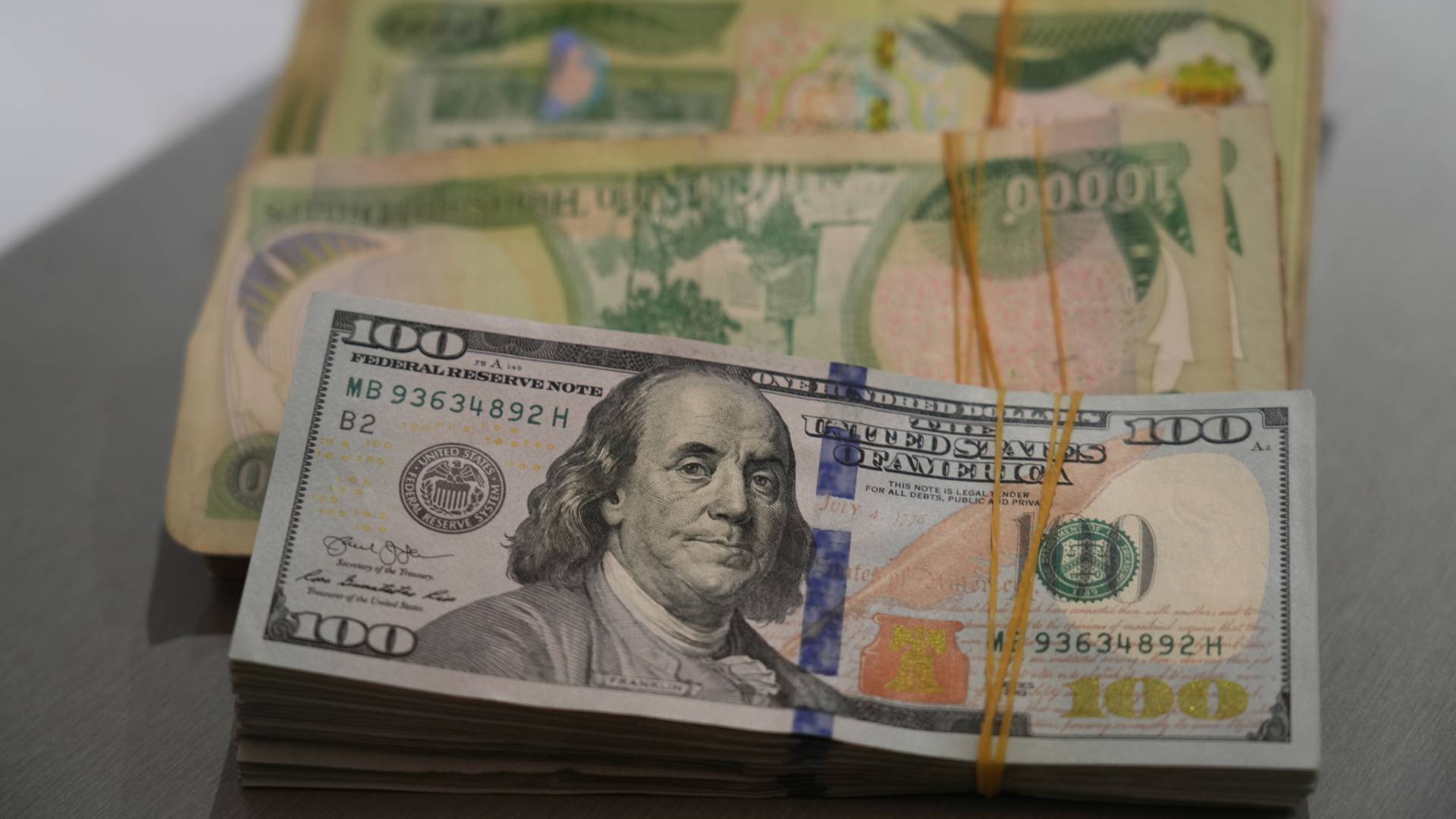
The exchange rate of the U.S. dollar against the Iraqi dinar continued to climb, reaching around 150,000 dinars in local markets. Analysts say the primary source of dollar supply remains the U.S. Federal Reserve, while the Central Bank of Iraq (CBI) plays a key domestic role through its daily dollar sales. However, three main scenarios—technical, economic, and political—are being cited to explain the ongoing depreciation of the dinar.
Technical and Administrative Factors
One explanation centers on technical and administrative issues linked to the implementation of the new customs system, ASYCUDA (Automated System for Customs Data), which was introduced at the beginning of the year.
According to analysts, some traders have stopped accessing dollars at the official rate of 132,000 dinars to avoid the new system and related tax obligations. Instead, they have turned to the black market, where dollars are sold at higher prices.
In parallel, traders in the Kurdistan Region importing goods through the Ibrahim Khalil border crossing have long been unable to obtain dollars at the official rate, forcing them to rely on the black market as well.
Observers say if the issue is purely administrative, it could be addressed more quickly by revising regulations or expanding official dollar sales.
Economic Pressures
The second scenario is tied to broader economic challenges and is considered more difficult to resolve. Falling global oil prices have contributed to a revenue shortfall in Iraq.
In response, the central bank is believed to have reduced the volume of dollars in circulation to manage the deficit and maintain liquidity. Dollars are then exchanged for dinars through alternative channels to ensure the payment of public sector salaries.
Political Considerations
The most complex scenario points to political factors, particularly as Iraq moves toward forming a new government. Reports suggest that U.S. conditions may be influencing the flow of dollars to Iraq.
According to these reports, the U.S. president’s envoy has called for key and sensitive positions—such as the finance minister and the central bank governor—to be filled by technocrats acceptable to Washington. Analysts say the depreciation of the dinar could be used as a pressure tool in this context.
Risks to Confidence
Economists warn that the Iraqi economy may struggle to absorb further shocks if the exchange rate rises to 160,000 or even 170,000 dinars. In such volatile conditions, confidence in the dinar weakens.
As a result, citizens may increasingly convert their savings into dollars to protect their assets, adding further pressure on the local currency and complicating efforts to stabilize the market
06/01/2026