Channel8 Exclusive: “I Don’t Think It Will End Soon,” Bolton on Iran War
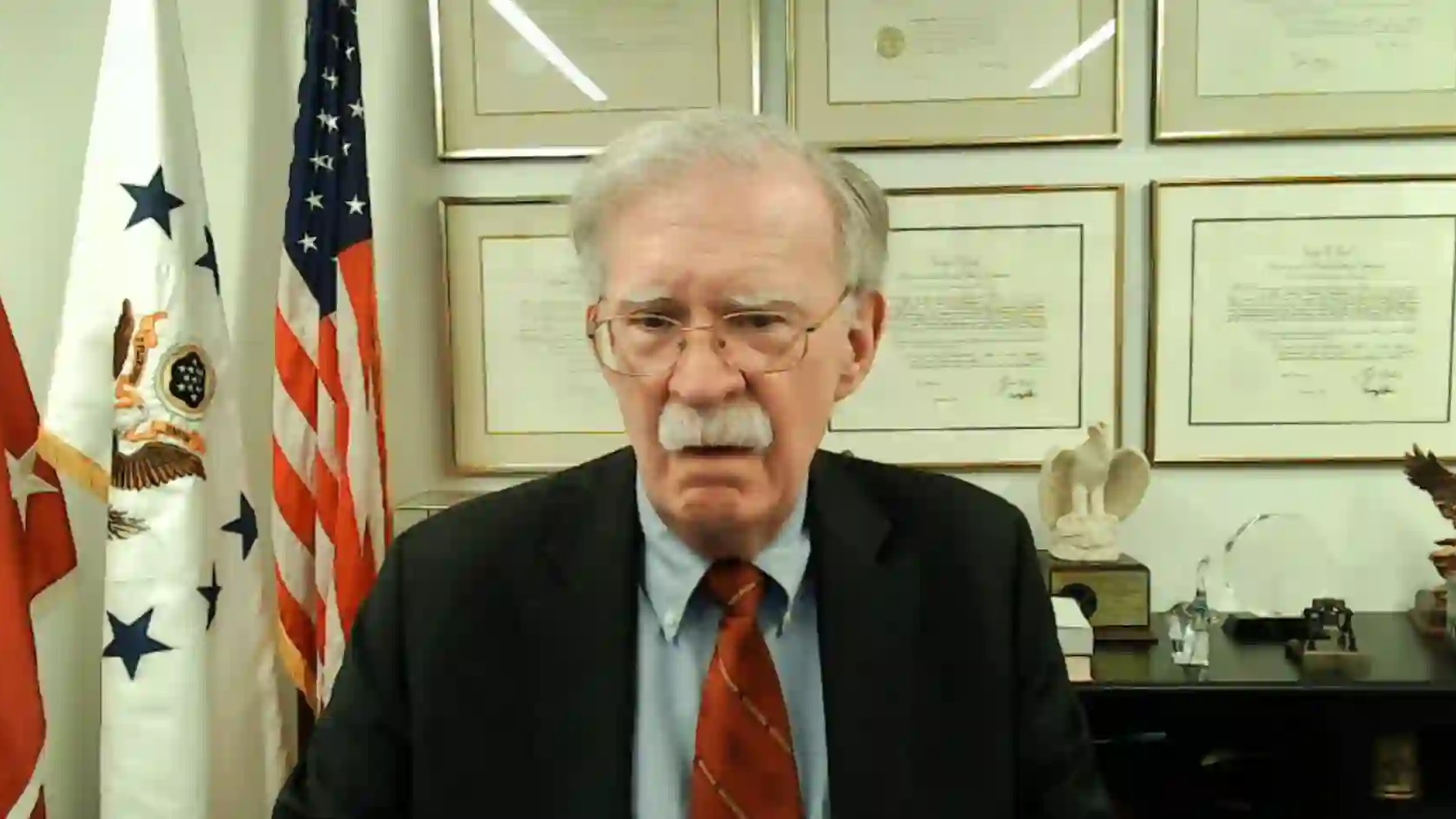
Former U.S. national security adviser John Bolton said the war in the Middle East is unlikely to end soon, warning that hostilities will continue at least until the Strait of Hormuz is reopened and safe for international shipping, in an exclusive interview with Channel8.
Speaking to Channel8 presenter Ara Ako, Bolton said the objectives of the conflict remain unclear. He added that if President Donald Trump is pursuing regime change in Iran, “there is still a long way to go.”
“I don’t see how he can declare victory with the Strait of Hormuz still closed,” Bolton said. “At an absolute minimum, the war will continue until the Strait is open and safe for shipping in and out of the Gulf.”
On what motivated Trump to launch the strikes, Bolton said the reasons were “entirely legitimate,” citing Iran’s nuclear program and its decades-long support for militant groups.
“Iran’s nuclear weapons program is a threat on a global basis,” he said. He added that Tehran’s backing of groups such as Hamas and Hezbollah represents a broader security threat. “Eliminating those threats, the nuclear threat and the terrorist threat, are both legitimate objectives for the U.S. to seek through military force.”
Bolton, who served as national security adviser during Trump’s first term and has long advocated regime change in Iran, said he believes that was Trump’s objective from the outset. He pointed to a January social media post in which Trump urged Iranian opposition protesters to “keep protesting, take control of your institutions — help is on its way.”
He said achieving that goal would require dismantling the instruments of Iranian state power, including the Islamic Revolutionary Guard Corps, its Quds Force, and affiliated militias.
Bolton also offered a critical assessment of Trump’s decision-making, saying the president “has a short attention span and doesn’t think through decisions in a strategic manner.” He added that concerns over rising global oil prices could prompt rapid policy shifts.
On regional dynamics, Bolton said he sees no need to redraw borders in the Middle East, but argued that a change of government in Tehran would be transformative.
“The only way we’re ever going to see lasting peace and security in the region is when that regime is gone,” he said, describing Iran’s leadership as “the biggest threat to peace and security” in the region.
Addressing the future of Iran, Bolton said any post-regime transition would require time and internal consensus. He suggested a transitional government led by Iran’s conventional military — rather than the Revolutionary Guard, could help stabilize the country and allow citizens to determine their political future.
On the Kurdish question, Bolton said Kurds across Iran, Turkey, Iraq, and Syria have long sought self-determination and noted he has supported that aspiration. However, he said such discussions should follow any regime change, urging focus on a common objective first.
Bolton cautioned against expectations of a rapid democratic transition, saying Iran is unlikely to become a democracy overnight. He warned that if the current leadership remains in power, it could rebuild its nuclear and regional capabilities and emerge stronger.
“If you don’t have the resolve to see a regime change effort through to success, you shouldn’t start it,” Bolton said.
21/03/2026