Global Trade Routes Under Pressure As Houthis Join Conflict
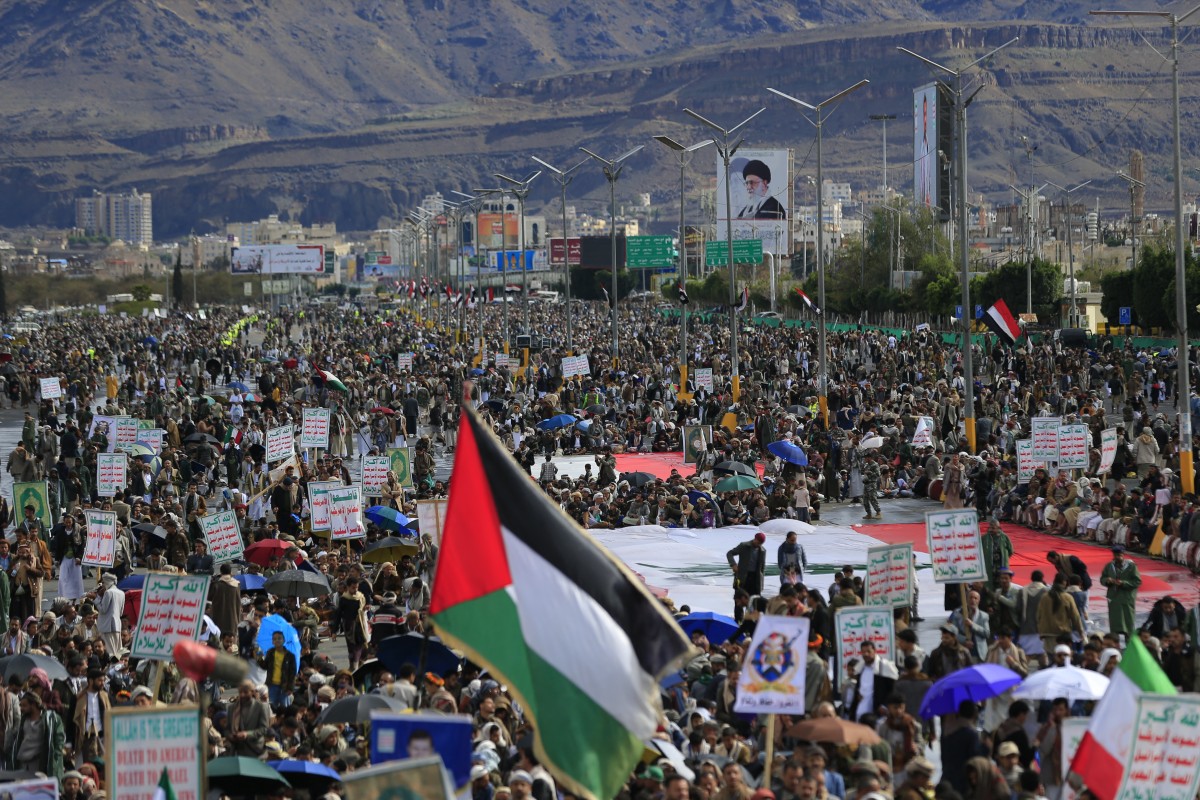
Yemen’s Houthi movement has launched missiles toward Israel for the first time since the start of the conflict involving Iran, marking a direct entry into the war and raising concerns of a wider regional escalation.
The move signals a shift by the Houthis from political alignment to direct military involvement, heightening fears of renewed threats to maritime security in the Red Sea and the Bab al-Mandeb Strait.
The group has previously demonstrated its maritime capabilities, claiming responsibility for attacks on more than 200 vessels over the past two years. Those incidents resulted in the sinking of several cargo ships, the seizure of another, damage to dozens of vessels, and the deaths of multiple seafarers.
Such attacks disrupted global shipping, with more than half of international traffic through the Bab al-Mandeb reportedly rerouted. Major shipping companies diverted vessels around the Cape of Good Hope, increasing transit times, freight costs and insurance premiums, while causing significant financial losses for the Suez Canal.
Maritime chokepoints such as Bab al-Mandeb and the Strait of Hormuz play a critical role in global supply chains. Roughly one-fifth of the world’s oil and significant volumes of gas pass through Hormuz, meaning any disruption has far-reaching global consequences.
Analysts warn that a simultaneous disruption of both Bab al-Mandeb and Hormuz could severely constrain trade between East and West, pushing the global economy toward stagflation, with sharply rising shipping and insurance costs and longer alternative routes via southern Africa.
Economic and geopolitical assessments indicate that any sustained disruption to Bab al-Mandeb, combined with restrictions in Hormuz, could significantly affect global energy flows, as both routes serve as vital corridors for oil, gas and trade between Asia and Europe.
Historically, major supply disruptions have followed events such as the 1973 oil crisis, the Iranian Revolution, the Iran-Iraq war, and the Gulf War. However, analysts note that the scale of potential disruption today could be significantly larger, with current shortages estimated at around 20 percent of global supply, compared with 4 to 6 percent during past crises.
Yemen’s internationally recognized government has warned of the risks of expanding tensions to Bab al-Mandeb, saying such developments could transform a regional conflict into a global crisis.
The strait remains one of the world’s busiest shipping routes, linking the Indian Ocean to the Red Sea and the Suez Canal, and serving as a critical corridor for oil tankers and commercial vessels traveling between Asia, Europe and Africa.
29/03/2026