Origin of Hormuz: History and Legends Behind World’s Most Strategic Strait
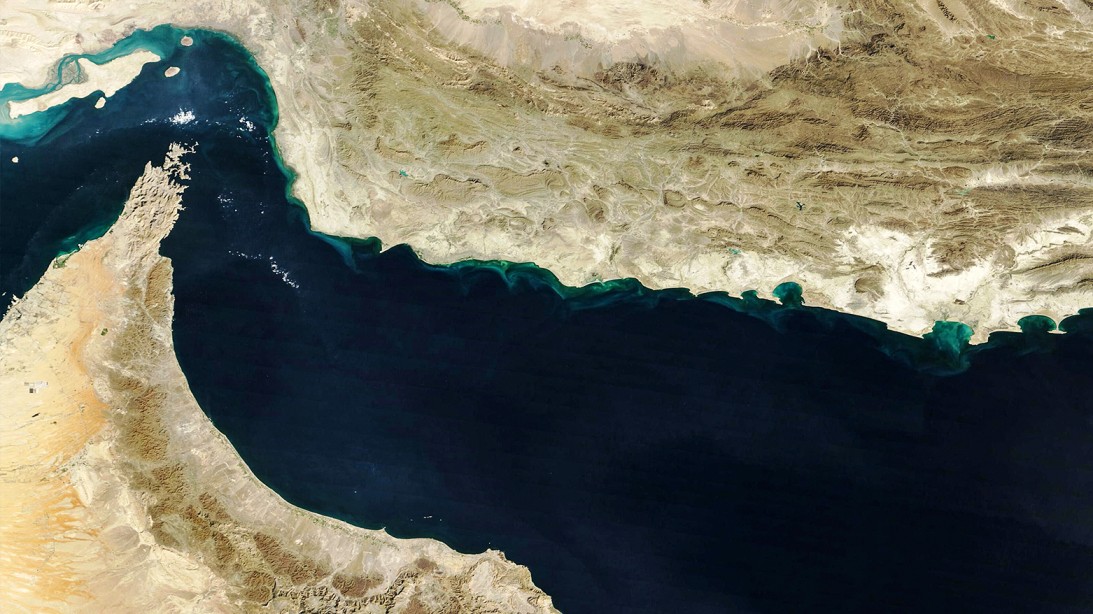
The Strait of Hormuz is one of the most strategically important waterways in the world, and now, the U.S. President is threatening to restrict or block maritime traffic through it. Behind its name lies a mixture of historical accounts and legends.
Why Is the Strait of Hormuz Named This?
One account states that the name comes from the ancient Kingdom of Hormuz, which was founded in the 10th century AD. This kingdom was initially established on the southern coast of Iran and was later relocated to the island of Jarun, which is known today as Hormuz Island. The principality often referred to as the “Key to India” due to its role in controlling trade routes in the East for several centuries.
Ahura Mazda and the Strait of Hormuz
Another theory connects the name “Hormuz” to the term “Ahura Mazda.” which is the name of the supreme deity in Zoroastrianism, associated with goodness and wisdom. According to some historical interpretations, the name “Ahura Mazda” was adapted into Arabic usage as “Hormuz,” which may have influenced the naming of the strait.
Interpretation of Khur-Muz
There is also a linguistic theory suggesting that “Hormuz” may derive from the Persian term “Khur-Muz.” In this interpretation, “khur” is understood to mean a small bay, while “muz” is sometimes associated with a banana or a type of date palm. However, this explanation is generally considered less supported among.
Who Was Hormuz?
If the name is not solely derived from the kingdom or the debated religious interpretation, some accounts in Islamic historical tradition suggest another figure associated with the name “Hormuz.” In this view, Hormuz may have been a regional ruler in southern areas of present-day Iraq during the Sasanian Empire.
Commander Hormuz
Hormuz was one of the prominent commanders of the Persian elite known as the Asawra (Sasanian heavy cavalry). He is said to have worn a crown valued at one hundred thousand dirhams, a distinction reserved for princes and high-ranking commanders close to Khosrow.
Sasanian Empire's Defensive Line
He is described as having extreme arrogance and strong hostility toward the Arabs. In this account, he served as part of the Sasanian Empire’s defensive line against the Arabian Peninsula. His end is said to have come at the hands of Khalid ibn al-Walid during the Battle of the Chains.
The Battle of the Chains
The battle is placed in the 12th year of the Hijra (633 AD). It is also identified as Khalid ibn al-Walid’s first battle in Iraq and is commonly referred to as the Battle of Kazimah, in the area of present-day Kuwait.
"The One Bearing the Chains"
He was also referred to as “Dhat as-Salaseel,” meaning “The One Bearing the Chains.” This name is explained by the claim that Hormuz ordered his soldiers to be chained up to prevent retreat during the battle in fear of the Muslims, a tactic meant to avoid collapse of morale.
The Battle Between Hormuz and Khalid ibn al-Walid
At the beginning of the battle, Hormuz is said to have challenged Khalid ibn al-Walid to a duel. Some Muslim historians interpret this challenge not as an act of bravery, but as part of a planned ambush. According to this account, he intended to have archers and horsemen attack Khalid during the duel.
The Beheading of Hormuz
When the duel began, Hormuz’s men reportedly launched an attack. In response, Qaaqa ibn Amr al-Tamimi is said to have intervened, killing the attackers. Khalid ibn al-Walid then beheaded Hormuz, according to these historical accounts.
The Area of U.S.-Iran Conflict
The name Hormuz is historically associated with both a place and a person, although the association with the place is generally considered more established. Today, it is a major area of conflict between the United States and Iran.
13/04/2026