Iraq's Designate Prime Minister Unveils Sweeping 14-Pillar Government Program for 2026–2029
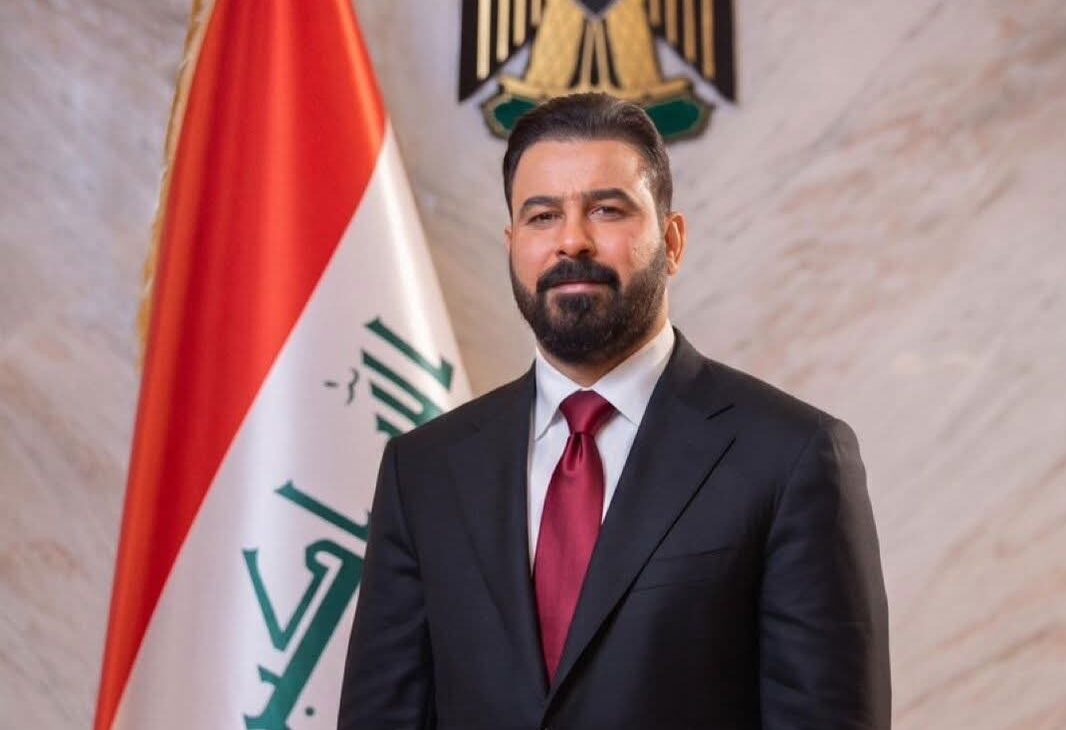
Ali Faleh al-Zaidi presents a comprehensive ministerial platform spanning national security, economic reform, energy, education, and human rights, anchored by the vision of "A Stable State, A Productive Economy, Balanced Partnerships."
Iraq's Designate Prime Minister, Ali Faleh al-Zaidi, has submitted to the Council of Representatives a detailed ministerial program covering the period from 2026 to 2029, setting out the incoming government's priorities across fourteen distinct policy pillars. Presented under the banner of "A Stable State, A Productive Economy, Balanced Partnerships," the program represents one of the most structured governance blueprints offered by an Iraqi government in recent years.
The program, bearing the seal of the Republic of Iraq, is framed as both a national commitment and a binding undertaking before parliament. It pledges that implementation will be underpinned by a comprehensive, government-wide action plan translating the program's objectives into measurable targets, timelines, budgetary allocations, and accountability mechanisms.
PILLAR ONE: Reinforcing State Sovereignty and National Security
The program's opening pillar addresses the consolidation of state authority and the primacy of the rule of law.
Key commitments include restricting the bearing of arms exclusively to the state and enforcing the rule of law; strengthening the intelligence, security, and military apparatuses while diversifying arms procurement sources; developing the capabilities of the Popular Mobilization Forces (PMF) in a manner that enhances their combat readiness, defines their mandates and responsibilities, and integrates them within the formal military and security structures in accordance with the law; unifying security decision-making and linking all resources and capabilities to official state institutions; combating terrorism and organized crime and drying up their sources of financing; strengthening border security through modern surveillance technologies; and entrenching human rights principles, criminal justice, freedom of opinion, and press freedom.
PILLAR TWO: Foreign Policy
On the international stage, the government commits to a proactive and balanced foreign policy designed to insulate Iraq from regional and global conflicts while creating conditions for sustainable economic growth.
The foreign policy framework includes distancing Iraq from theaters of regional and international conflict as a foundational safeguard for domestic stability, while attracting foreign investment and promoting sustainable development. The government pledges to build distinguished relations with Arab states, particularly Gulf Cooperation Council countries and neighboring states, on the basis of mutual interests, activating bilateral economic and strategic agreements and accelerating regional connectivity projects in the fields of energy, trade, and transport.
The program upholds the principle that Iraqi territory shall not be used as a launching pad for aggression against other states, and that no foreign state may interfere in Iraq's internal affairs, in accordance with constitutional provisions. Additional commitments include activating the Strategic Framework Agreement with the United States in a manner that serves mutual interests, enhancing the standing of the Iraqi passport, elevating Iraq's profile in international and regional forums, and confining international engagement exclusively to official diplomatic channels.
PILLAR THREE: Economic and Financial Reform
The program presents an ambitious economic agenda aimed at diversifying Iraq's oil-dependent economy and building resilience against external shocks. It commits to building a diversified national economy capable of adapting to global fluctuations; adopting fiscal discipline programs and restructuring public expenditure; boosting non-oil revenues and digitizing tax collection in coordination with relevant international institutions; and accelerating the reform of the banking sector to meet international standards, particularly in combating money laundering and terrorism financing.
The government also pledges to empower the private sector and promote a competitive business environment while outlawing monopolistic practices; reform state-owned enterprises through strategic partnerships; establish a Supreme Financial and Monetary Stability Council to coordinate fiscal and monetary policies; establish a Supreme Investment Council to attract foreign direct investment; establish a "Future Generations Fund" to protect the rights of future generations over Iraq's oil and natural wealth; and expand investment in non-oil minerals and natural resources.
PILLAR FOUR: The Energy Sector, Electricity, Oil, and Gas
Iraq's chronic electricity crisis and its reliance on energy imports figure prominently in the program. The government pledges a comprehensive overhaul of the electricity sector, including a wholesale reform of production, transmission, and distribution; reviewing generation projects for maximum efficiency; transitioning from conventional fuels to renewable and hybrid energy sources; diversifying energy supply sources and increasing domestic gas production; and encouraging private sector participation in electrical energy distribution while transitioning to smart grid technology.
On hydrocarbons, the program outlines an equally ambitious oil-and-gas agenda. It commits to building strategic partnerships with international oil companies on a model that guarantees national interests; completing associated gas projects and increasing output; strengthening export infrastructure by expanding pipelines and port capacities; enacting a long-awaited oil-and-gas law; increasing refinery capacity; maximizing revenues through integrated value chains from refining to petrochemical industries; and exporting gas through the Grand Faw Port.
PILLAR FIVE: Industry
To rebuild Iraq's industrial base, the program commits to legislative and regulatory reform that restores the economic role of the industrial sector and raises its contribution to GDP. Specific measures include supporting strategic industries across food, pharmaceutical, and construction sectors; easing administrative and licensing procedures; offering preferential treatment for export-oriented industries that create local jobs; activating an export support fund; combating the dumping of foreign goods that undercuts domestic production; and adopting a public-private partnership model for industrial enterprises while developing industrial cities.
PILLAR SIX: Agriculture and Water Resources
Recognizing the centrality of food security to national stability, the program pledges to revive agricultural production as a vital economic sector. Key commitments include leveraging political and economic relations with upstream riparian states to advance Iraq's water rights; promoting livestock production to achieve food security in the broadest sense; encouraging both domestic and foreign investment in the agricultural sector; rationalizing water use across all sectors using modern irrigation technologies; and directing university agricultural research toward the development of modern farming techniques that raise production efficiency and strengthen agricultural supply chains.
PILLAR SEVEN: Governance, Institutional Reform, and Anti-Corruption
Anti-corruption and good governance rank among the most politically sensitive commitments in the program. The government pledges to consolidate the prestige of the state and the independence of its institutions; build a comprehensive national program for institutional reform and combating administrative and financial corruption, with robust and transparent accountability mechanisms including the recovery of misappropriated public funds; adopt institutional governance in the management of ministries and public bodies through clear processes and periodic evaluation systems; strengthen the integrity and transparency ecosystem by developing the capabilities of oversight bodies; establish a national digital data and information management system as a decision-making tool; and empower administrative and financial decentralization to raise governorates' efficiency in service delivery.
PILLAR EIGHT: Education and Training
The education agenda focuses on aligning schooling and vocational training with labor market demands. The program commits to raising educational standards in both public and private schools; continuing the school construction program under the Iraq-China Framework Agreement; integrating skills development within a vocational rehabilitation framework and establishing pioneering projects and scientific incubators; launching a national project to develop the capacities of teaching bodies; expanding inclusive education for students with special needs to cover all academic levels; launching a national literacy program; and supporting academic scholarships and scientific research centers in vital disciplines.
PILLAR NINE: Healthcare and Medical Services
The health sector agenda emphasizes equitable access to quality care across all governorates and rural areas. The program commits to improving the quality of basic healthcare services and ensuring fair distribution including in remote and rural communities; expanding the national health insurance system; benchmarking hospital performance against international standards; completing the construction of hospitals and healthcare centers; activating oversight and medical inspection programs across public and private institutions; updating and renovating government hospitals and upgrading medical technologies; and updating the domestic pharmaceutical industry and developing rare medical specializations and research programs.
PILLAR TEN: Social Safety Nets and Poverty Alleviation
The program pledges to modernize labor legislation to simultaneously guarantee flexibility and worker protection while reducing unemployment. It commits to raising the efficiency and effectiveness of the social protection network; updating support methodologies for impoverished households through food support, health insurance, and training programs; gradually transitioning from cash grants to empowering citizens through small business entrepreneurship and micro-financing; and utilizing the national human development report and census results to raise indicators of income, education, and health at the individual level.
PILLAR ELEVEN: Communications and Information Technology
A national digital transformation strategy sits at the heart of the program's modernization agenda. The government pledges to develop telecommunications infrastructure and establish interconnected government data centers; launch a comprehensive national digital transformation strategy in collaboration with specialized international organizations; adopt a national digital identity framework; expand the use of cloud computing and unified national standards for government systems and applications; enable national centers for digital transformation, cybersecurity, and artificial intelligence; launch a national licensing project for mobile telephony in partnership with the private sector; and leverage Iraq's unique geostrategic position to become an international data hub and a regional data exchange center. The program also commits to strengthening the regulatory role of the Communications and Media Commission over social media platforms to promote societal stability.
PILLAR TWELVE: Human Rights, Women's Rights, and Child Protection
The program commits to reinforcing Iraq's human rights framework to uphold human dignity and ensure equality, enshrining women's empowerment as a key and active partner in development and decision-making in line with the Iraqi constitution and international conventions. The government pledges to combat all forms of violence and discrimination against women and children through the rule of law; enact domestic violence prevention legislation; propagate a human rights culture within state institutions and civil society; prepare leadership training programs for women in government and political work; and strengthen the role of civil society organizations in the fields of human rights, women's protection, and child welfare, including the establishment of an independent body for civil society affairs with a long-term support and evaluation mandate.
PILLAR THIRTEEN: Youth and Sports
The program acknowledges the importance of Iraq's youth as both a challenge and an opportunity. It pledges to elevate Iraq's sporting profile internationally; assist sports clubs with self-sustaining funding models; support youth entrepreneurship through skill-building centers that prepare young people for the labor market; empower youth in governance through digital platforms and youth councils; develop national identity and a sense of patriotic belonging through youth forums; and concentrate on what reinforces national identity and the spirit of belonging.
PILLAR FOURTEEN: Culture, Tourism, and Heritage
The final pillar reflects Iraq's ambition to position itself as a civilization of profound historical depth. Commitments include reinforcing Iraq's civilizational and cultural standing as a state with deep roots in human history; reviving Iraqi heritage and civilizational symbols in domestic and international events; developing museums and building new traditional and virtual venues to display Iraqi antiquities; promoting tourism as a major contributor to the national economy and a primary venue for acquainting visitors with Iraq's civilizational heritage; developing cultural projects that project Iraqi national identity through the Cultural Security project; paying attention to heritage sites, historical districts, and civilizational centers; and cooperating with cultural unions and associations to sustain their activities in preserving and promoting Iraqi cultural heritage.
IMPLEMENTATION FRAMEWORK: Accountability and Execution Mechanisms
The ministerial program devotes a separate section to implementation, acknowledging that ambitious agendas have historically fallen short in Iraq due to weak accountability structures. The program flows from a comprehensive government vision and constitutes a national commitment before the Council of Representatives, to be implemented with discipline and responsibility.
A detailed government action plan will be formulated covering all ministries, bodies, and institutions, including objectives, priorities, programs, initiatives, procedures, timelines, costs, funding sources, responsibilities, and performance indicators. The Federal Government retains full authority to adjust the program's priorities in response to supreme national interests, security conditions, financial circumstances, or emergency situations such as those requiring "the most pressing measures" as referenced in the text.
All ministries and bodies are required to fulfill the tasks and responsibilities falling within their purview in accordance with applicable legislation, national priorities, and defined benchmarks. Execution of the program's pillars is contingent upon the allocation of the necessary financial appropriations within the framework of the State's General Budget.
The program concludes with the traditional Arabic invocation: "And from God comes all success."
This article is based exclusively on the official text of the Iraqi Ministerial Program 2026 to 2029 as submitted to the Council of Representatives by Designate Prime Minister Ali Faleh al-Zaidi. All translations from Arabic are the author's own and aim to reflect both the precise meaning and the formal register of the original document. The program is subject to a parliamentary confidence vote before it takes legal effect.
07/05/2026