How Diplomacy and ‘Reciprocal Moves’ are Reshaping PUK-Ankara Relations: Expert Analysis
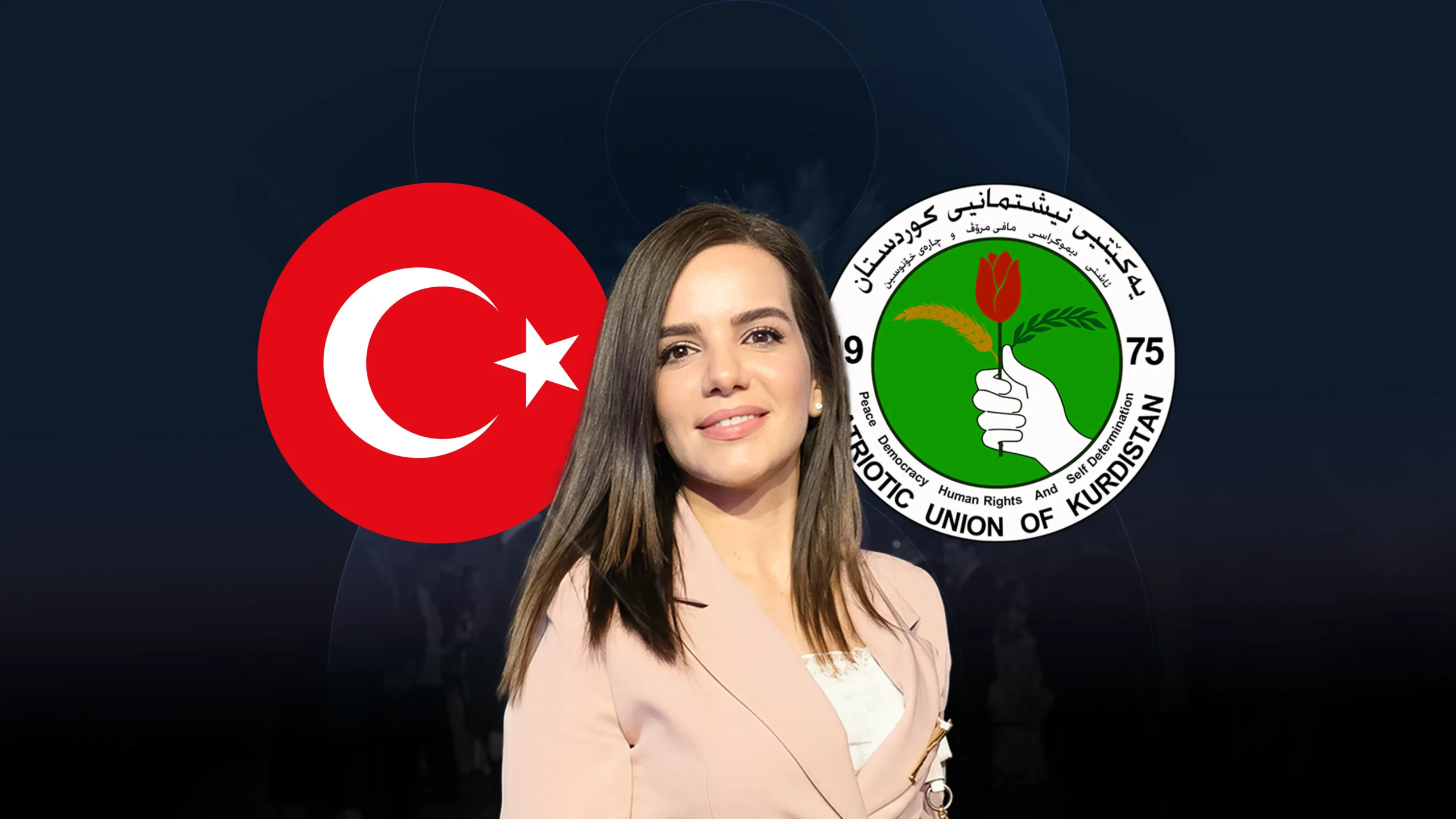
From the Kurdistan Workers’ Party (PKK) disarmament process to the opening of the Turkey Visa Application Center in Sulaymaniyah, the relations of the Patriotic Union of Kurdistan (PUK) and Ankara have entered a decisive period of recalibration. "A long-term strategic shift” contingent upon the reciprocal steps taken going forward, Ankara-based researcher and academic Sohan Aydogan told Channel8.
The disarmament ceremony took place within the framework of a peace process initiated in late 2024, which has progressed through several pivotal stages. These milestones include parliamentary initiatives and a landmark address by Abdullah Ocalan; the PKK dissolution congress held May 5–12, 2025; and the formation of the National Solidarity, Brotherhood, and Democracy Commission in August of the same year.
This was followed by the PKK’s withdrawal from Turkish territory in October and subsequent legislative advancements to institutionalize the peace roadmap.
PUK’s ‘Crucial Mediating Role’ in the Peace Process
In an exclusive interview, Aydogan noted the PKK disarmament, which occurred on July 11 last year, was "one of the key parts of the peace process between Türkiye and the PKK."
"The fact that it was held in Sulaymaniyah also shows that the PUK has taken on a crucial mediating role in the peace process and that this role has been recognized by both actors,” she added.
Aydogan asserted that the event demonstrated "a strong sign” that the city backs peace instead of conflict, adding that "in this context, both steps are interrelated and consistent and serve for confidence-building between Türkiye and the PUK."
She expressed optimism regarding strategic shifts and deepening PUK-Ankara ties, highlighting that through "reciprocal steps," both parties could help further “repair" relations.
The expert contends that, alongside the disarmament process, the resumption of flights to Sulaymaniyah and the mid-April administrative reshuffle in Kirkuk have collectively fostered "closer relations" between the two actors.
The PUK asserted previously that the rotational model in Kirkuk is a "democratic process" rooted in the party's long-standing policy of peaceful coexistence among the province's diverse ethnic components.
'Multi-Vector Diplomacy' and an Anti-War Stance
Aydogan further stressed that despite experiencing “most challenging periods," the communication between both sides "never broke down."
Additionally, the PUK and Turkey have reinforced their bilateral ties through a coordinated "anti-war" stance on the U.S.-Iran standoff, highlighting a growing diplomatic alignment between Sulaymaniyah and Ankara.
She underlined that the party's neutrality in the conflict, "while simultaneously maintaining communication with the U.S. and Iran—the two warring parties—is a critically important skill for the party in terms of promoting peace and regional stability.”
Economic Interdependence as a ‘Powerful Anchor’ for Relations
Aydogan also highlighted the importance of economic aspects in relations between Sulaymaniyah and Turkey. “Business connectivity often curbs political tensions, making economic interdependence a powerful anchor for the relationship.”
She stated that exporting Sulaymaniyah's natural gas through Turkey offers a strategic opportunity to strengthen bilateral ties, given the region's focus on energy security amid regional instability.
PUK-KDP Unity to Strengthen KRG’s Hand with Baghdad
Regarding the next cabinet of the Kurdistan Regional Government, the expert said the PUK, together with the Kurdistan Democratic Party (KDP), should “choose the path of reconciliation rather than polarization," arguing a "strong government" will better protect the interests of all people in the Kurdistan Region while dealing with Baghdad.
Full Transcript: Channel8 Conversation with Sohan Aydogan
Channel8: With the flight ban lifted and a PKK disarmament ceremony hosted in Sulaymaniyah, does this mark a strategic shift in relations between the Patriotic Union of Kurdistan and Türkiye, or only a short-term easing in relations?
Sohan Aydogan: Given that Türkiye had closed its airspace to Sulaymaniyah citing the "PKK presence" in the city, Ankara's removal of the ban indicates that the underlying cause has either disappeared or has lost its significance. The hosting of a PKK disarmament ceremony in Sulaymaniyah is also a strong sign that the city supports peace rather than conflict. In this context, both steps are interrelated, consistent, and serves for confidence-building between Türkiye and the PUK.
Whether the two actors can transform this meaningful trend that helps repair bilateral ties into a long-term strategic shift depends on the reciprocal steps taken going forward. However, there are sufficient reasons to be hopeful about this.
Additionally, the opening of a Turkish consulate in Sulaymaniyah and a PUK representative office in Ankara would further institutionalize bilateral ties and contribute to potential crisis management in their relations.
Channel8: How significant was the PKK disarmament event in Sulaymaniyah in terms of confidence-building between Kurdish actors and Ankara?
Sohan Aydogan: The PKK's disarmament event in Sulaymaniyah is one of the key parts of the peace process between Türkiye and PKK. It provides confidence into the process and facilitated further negotiations and potential legal steps. On the other hand, the fact that it was held in Sulaymaniyah also shows that the PUK has taken on a crucial mediating role in the peace process, and that this role has been recognized by both actors.
Channel8: What concrete mechanisms are being put in place to institutionalize the current momentum between the PUK and Türkiye?
Sohan Aydogan: It appears that the process of repairing ties and building closer relations between the PUK and Türkiye continues through reciprocal moves. Lifting the flight ban, hosting the PKK disarmament ceremony and lastly, the inclusion of the Ankara-backed Iraqi Turkmen Front leader in the rotational governorship system in Kirkuk are signs of this. Particularly the last step has generated broad satisfaction both within the Turkish government and among the public.
It is understood that communication between the two actors never broke down even during the most challenging periods of their relations and the leadership-level contacts in the early March between the PUK and Türkiye is also worth noting. In fact, more importantly, both the PUK and Türkiye have adopted similar positions regarding the Iran war. Both actors made intensive diplomatic efforts to prevent the war from spreading to the region and to bring it to an end. Therefore, looking at the reciprocal steps and shared anti-war policy between the two actors, it is evident that the PUK and Türkiye have an increasingly strengthened channel of communication.
Additionally, the economic dimension should not be overlooked. More and comprehensive Turkish investment and trade ties with Sulaymaniyah can serve as a concrete incentive for both sides to further develop their relations. Business connectivity often curbs political tensions, making economic interdependence a powerful anchor for the relationship.
Furthermore, the possibility of exporting Sulaymaniyah's rich natural gas to international markets via Türkiye presents a unique opportunity to forge a more permanent bond between the two parties, considering how much importance being attached to energy supply in the current turbulent atmosphere of the region.
Channel8: The PUK has engaged simultaneously with the United States, Iran, and Türkiye. How sustainable is this multi-vector diplomacy in an increasingly polarized regional environment?
Sohan Aydogan: The ability of the PUK to remain neutral in the conflict while simultaneously maintaining communication with the US and Iran -the two warring parties- is a critically important skill for the party in terms of promoting peace and regional stability. The fact that Iraqi Kurdish leaders have held talks with global and regional actors aimed at ending the conflict is an unusual yet significant threshold. This is because in the past, US and Iran used to help the Iraqi Kurdish leaders to resolve their internal issues but this time the Iraqi Kurdish leaders are the ones took role in preventing potential extension of the US-Iran conflict. However, it must not be forgotten that Iraqi Kurds need to use their growing regional standing to strengthen their own internal cohesion as well.
Channel8: How does the emerging alignment between the Patriotic Union of Kurdistan and the New Generation Movement reshape the traditional balance of power in Erbil?
Sohan Aydogan: The alignment between the PUK and the New Generation Movement undoubtedly strengthens Sulaymaniyah's position against Erbil, since PUK-New Generation parliamentary seats almost jointly equals to KDP seats. However, the KDP and the PUK are the two indispensable and significant parties of the region. For a cohesive and strong government encompassing the entire Kurdistan Region to be formed, both parties must choose the path of reconciliation rather than polarization. In this way, a strong KRG government that includes the PUK, the KDP, other parties, as well as the Turkmens/Christians living in the region, will better protect the interests of all people in dealing with Baghdad.
About the Expert: Sohan Aydogan previously published as (Shokhan Sherzad Qader) is a Turkish/Iraqi academician and researcher based in Ankara. She is a lecturer at the Department of International Relations of the University of Salahaddin, in the Kurdistan Region.
13/05/2026