The State of the Kurdish Language in the Middle East: Recent Developments in Rojava and the Hasaka Language Dispute with Damascus
Preliminary
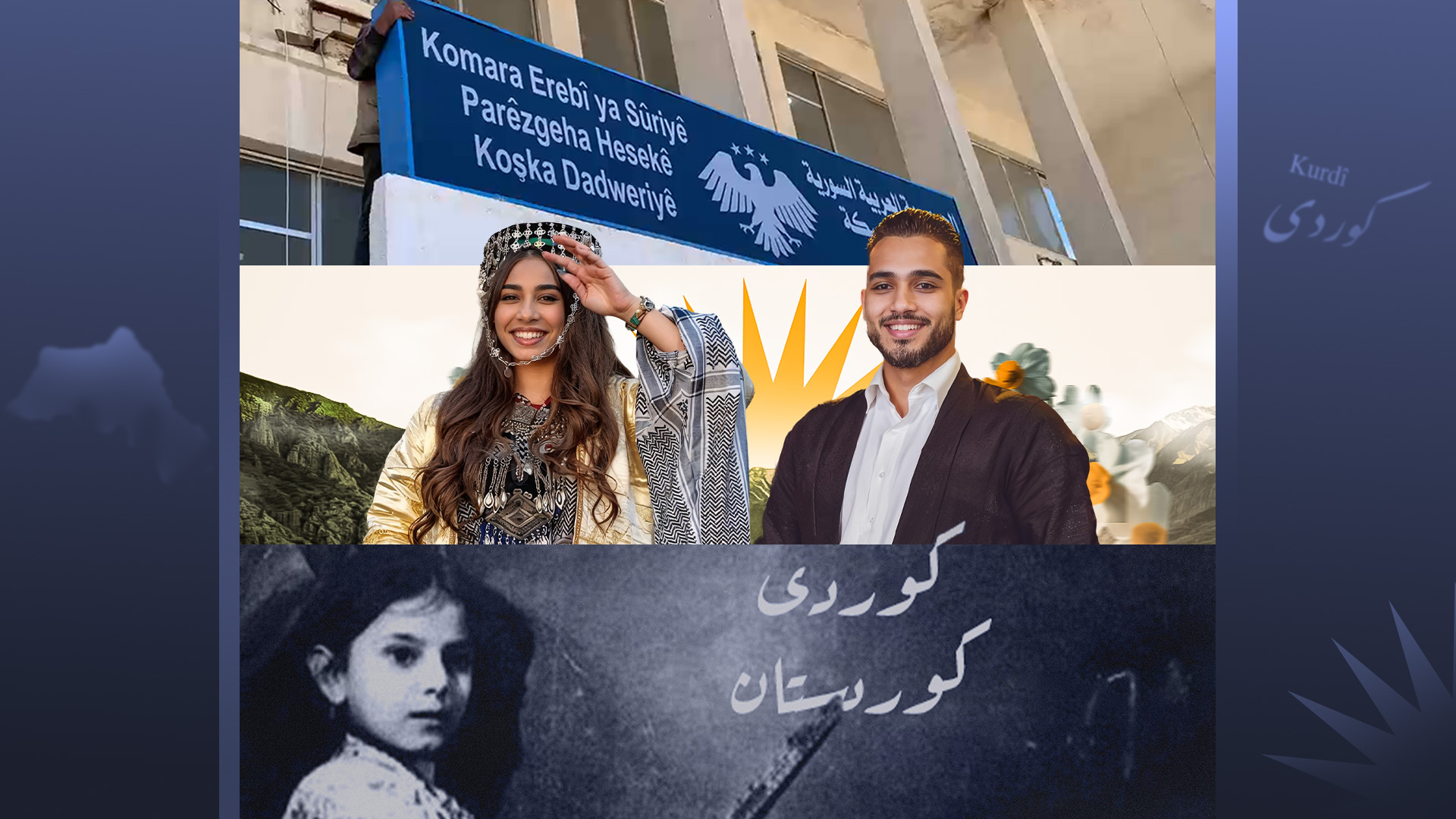
Kurdish, a stateless language with over 40 million speakers, experiences a varied legal status across Turkey, Iran, Iraq, and Syria. This article examines the current situation of the Kurdish language in these countries, particularly highlighting significant events in northeastern Syria (Rojava) after the fall of the Assad regime in December 2024. Notable developments include Presidential Decree No. 13 of 2026, which marked the first official recognition of Kurdish as a national language in Syria, and a May 2026 incident in Hasaka regarding the removal of Kurdish from public signs, which underscored the ongoing conflict between the Damascus government and the Kurdish-led Democratic Autonomous Administration of North and East Syria (DAANES) about the official status of the Kurdish language.
1. Introduction
Kurdish is a Northwestern Iranian language spoken in a contiguous area across Turkey, Iran, Iraq, and Syria, as well as in diaspora communities in various countries, including Armenia and Europe. Its primary dialects include Northern Kurdish (Kurmanji), Central Kurdish (Sorani), and Southern Kurdish (Kalhuri, Ilami, Laki)—exhibit varying levels of mutual intelligibility and are written in different scripts: Northern Kurdish uses the Hawar-Latin alphabet, while Central Kurdish utilizes a modified Arabic-Persian script. Despite its significant number of speakers, Kurdish has faced a precarious political reality, influenced by national language policies that range from co-official status in Iraq to criminalization in Turkey and Syria (In Iran, Kurdish has been constitutionally recognized but the article regarding the use of local languages is never implemented!).
This article aims to provide a brief overview of Kurdish's legal and sociolinguistic status in the Middle East and to analyze the rapid changes in Syria since the fall of the Assad regime, particularly between January and May 2026. The Hasaka signboard incident serves as a critical case study illustrating the gap between legal recognition and actual practice, highlighting the contentious constitutional debate over whether Kurdish should be designated as an official language or simply a tolerated national language.
2. Overview of the Kurdish Language in the Middle East
2.1 Iraq: Full Constitutional Recognition
Iraq is the only country in the region where Kurdish is fully recognized constitutionally. The 2005 Iraqi Constitution declares Arabic and Kurdish as the official languages of the federal state, granting Kurdish exclusive official status within the semi-autonomous Kurdistan Region. This legal acknowledgment is the outcome of years of struggle, notably following the 1991 uprising and subsequent political agreements post-2003. While Central Kurdish is predominantly used in administration and education, Northern Kurdish retains communal relevance in educational institutions and all KRG administrative offices in specific regions like Duhok. However, despite the constitutional recognition of Kurdish language in Iraq, the implementation is limited to the Kurdish-inhabited areas of Kurdistan Regional Government only, which leaves out significant Kurdish speaking territories and populations in Kirkuk, Mosul, Khanaqin, Mandali, etc.
2.2 Iran: Recognized but Restricted
Article 15 of the Iranian Constitution allows for the use of regional languages in media and education, yet Kurdish education in public schools is largely prohibited, and there is tight control over Kurdish publishing. With an estimated seven to fifteen million Kurds residing in regions like Urmia, Sanandaj, Kermanshah, Ilam, and parts of Luristan, Kurds face a stark disparity between constitutional rights and actual practices in Iran.
2.3 Turkey: From Suppression to Limited Acceptance
Turkey maintains the most restrictive language policies, designating Turkish as the sole official language and prohibiting the teaching of other languages in schools. While some measures to ease restrictions have been introduced, including private Kurdish courses, some university degrees, and broadcasting, the dominant monolingual framework remains, continually limiting Kurdish language rights.
2.4 Syria Prior to 2024: Systematic Exclusion
The Ba'athist regime in Syria systematically marginalized the Kurdish language, including a controversial census in 1962 that stripped many Kurds of citizenship. After a partial regime withdrawal in 2012, the DAANES established trilingual education, broadening Kurdish-medium instruction significantly.
3. The Syrian Political Shift and Presidential Decree No. 13 of 2026
Following the Assad regime's collapse in December 2024, political dynamics shifted significantly for Kurds in Syria. In early 2026, a conflict between government forces and the Syrian Democratic Forces (SDF) resulted in limited Kurdish control in northeastern Syria. An agreement signed on January 29, 2026, laid out provisions for Kurdish rights, leading to the issuance of Presidential Decree No. 13 on January 16, 2026, which formally recognized Kurdish as a national language and allowed for Kurdish education in Kurdish-majority areas.
Despite some approval, the decree has contentious aspects, such as its terminology—referring to Kurdish as a national language rather than an official language—and the ambiguity surrounding educational provisions for Kurdish.
4. The Hasaka Signboard Controversy, May 2026
Tensions escalated in May 2026 when the Damascus-aligned government removed a Kurdish-Arabic sign from the Justice Palace in Hasaka, sparking protests. The removal and subsequent replacement with Arabic-only signage incited demonstrations across Kurdish-majority regions, emphasizing the struggle for linguistic recognition.
5. Education, Constitutional Issues, and the National/Official Language Debate
Proposals for Kurdish-language education currently vary. One suggests a limited elective approach, while another advocates for the use of a Kurdish-translated national curriculum in majority-Kurdish areas. Neither approach matches the extensive education system previously established by DAANES.
Demands for official recognition of Kurdish language qualifications and the establishment of a Kurdish Language Academy also feature prominently in ongoing negotiations. The distinction between a national and an official language bears significant implications for areas such as administrative use and legal rights.
6. Conclusion
In 2026, the status of the Kurdish language in the Middle East reflects significant disparities: full recognition in Iraq, constitutional provision with restrictions in Iran, limited tolerance in Turkey, and a fragile transition from suppression to recognition in Syria. Presidential Decree No. 13 represents a major legal advancement but is undermined by ongoing practical challenges, exemplifying the broader struggle for substantive recognition in a region marked by linguistic diversity and political complexity. The future of Kurdish in Syria will depend on the resolution of these tensions and the capacity for institutional reforms.
About the Author: Prof. Hoshang Farooq Jawad Sadik specializes in English Language and Linguistics. He is currently a faculty member in the English Department of the College of Basic Education at the University of Sulaimani.
15/05/2026